Product alignment using a printed relief
Summary
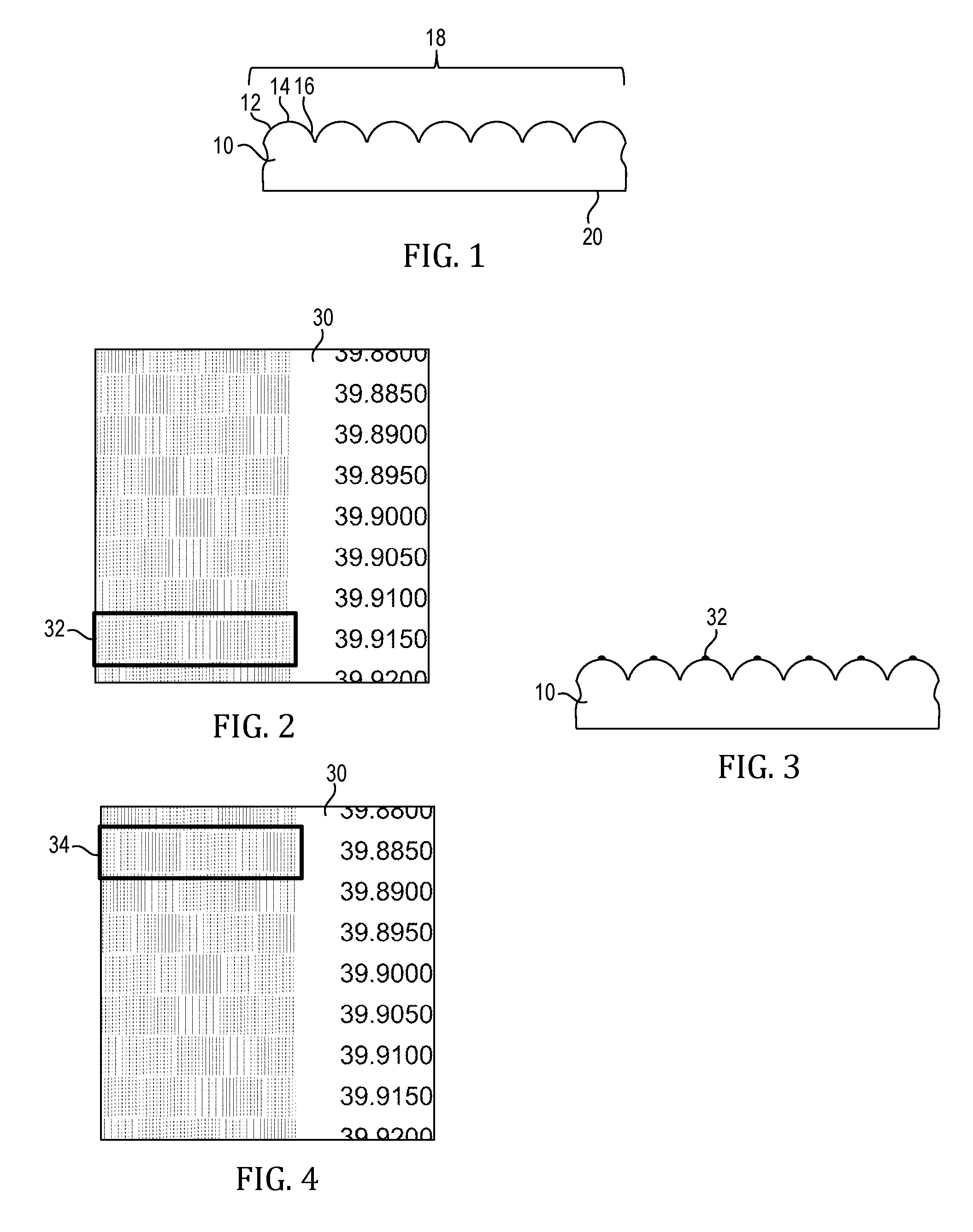
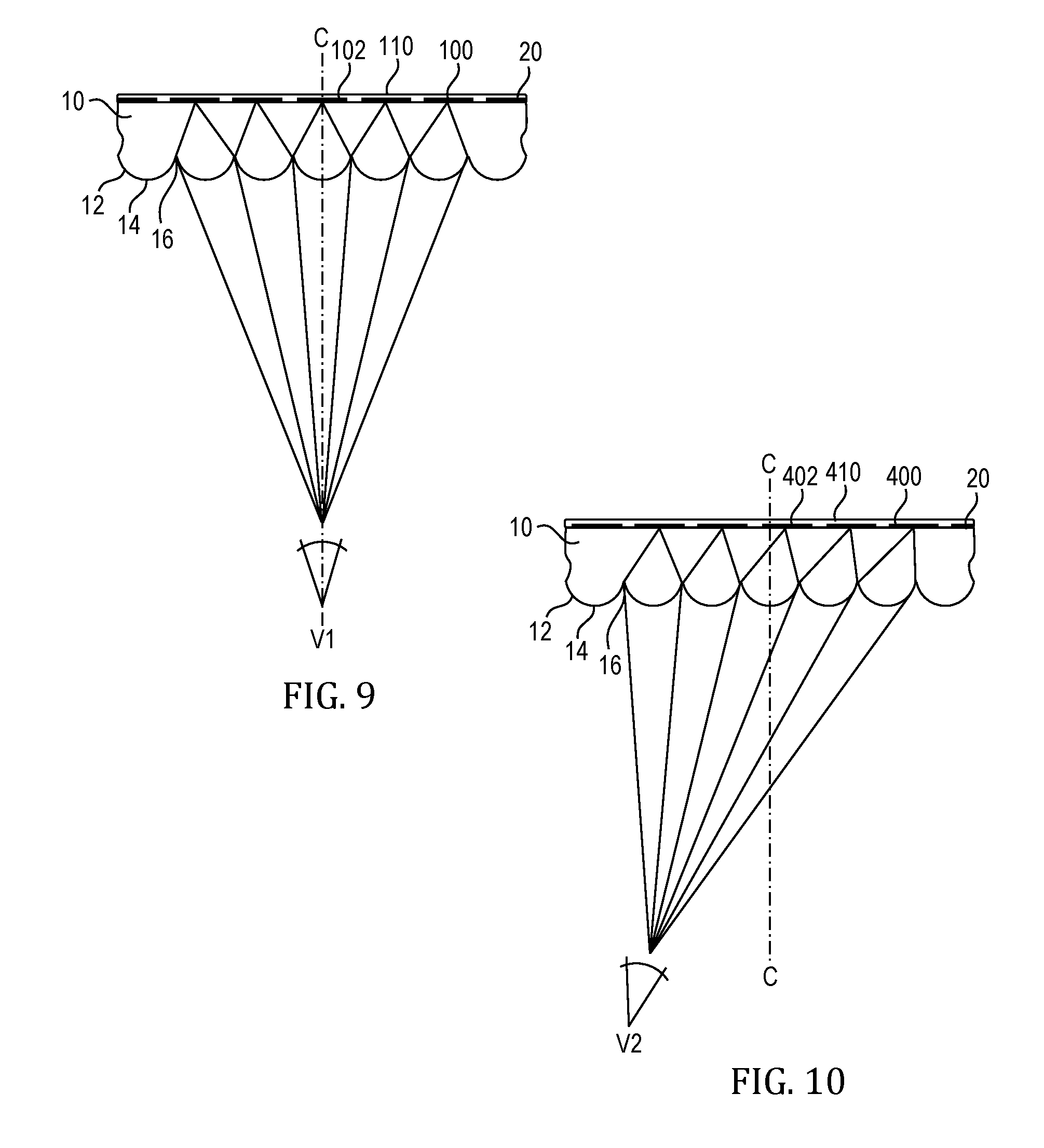
A lenticular print is two layers in close contact: a clear plastic sheet of tiny cylindrical lenses on top, and an interlaced image on the bottom. The illusion only works if those two layers are aligned to within a fraction of the lens pitch. A slight rotation produces a diagonal break across the image; a slight shift moves the apparent center of the effect from print to print. As lens pitches get finer, the tolerances get brutal.
The standard fix is a mechanical jig — a grooved cylinder or fluted roller that matches one specific lens pitch. Switching to a different lens means switching hardware. Worse, those jigs assume an ideal lens pitch, and real lens sheets have manufacturing variation that the jig can’t accommodate, so small errors compound across a large print.
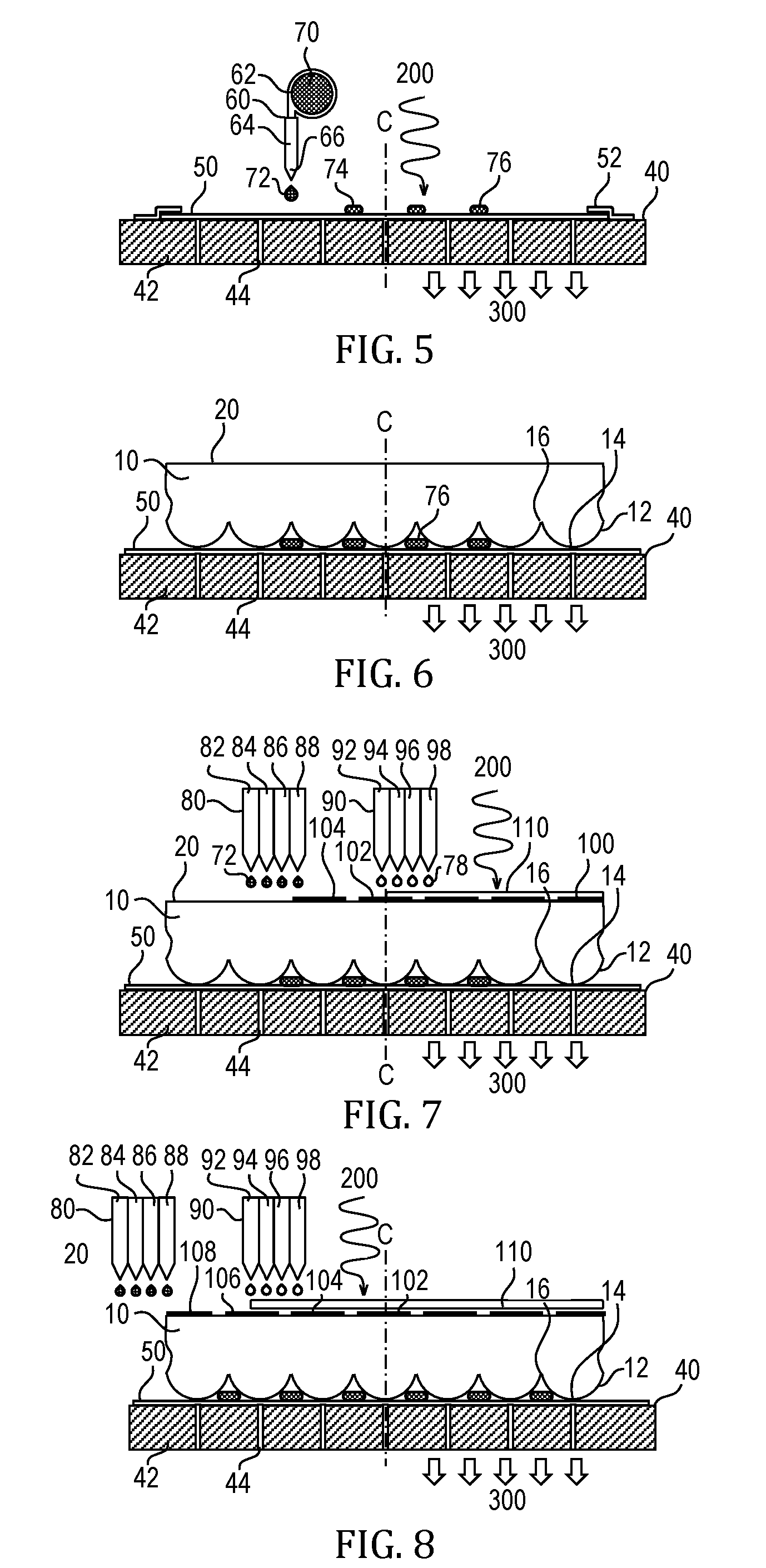
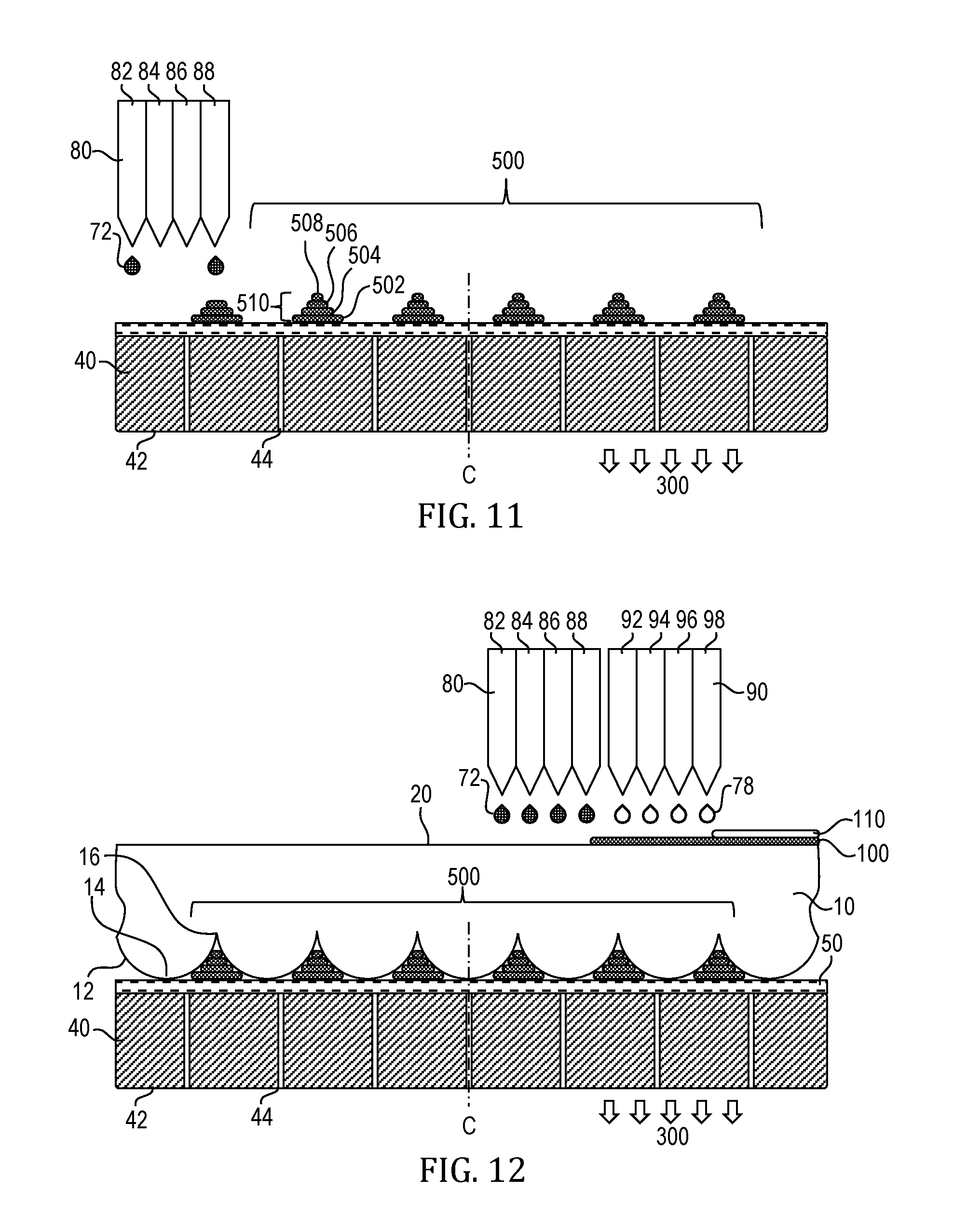
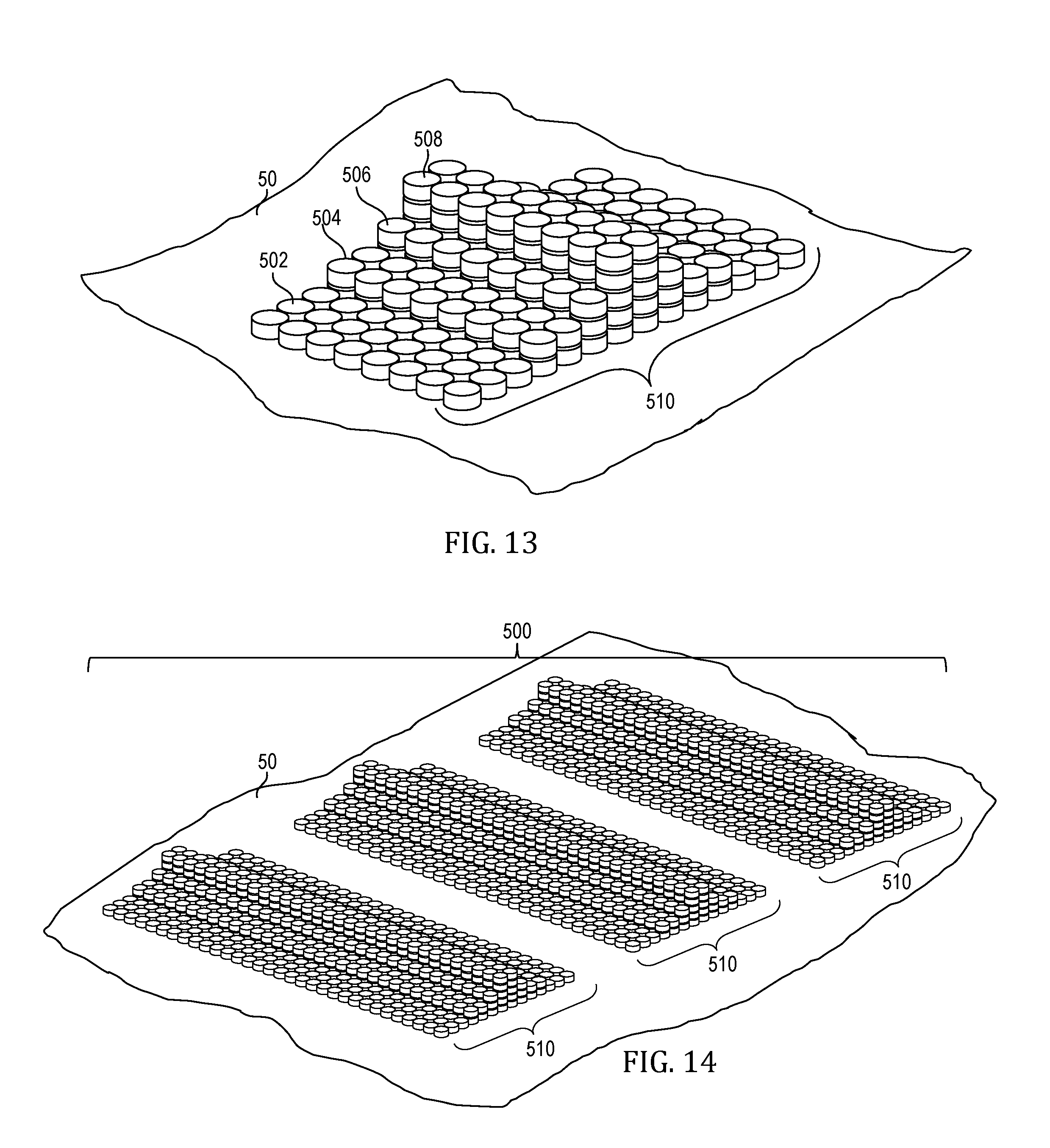
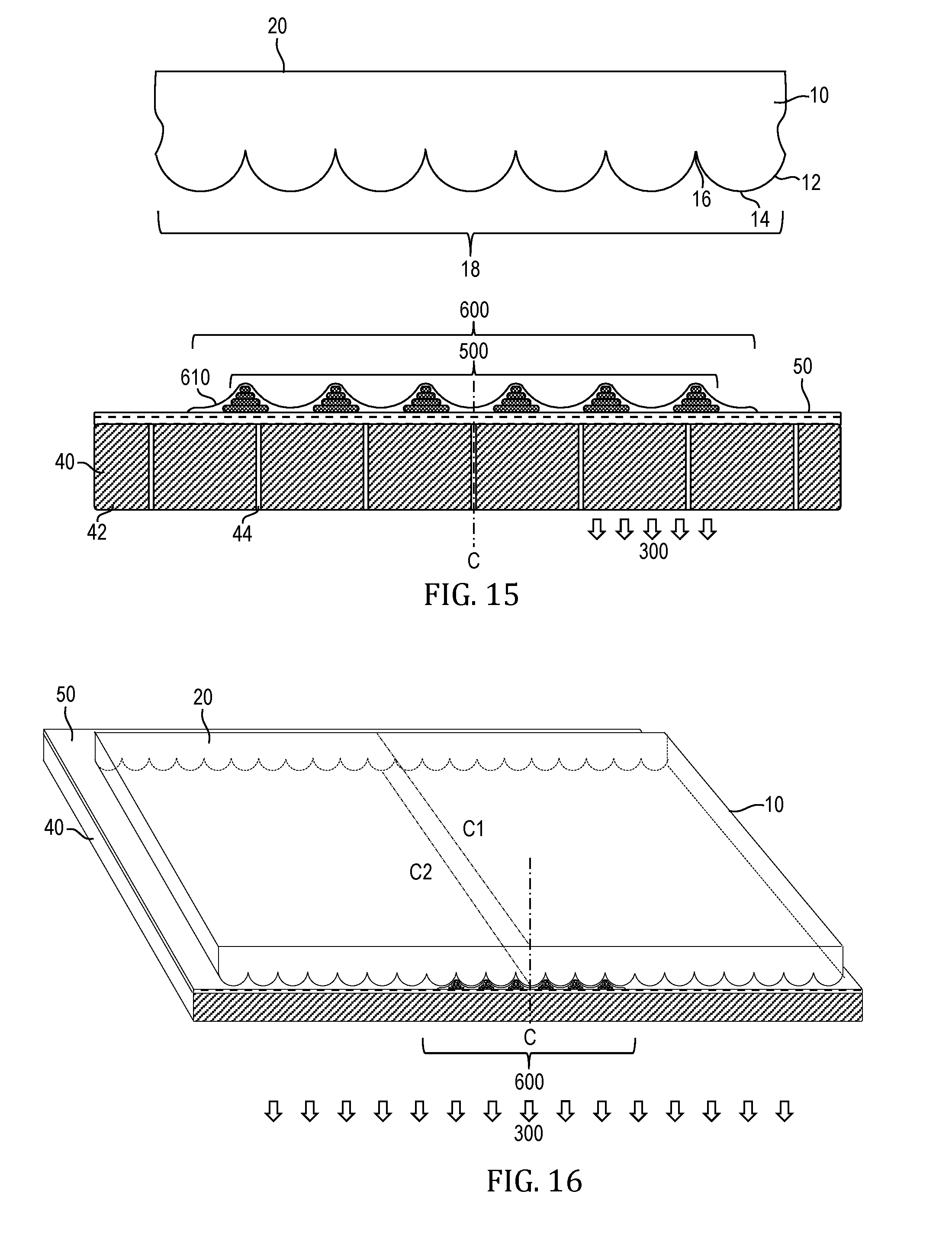
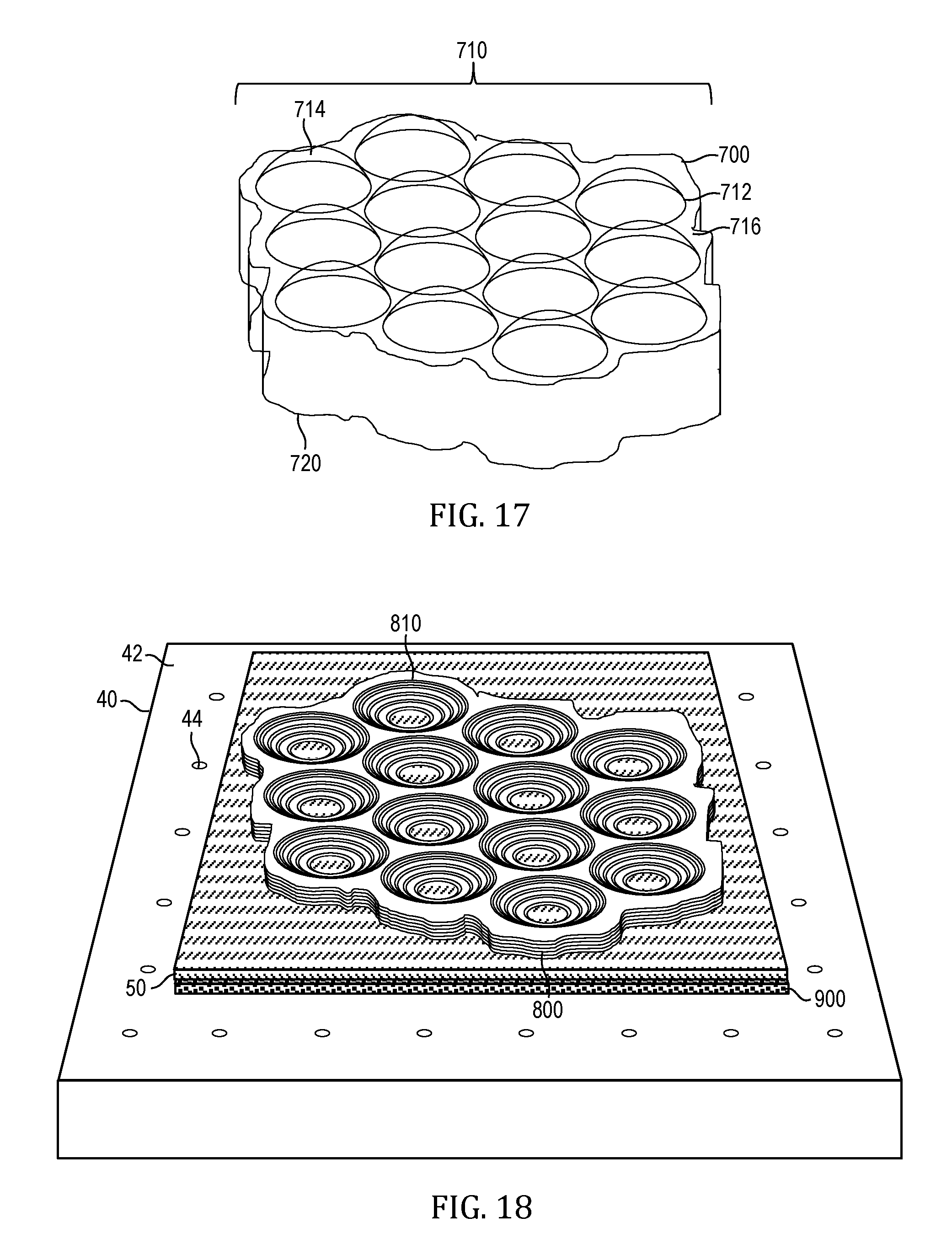
This patent throws the jig out and uses the printer itself. Before printing the image, the printer lays down raised relief lines in UV-curable ink, spaced to match the actual measured pitch of the lens valleys on the specific sheet about to be aligned. The lenticular sheet is then placed lens-side-down onto those ridges, and the lenses self-seat into the valleys — mechanically centering the sheet to the same printhead that will lay down the image. Because the alignment ridges follow the printer’s own real path rather than a nominal ideal, manufacturing imperfections in both the printer and the lens sheet cancel rather than compound. Any lens pitch can be supported without custom hardware, finer pitches become viable, and large-format flexible lenticulars can be rolled and shipped instead of crated flat.
Figures