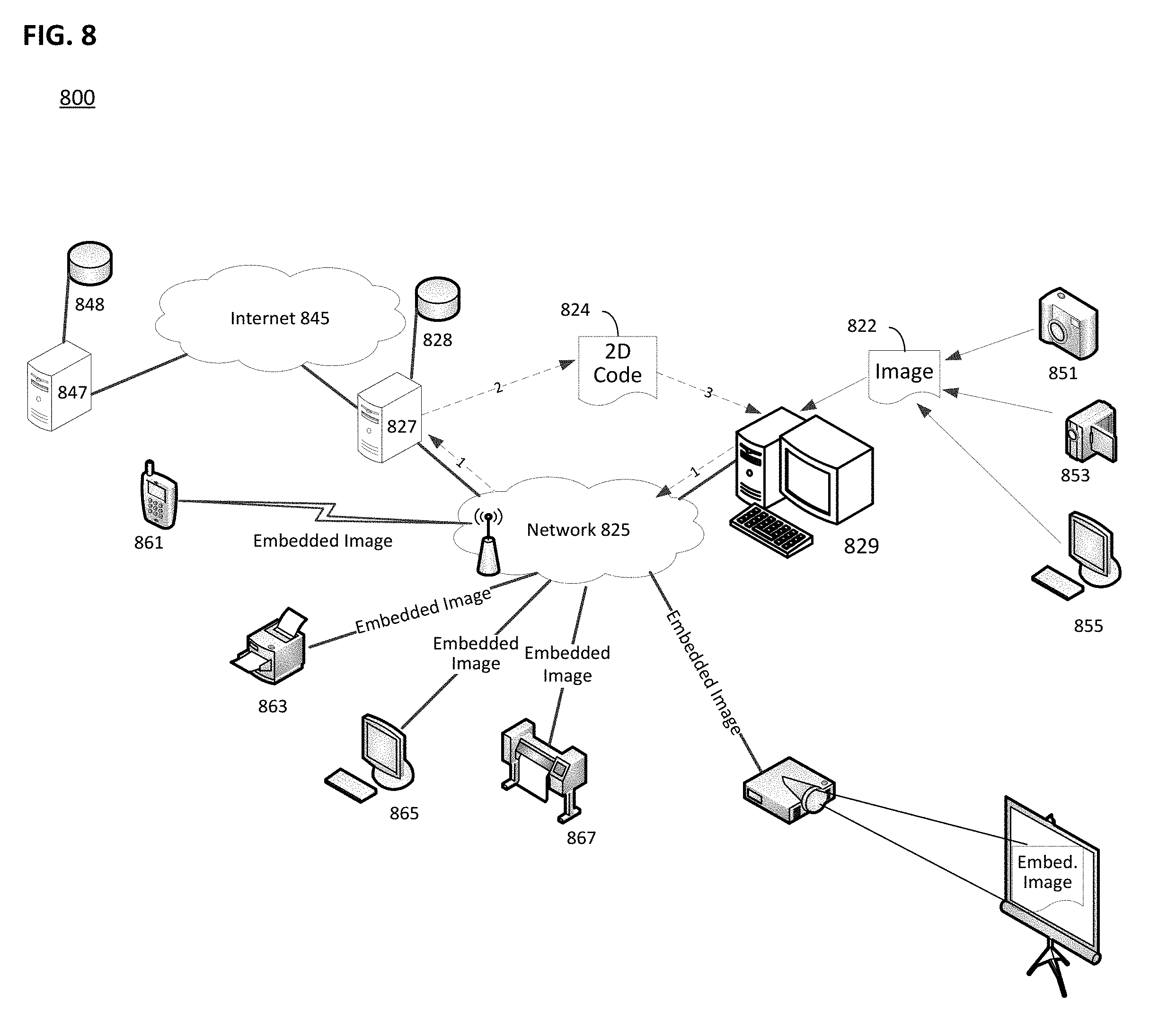
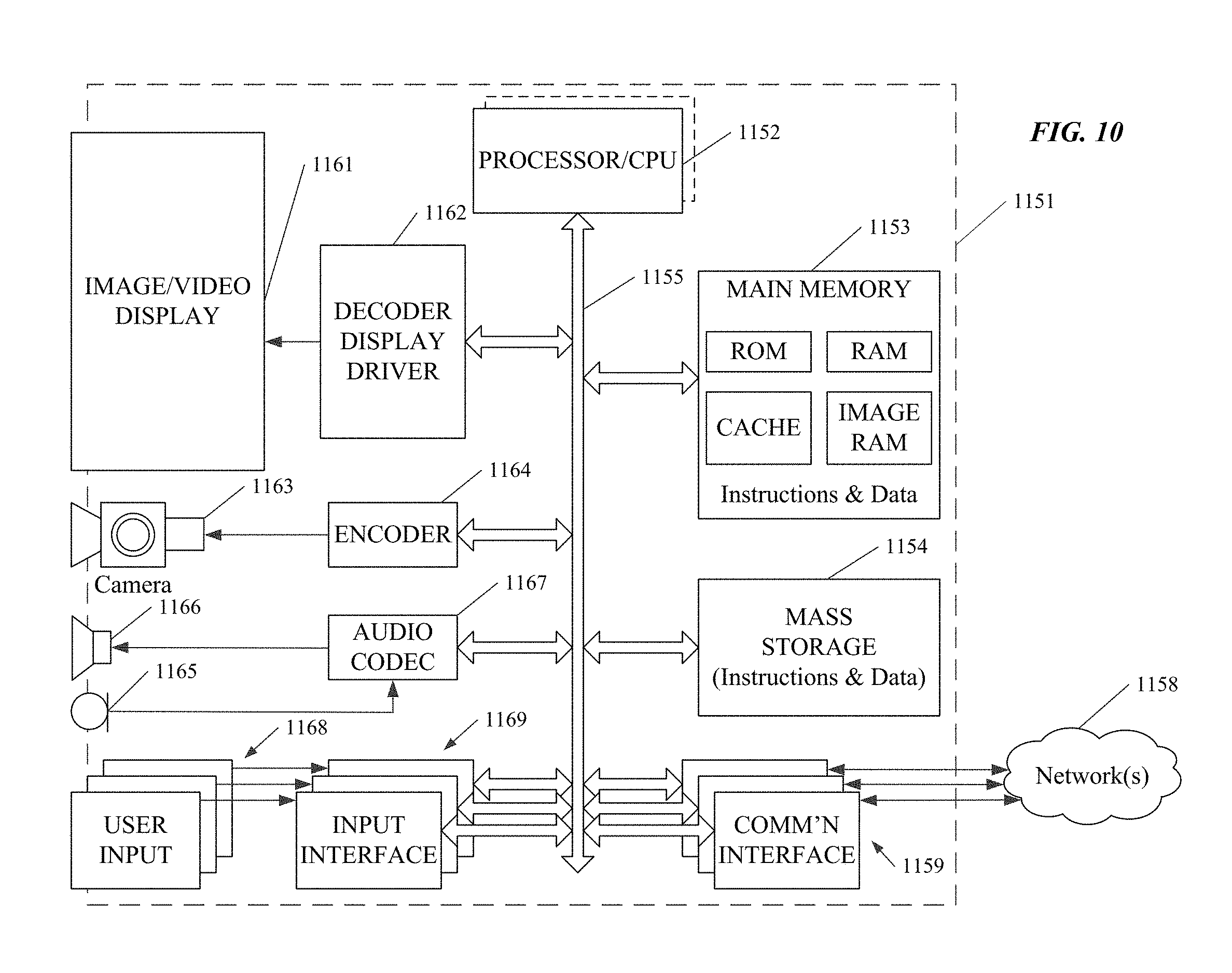
System and method for embedding of a two dimensional code with an image
Summary
A standard QR code is a square of stark black and white modules. It is excellent at carrying information — a phone camera can pull a URL out of it from across a room — but it is aesthetically jarring. Brands and designers want to put scannable codes on packaging, advertising, and printed collateral without sacrificing the image they spent money producing.
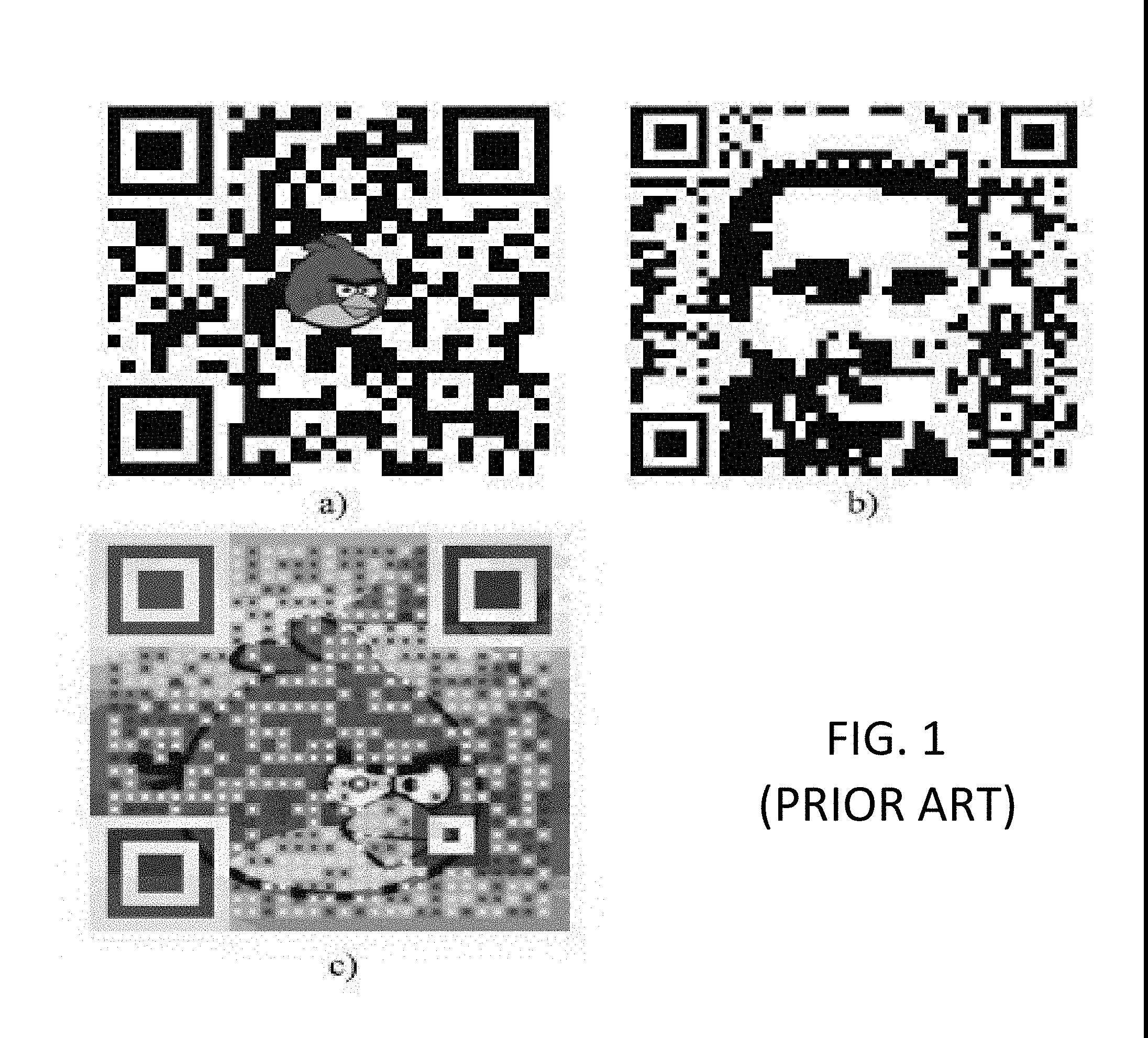
Earlier attempts at “pretty” QR codes mostly fell into two camps. One was to overlay the code onto an image and rely on the QR error-correction layer to recover the parts the image covered — which works only at low coverage and produces a coarse, blocky look. The other was to nudge the brightness at the center of each QR module toward the image’s underlying color, which preserves more of the photograph but leaves the QR’s blocky structure plainly visible.
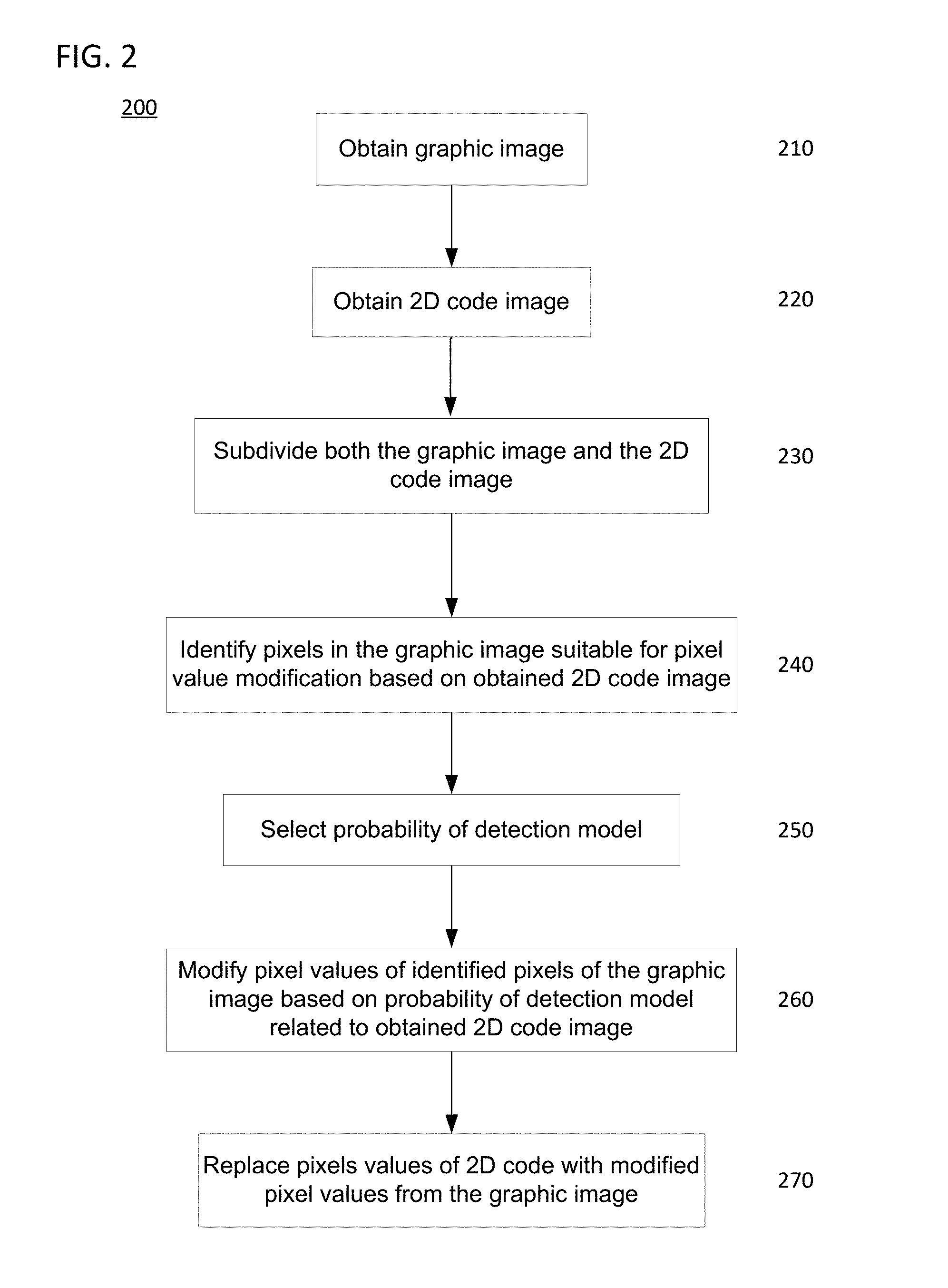
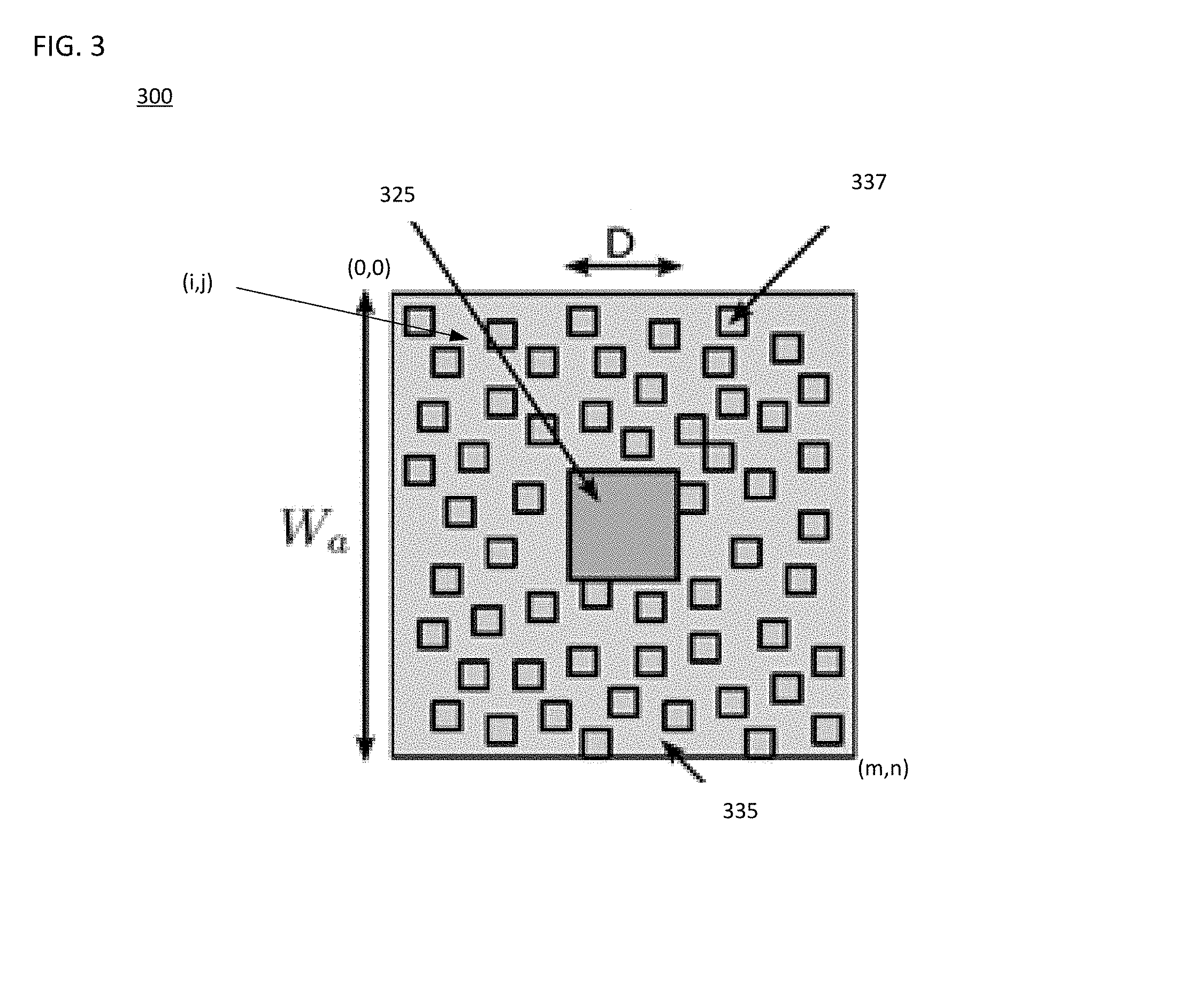
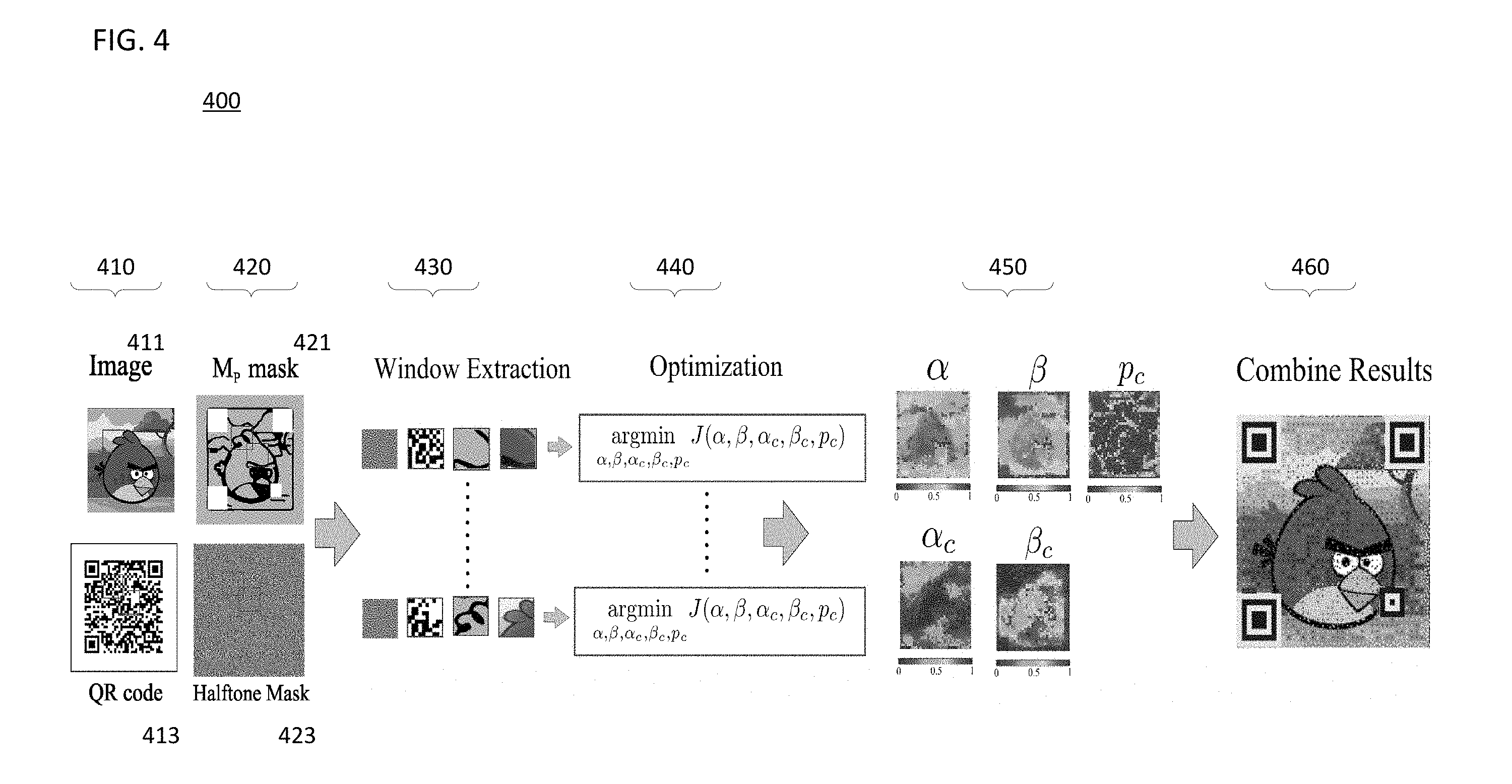
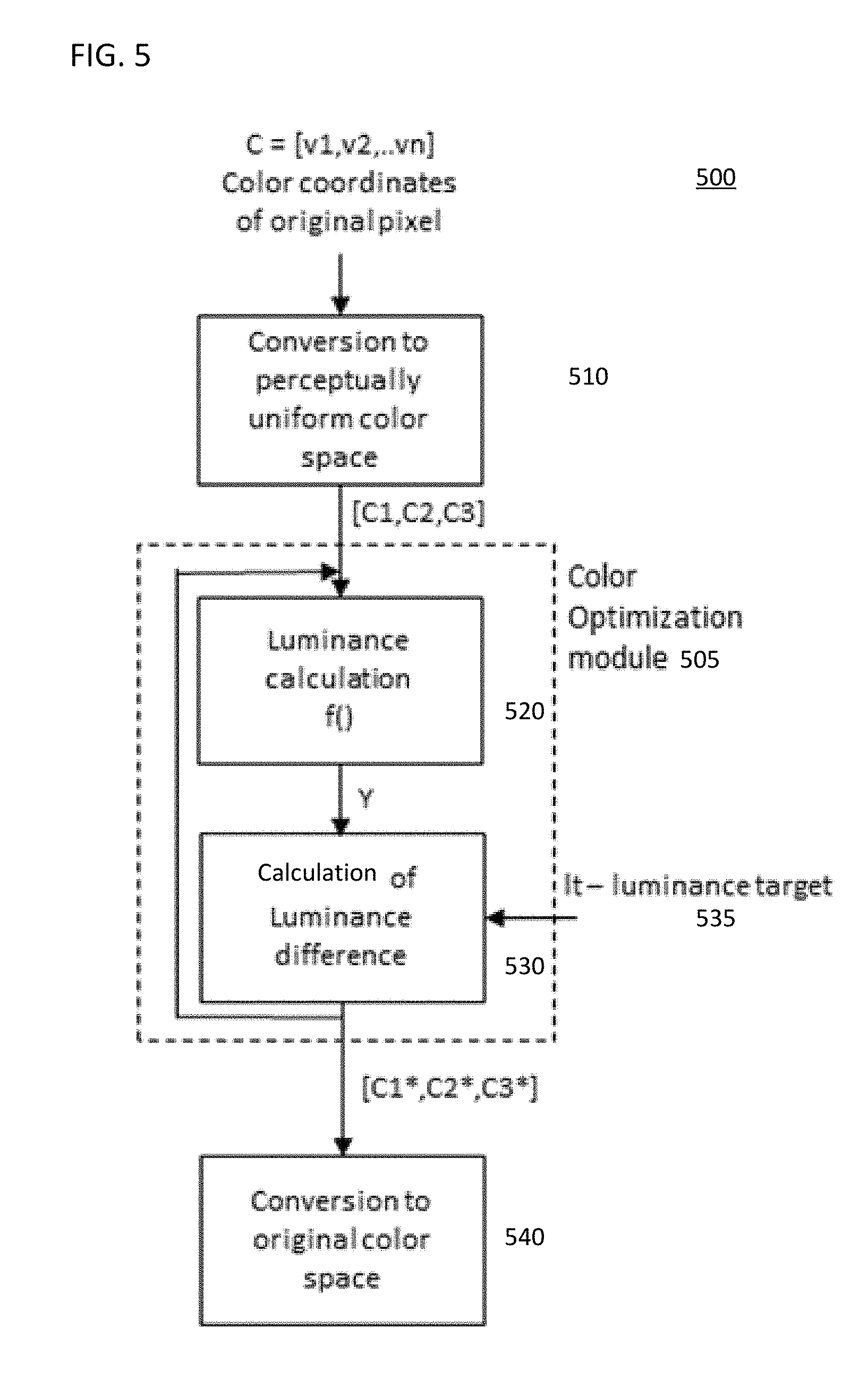
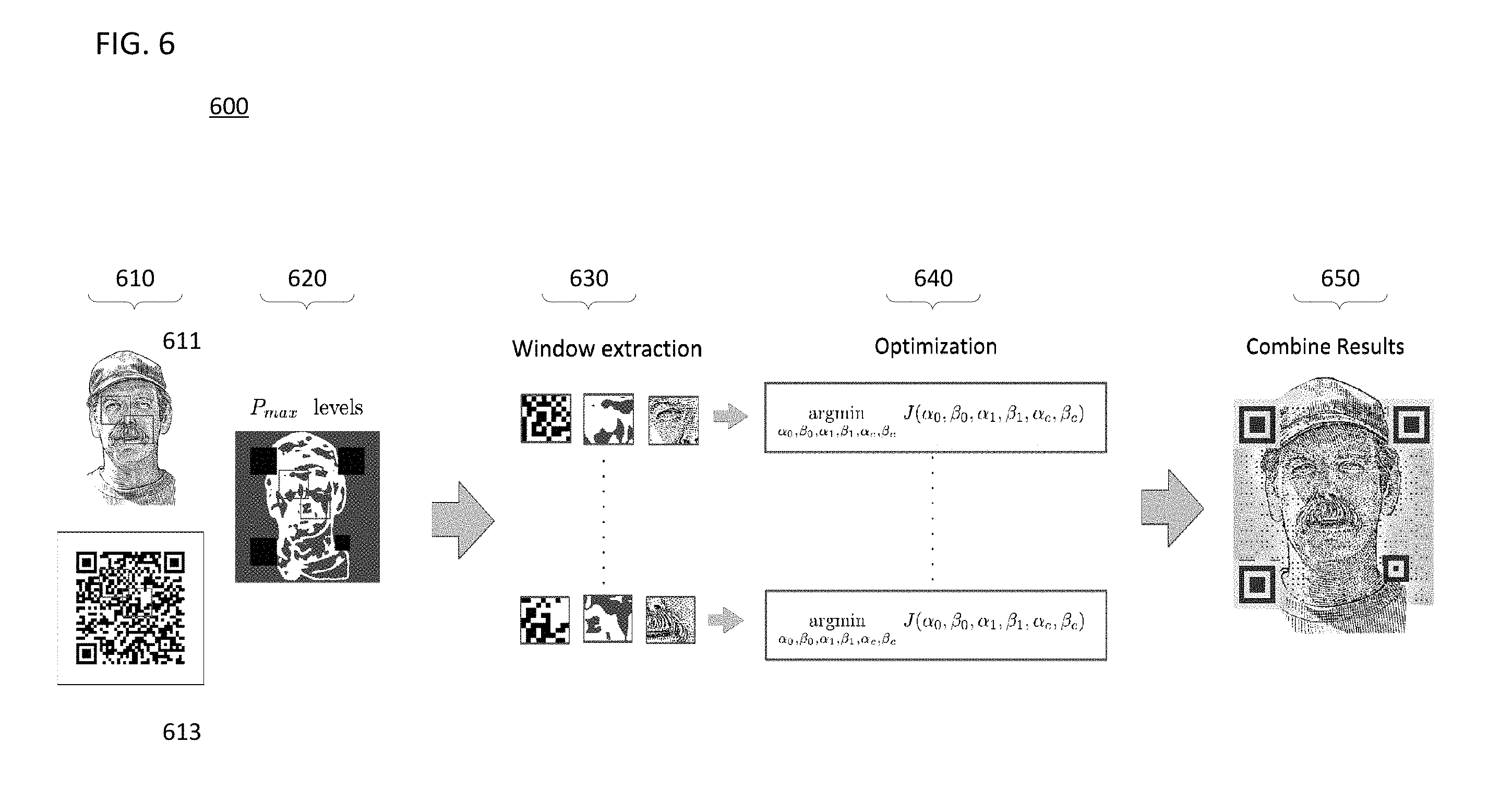
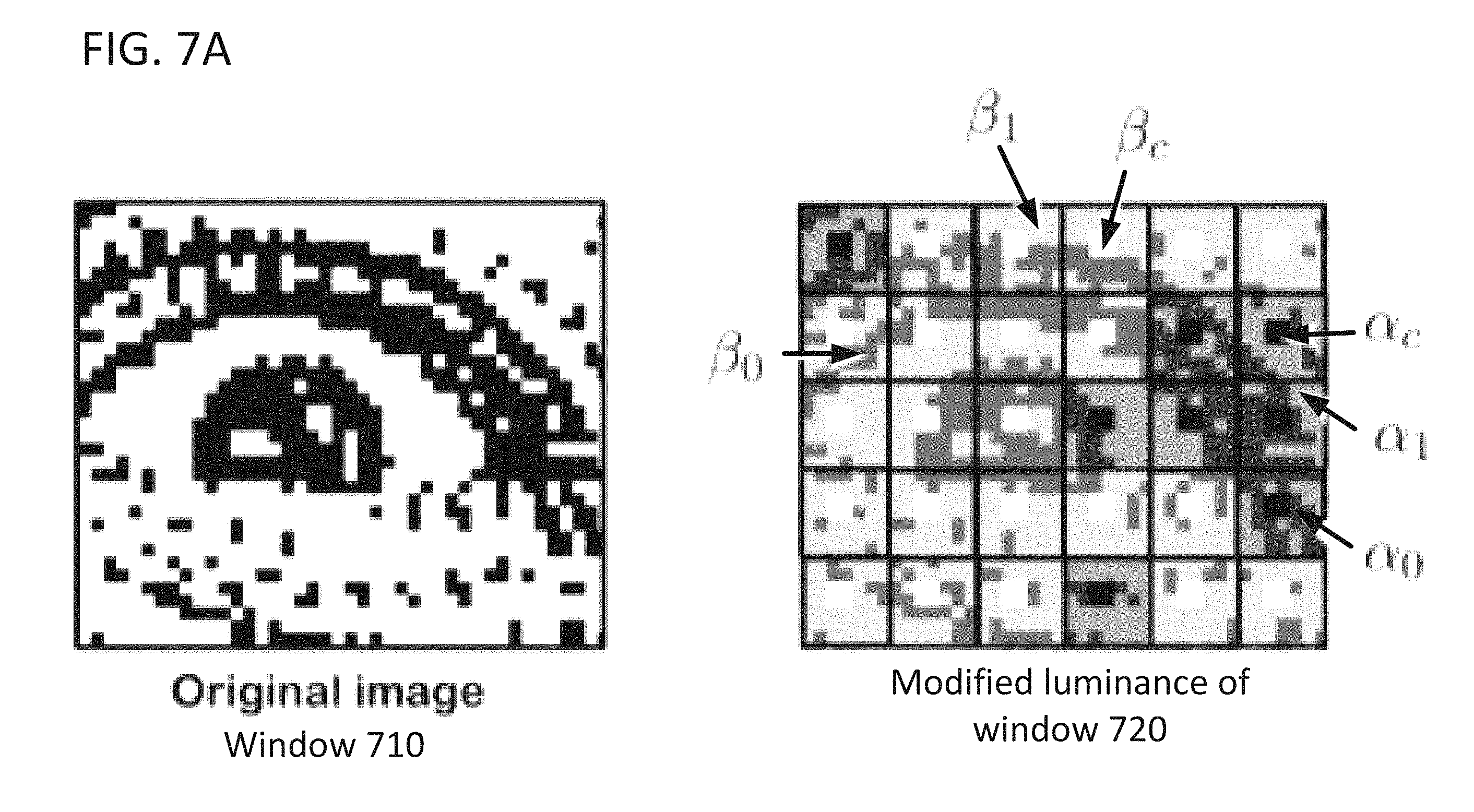
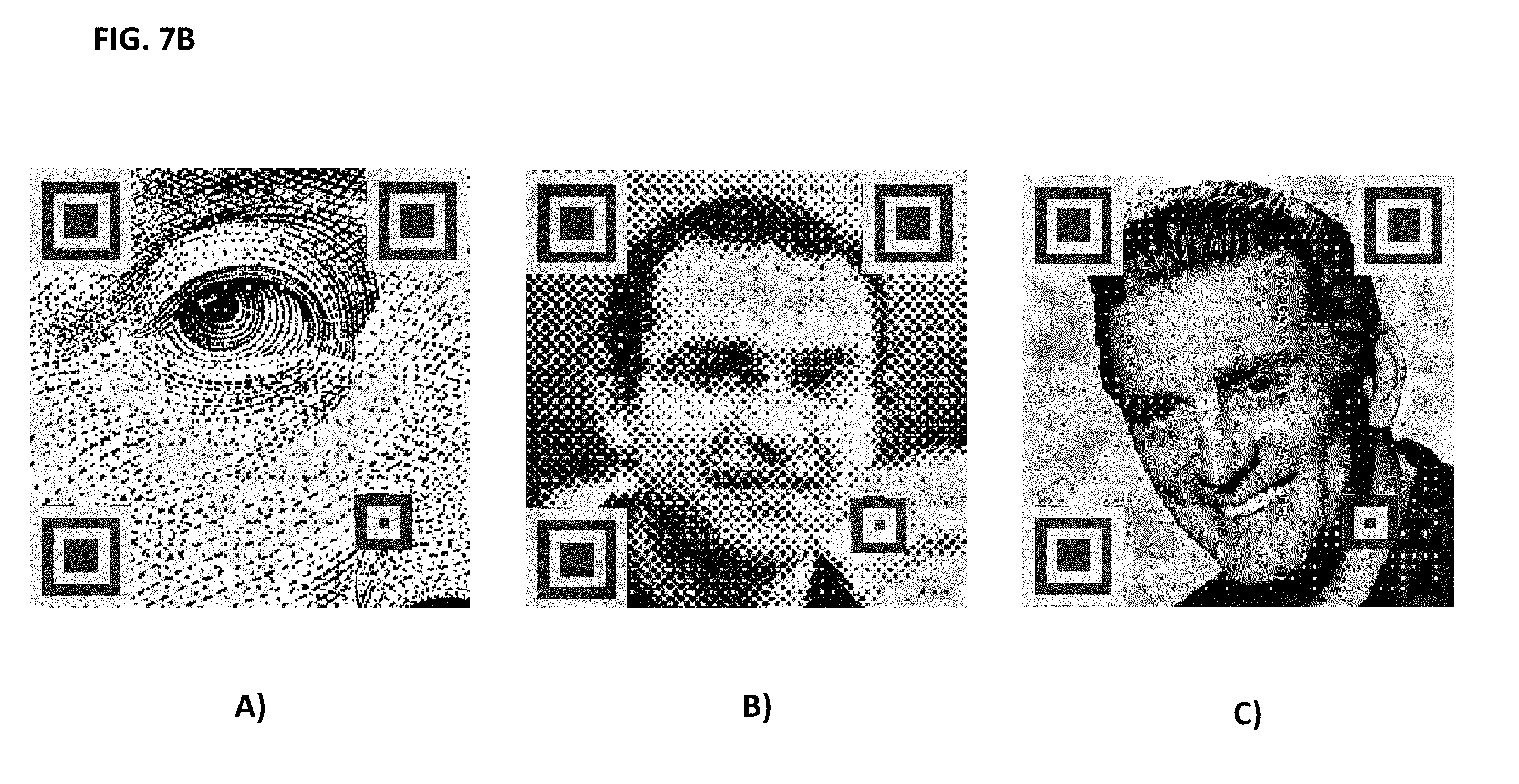
This patent treats the embedding as a constrained optimization. Every pixel of the host image is a knob, and a halftone-like mask identifies which pixels are good candidates to modify within each QR module — the eye is much more tolerant of changes in some places than in others. The optimizer adjusts those pixels to minimize the visible deviation from the original image, subject to a hard constraint that the probability of a QR decoding error stays below a chosen threshold. The result is a code that essentially disappears into the host image at normal viewing distance, yet still scans reliably with an ordinary phone camera — usable for marketing, packaging, and brand-aware print.
Figures