Lenticular product having a radial lenticular blending effect
Summary
Lenticular prints — the kind that change as you tilt them — have been used for decades to show simple flips, depth effects, or zooms. A classic application is the group photo that zooms in to a single person as you turn the print. The catch is that the standard zoom workflow demands a single very-high-resolution source image and precise manual targeting of the subject inside it, neither of which a normal portrait photographer reliably supplies.
What photographers actually capture is two separate images: a group shot and an individual portrait. There has been no clean way to stitch those two unrelated frames into a single tilt-and-zoom lenticular without obvious seams or hard cutovers.
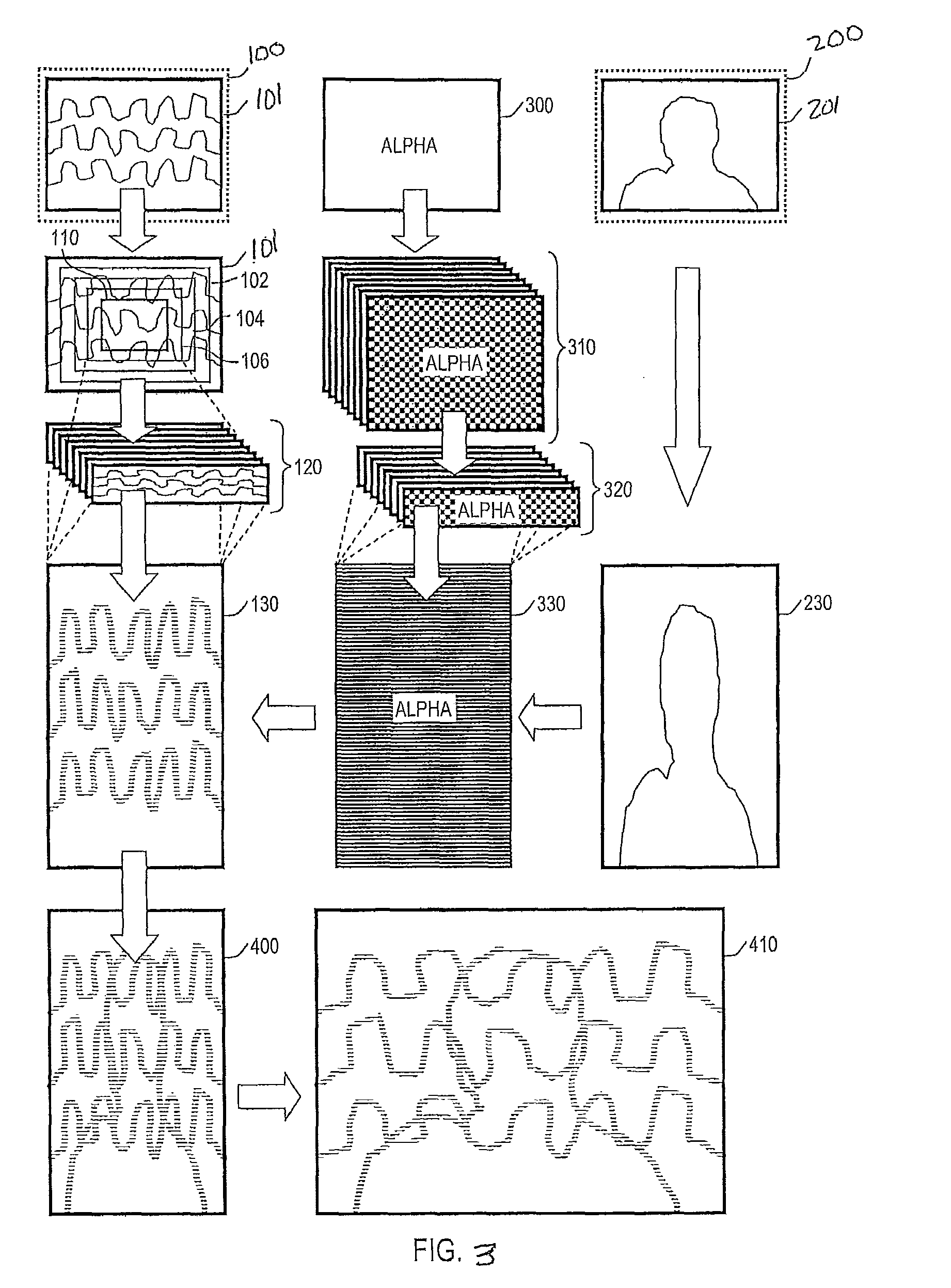
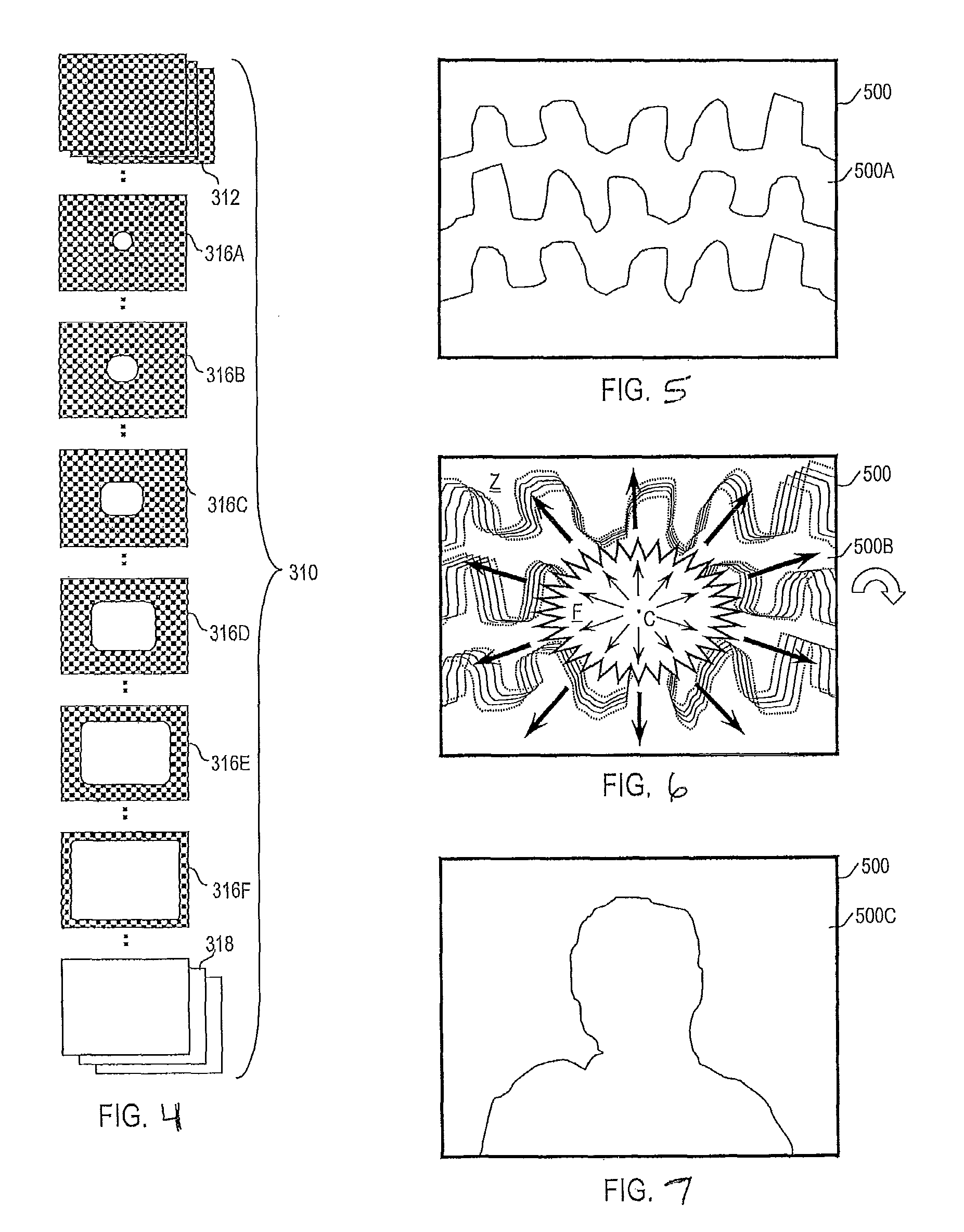
This patent introduces a radial rotation effect that integrates a zoom with a complementary radial fade, both centered on the same point. As the viewer tilts the print, the group photo zooms inward while the individual portrait simultaneously fades in from the center outward through a soft, vignette-like boundary. The blend uses an alpha-channel mask interlaced under the lens array, with a gradient that can be tuned from a smooth wash to a hard edge. The result is a polished team-portrait or family-photo product that works directly from the two images a photographer naturally shoots, without requiring custom retouching to identify or extract the focal subject.
Figures