Dual-frequency phase multiplexing (DFPM) and period coded phase measuring (PCPM) pattern strategies in 3-D structured light systems, and lookup table (LUT) based data processing
Summary
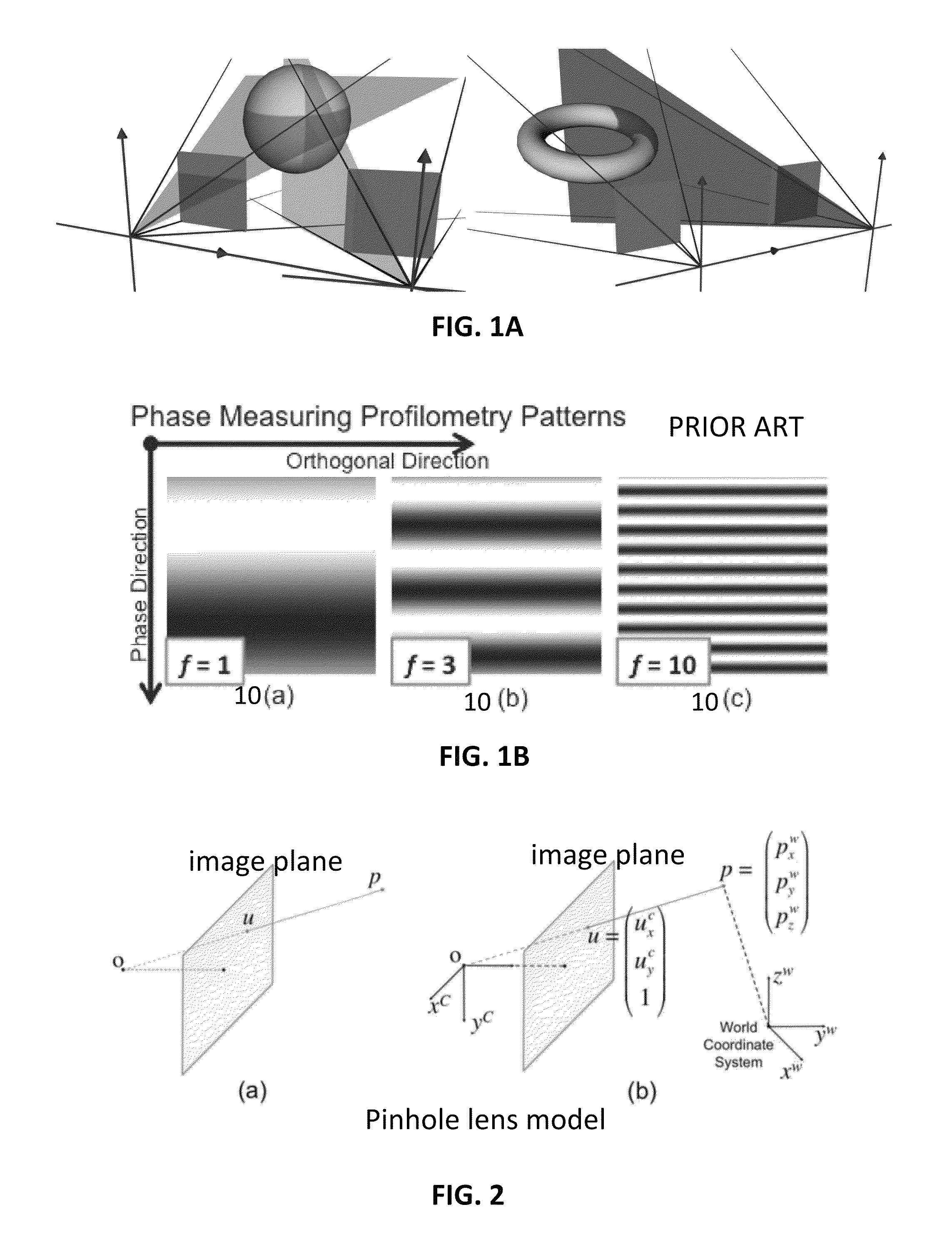
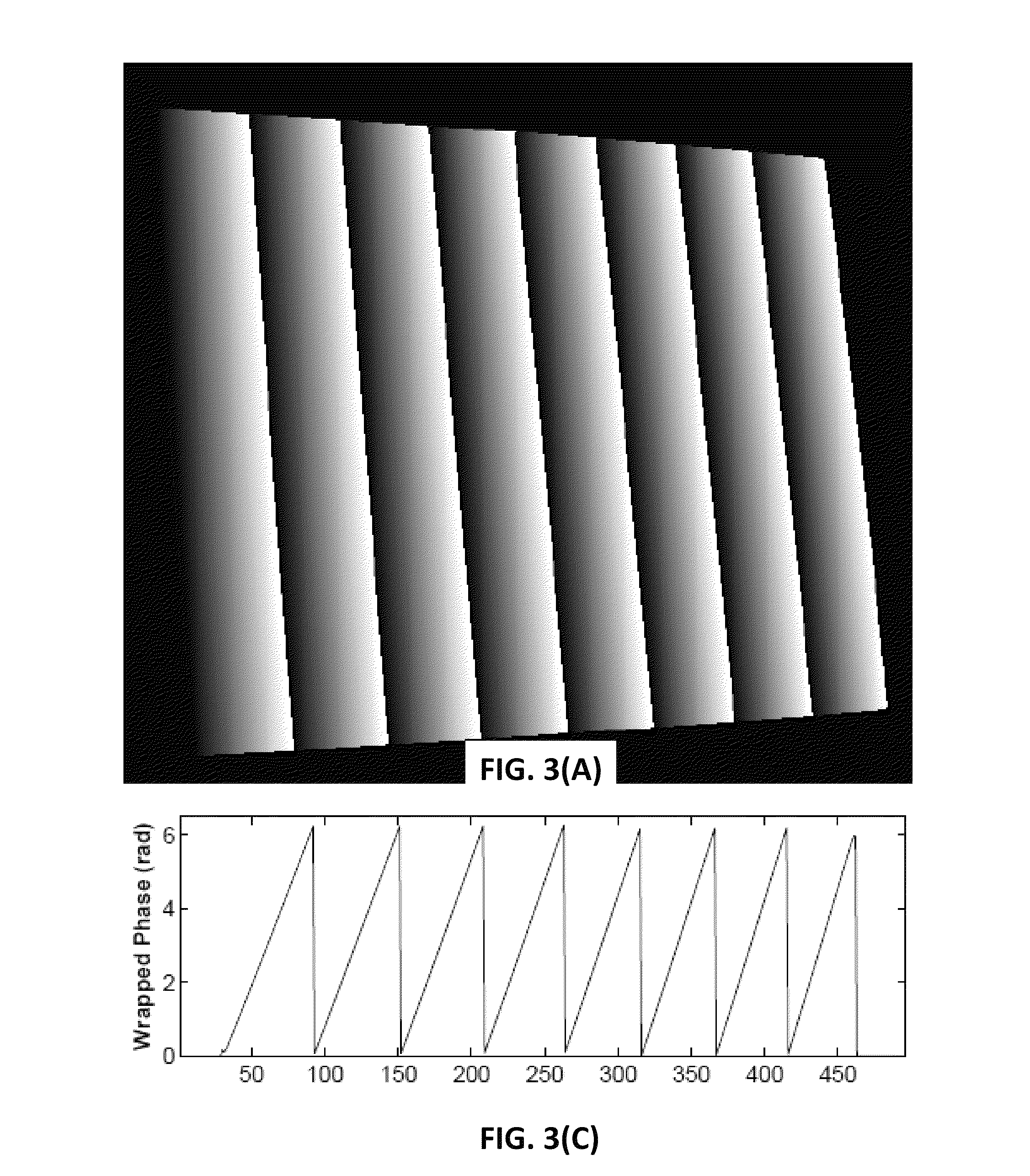
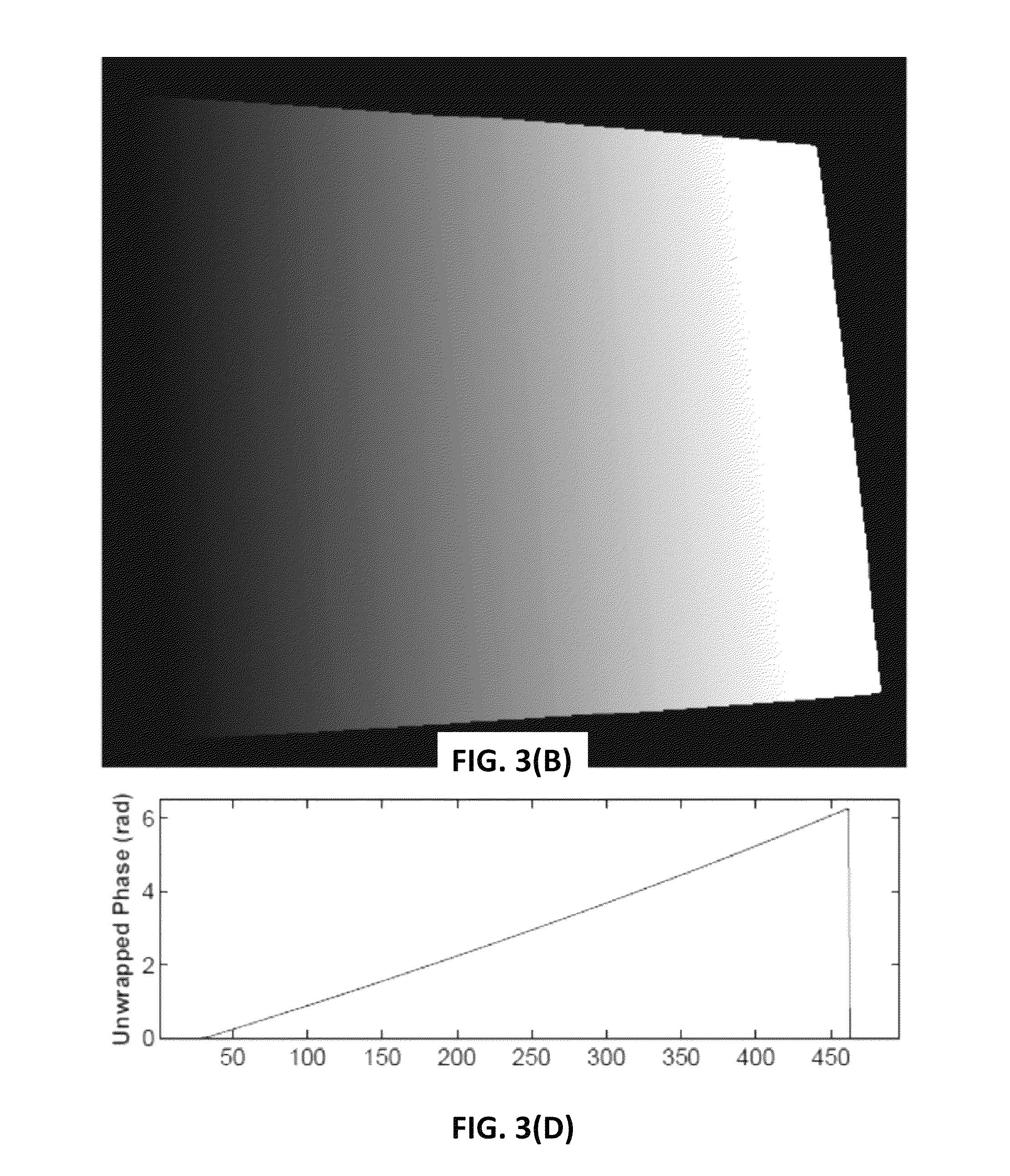
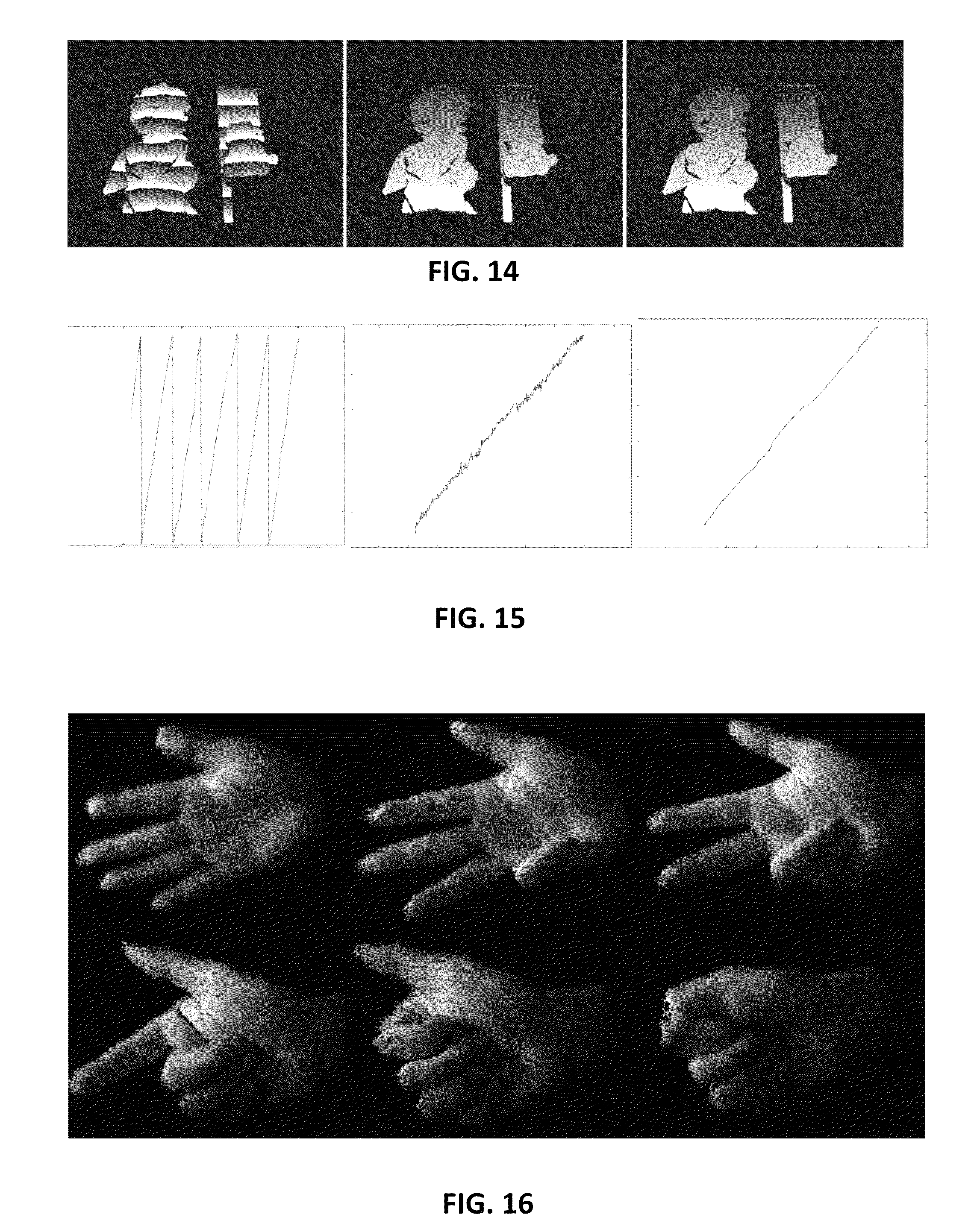
Structured-light scanners get more accurate as the projected pattern gets finer — narrower stripes resolve smaller surface detail. But fine patterns introduce ambiguity: every stripe in the camera image looks like every other stripe, and there is no way to tell which is which without help. Resolving that ambiguity — what the field calls “phase unwrapping” — is what makes high-resolution structured light slow.
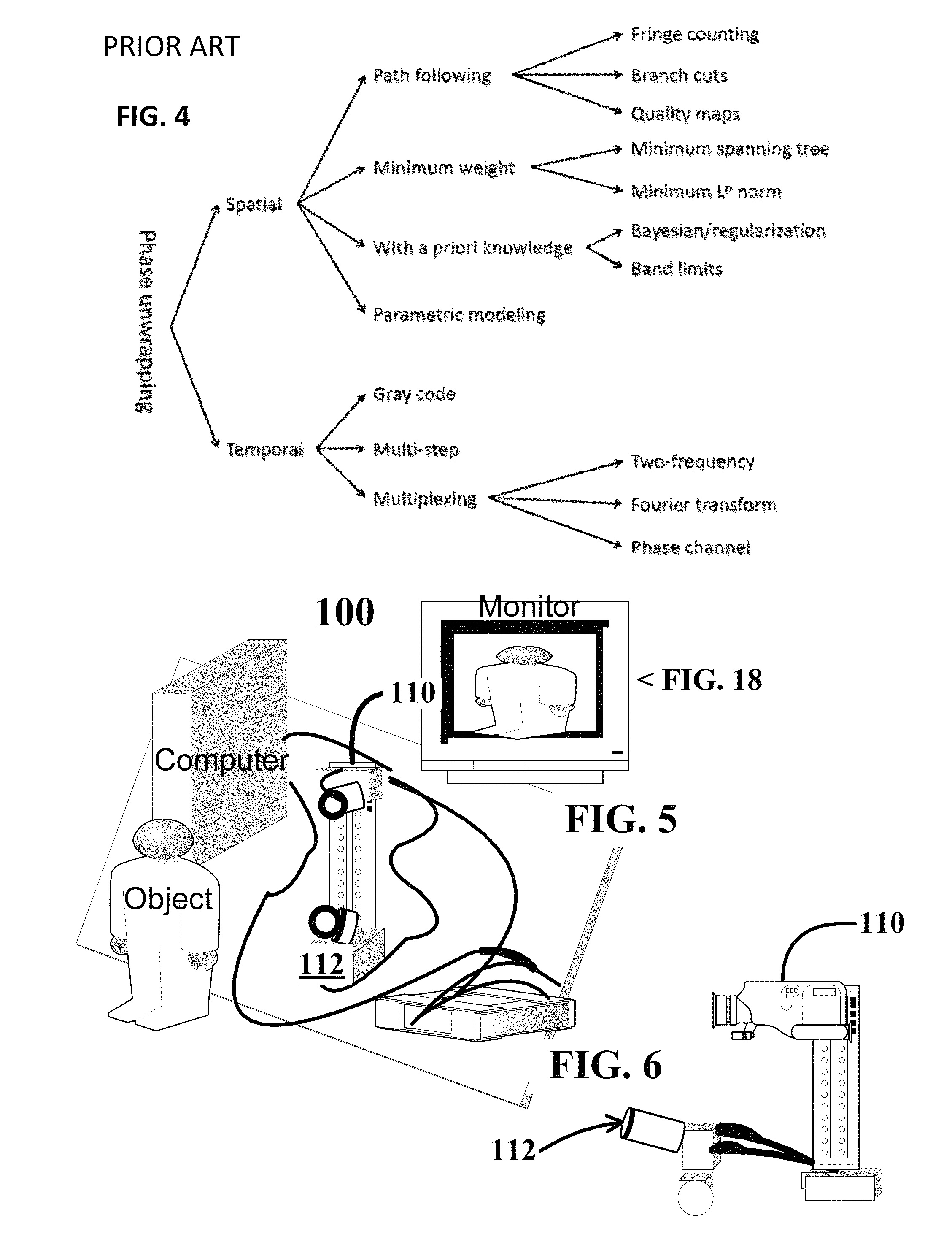
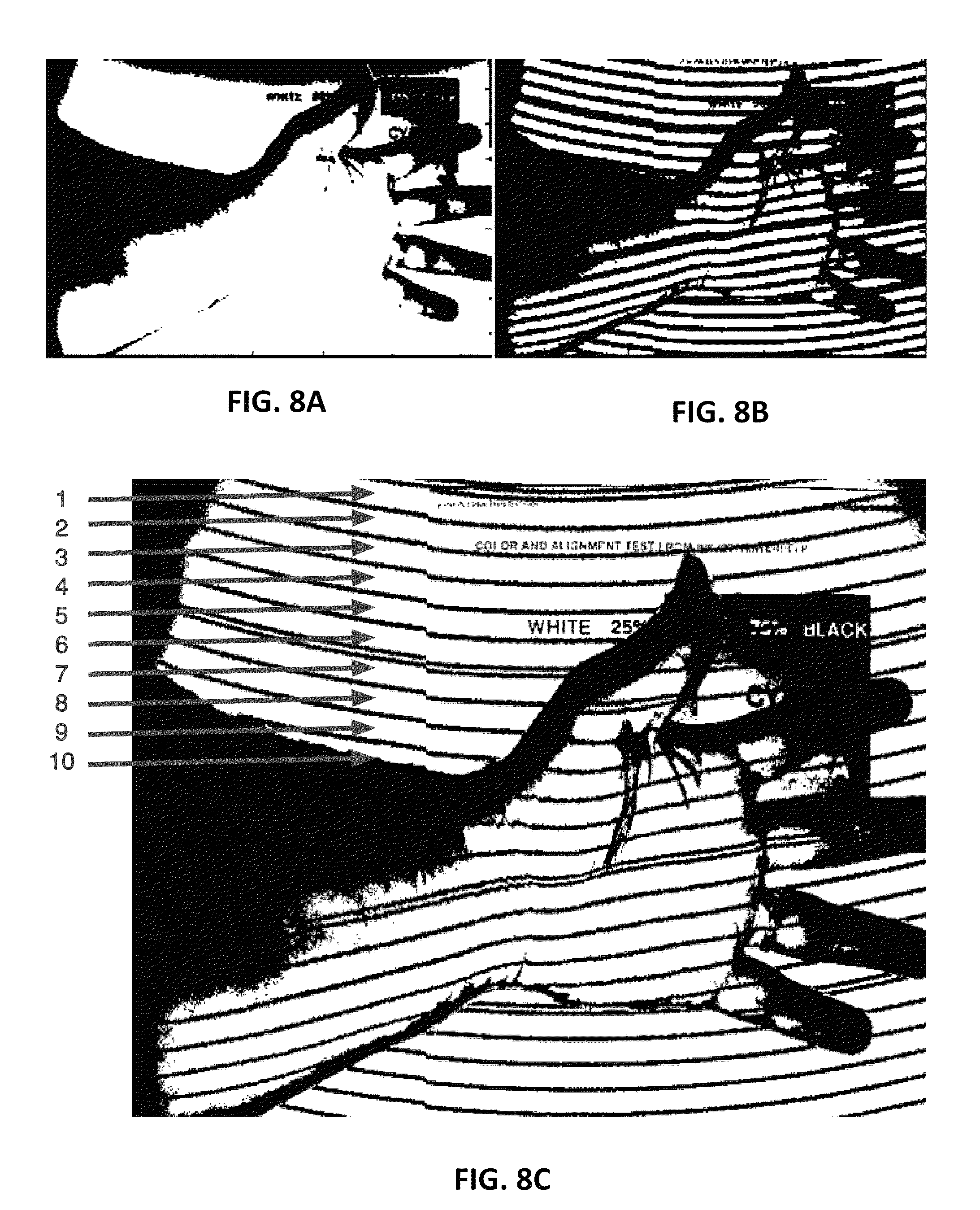
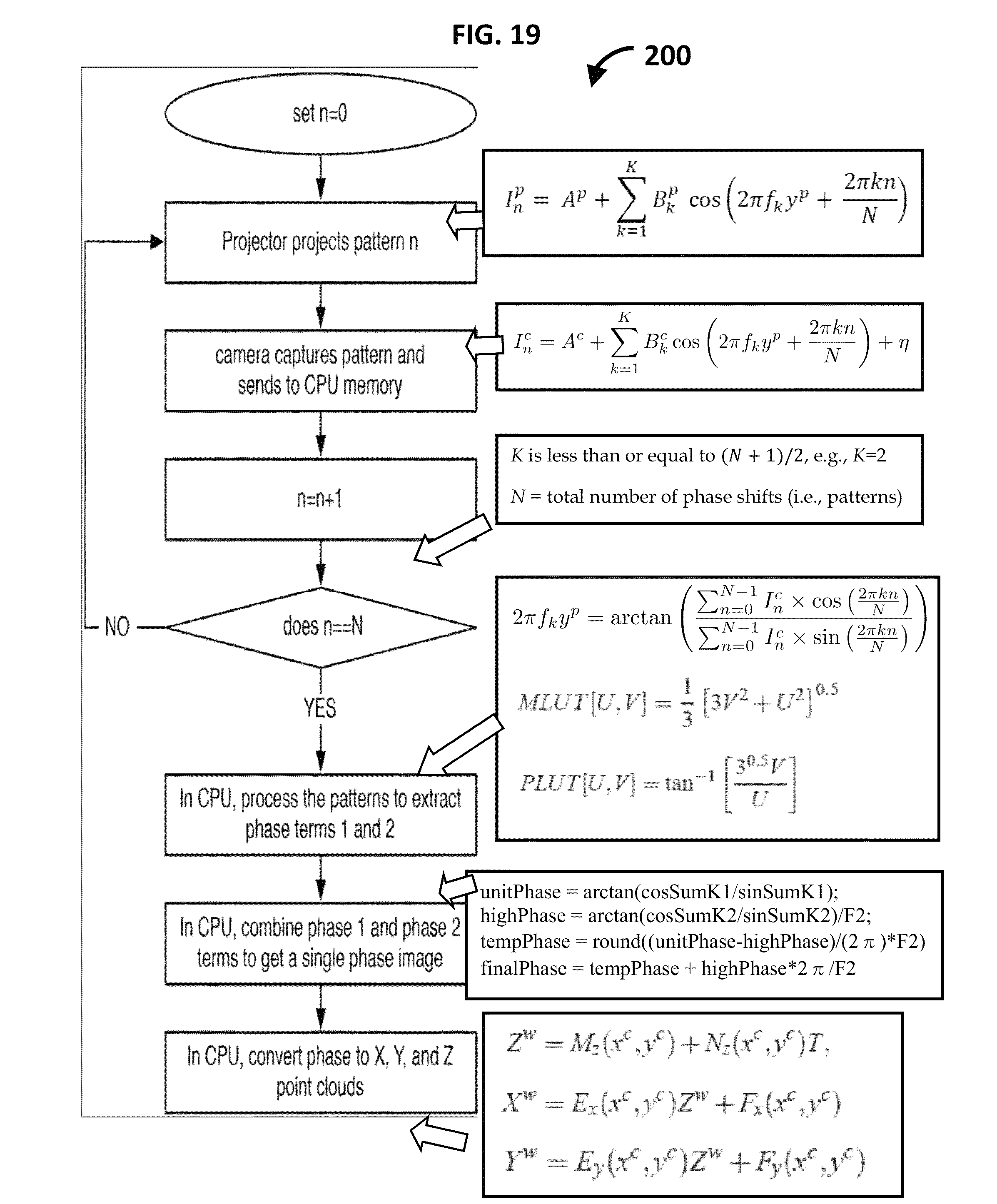
The standard fixes are imperfect. Spatial unwrapping assumes the surface is continuous and breaks at every edge or hole. Temporal unwrapping projects a sequence of extra patterns, but the sequence kills real-time performance. Even the pure mathematics — arctangents, matrix inversions — runs too slow per pixel to support live 3D video.
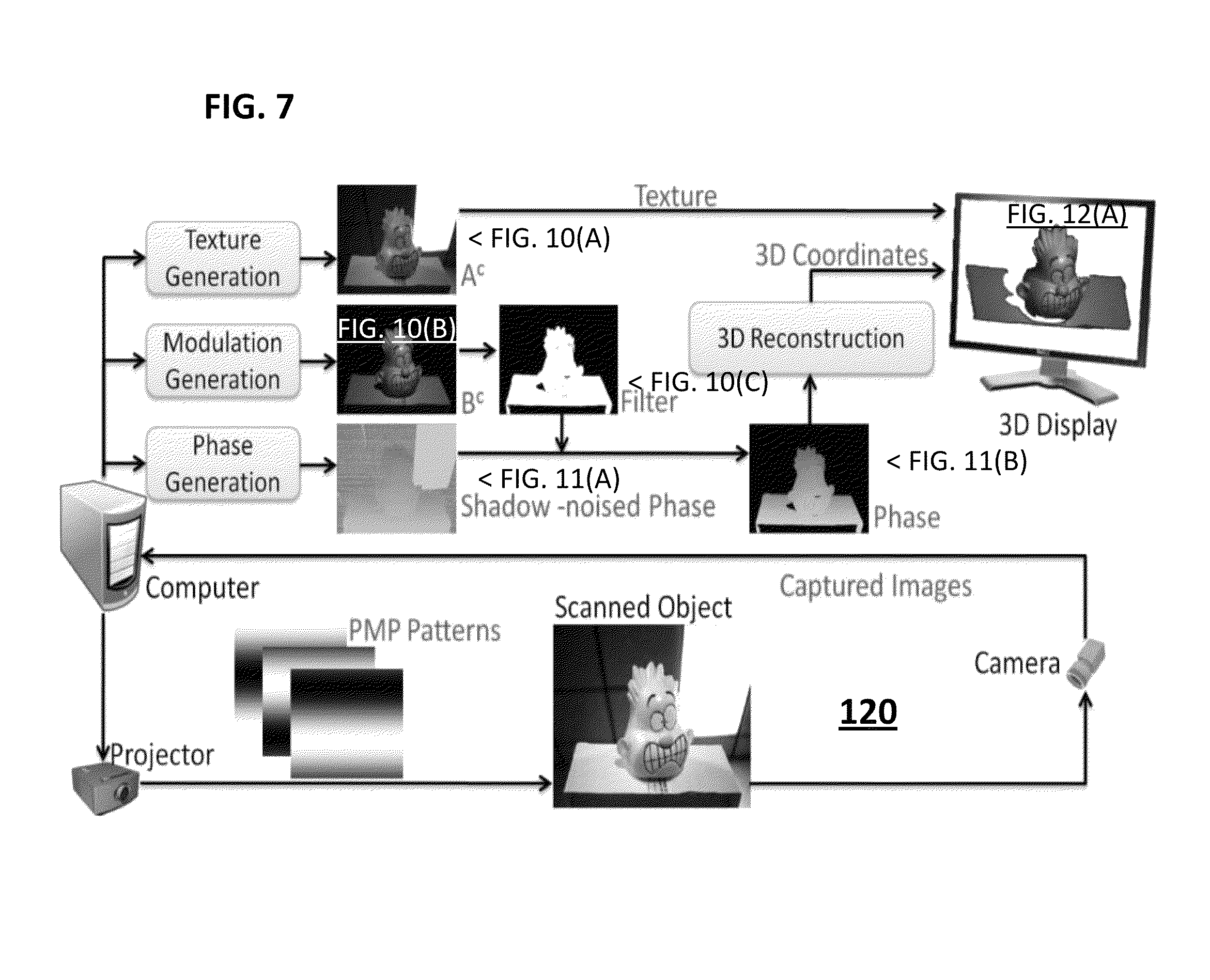
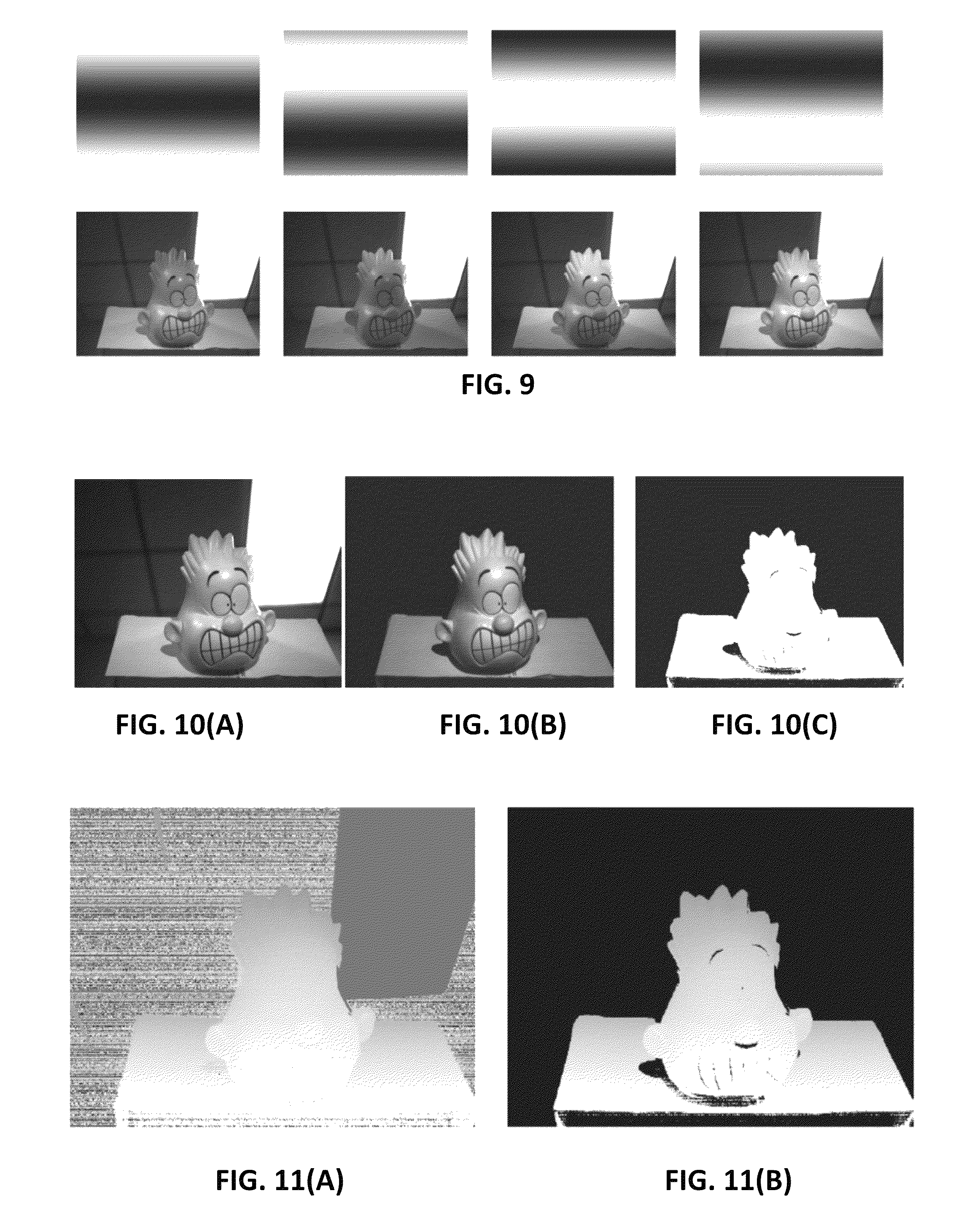
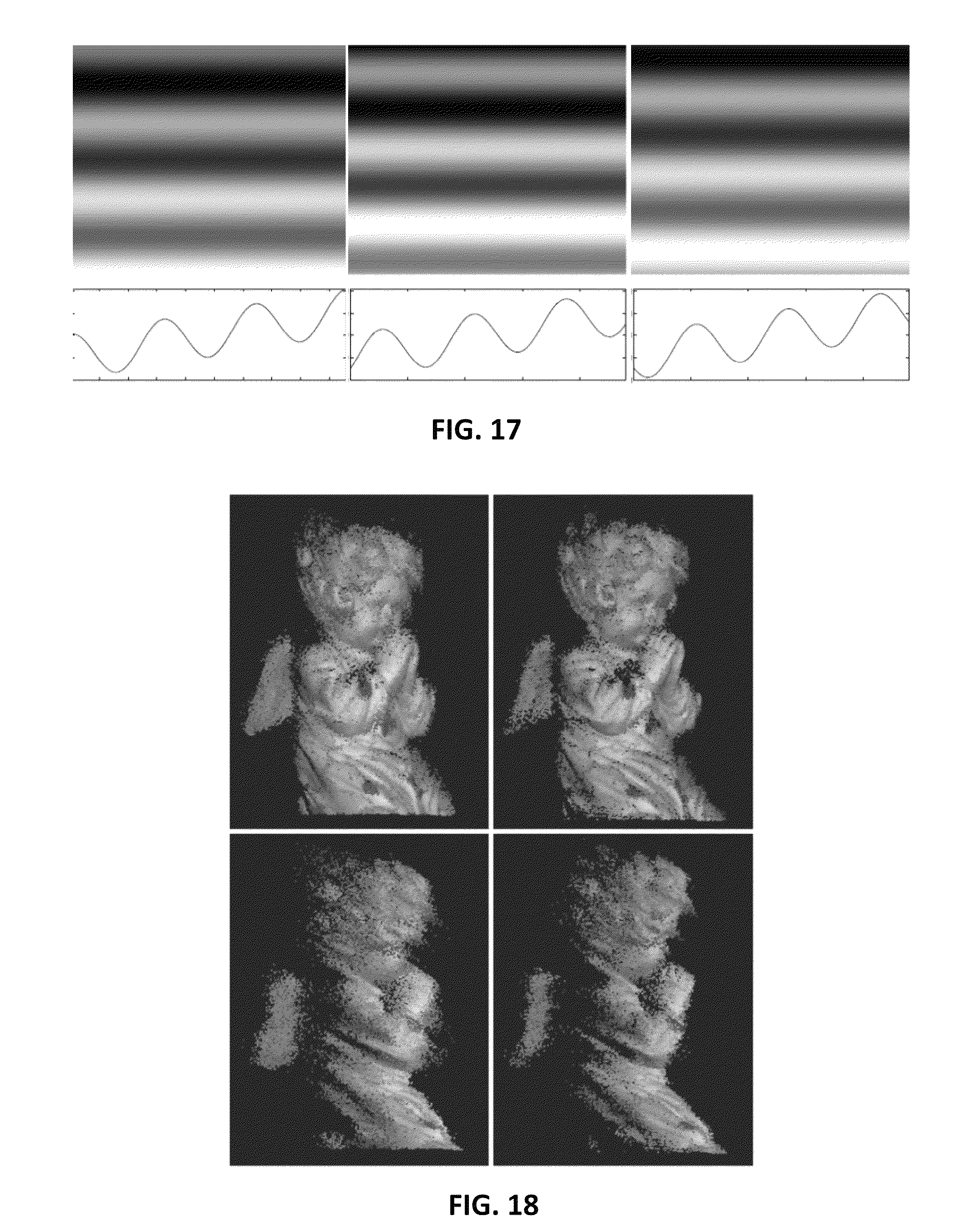
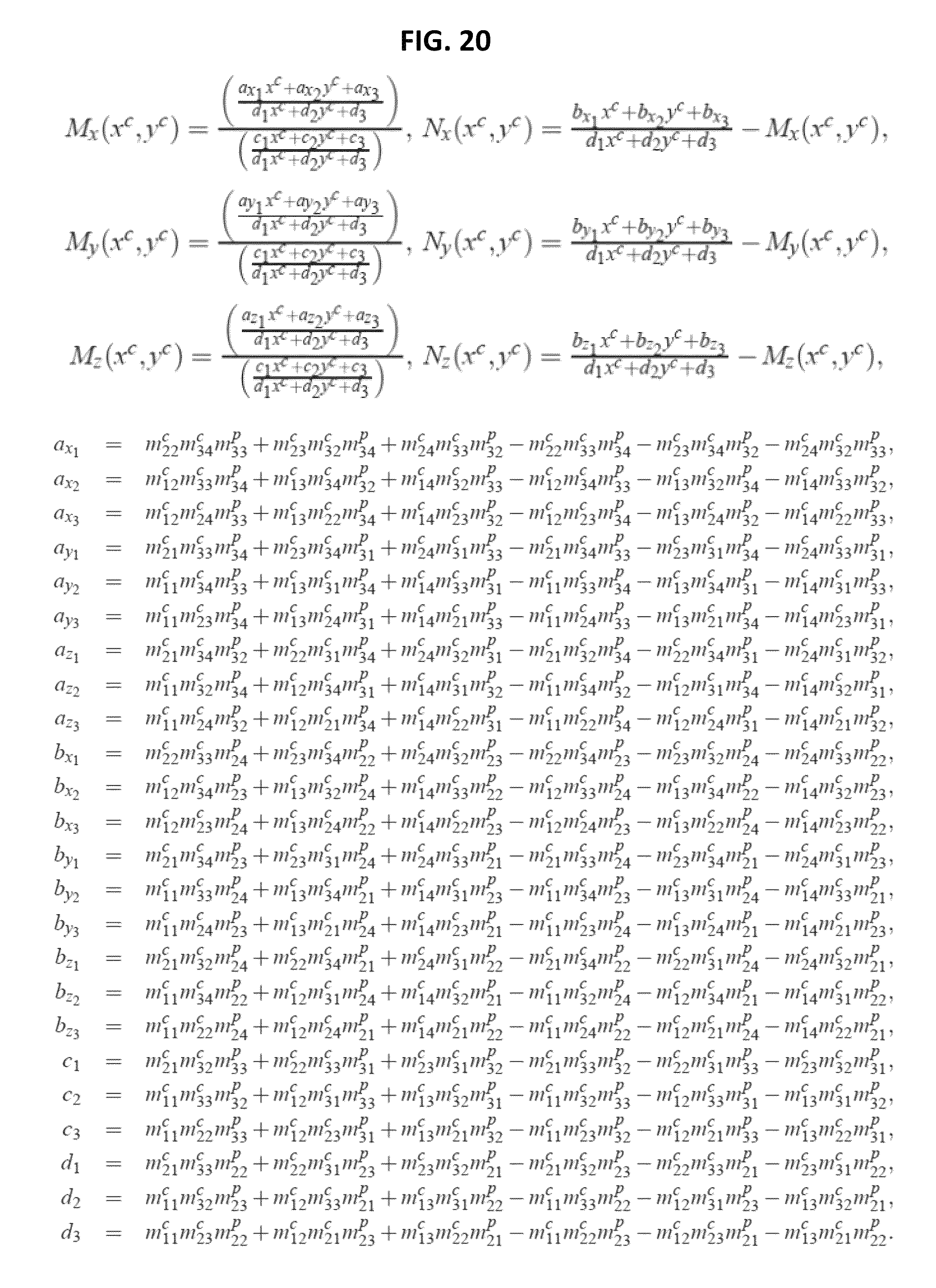
This patent does two things at once. First, it superimposes a fine high-frequency pattern with a single-stripe coarse pattern, so the coarse pattern instantly identifies which band each pixel belongs to while the fine pattern fills in the detail — no unwrapping needed. Second, it replaces the expensive per-pixel arithmetic with pre-computed lookup tables for modulation and phase. The combination produces phase data at over a thousand frames per second and full 3D point clouds at over two hundred — enough headroom to drive medical imaging, gesture recognition, manufacturing inspection, and real-time robotics.
Figures