Lock and hold structured light illumination
Summary
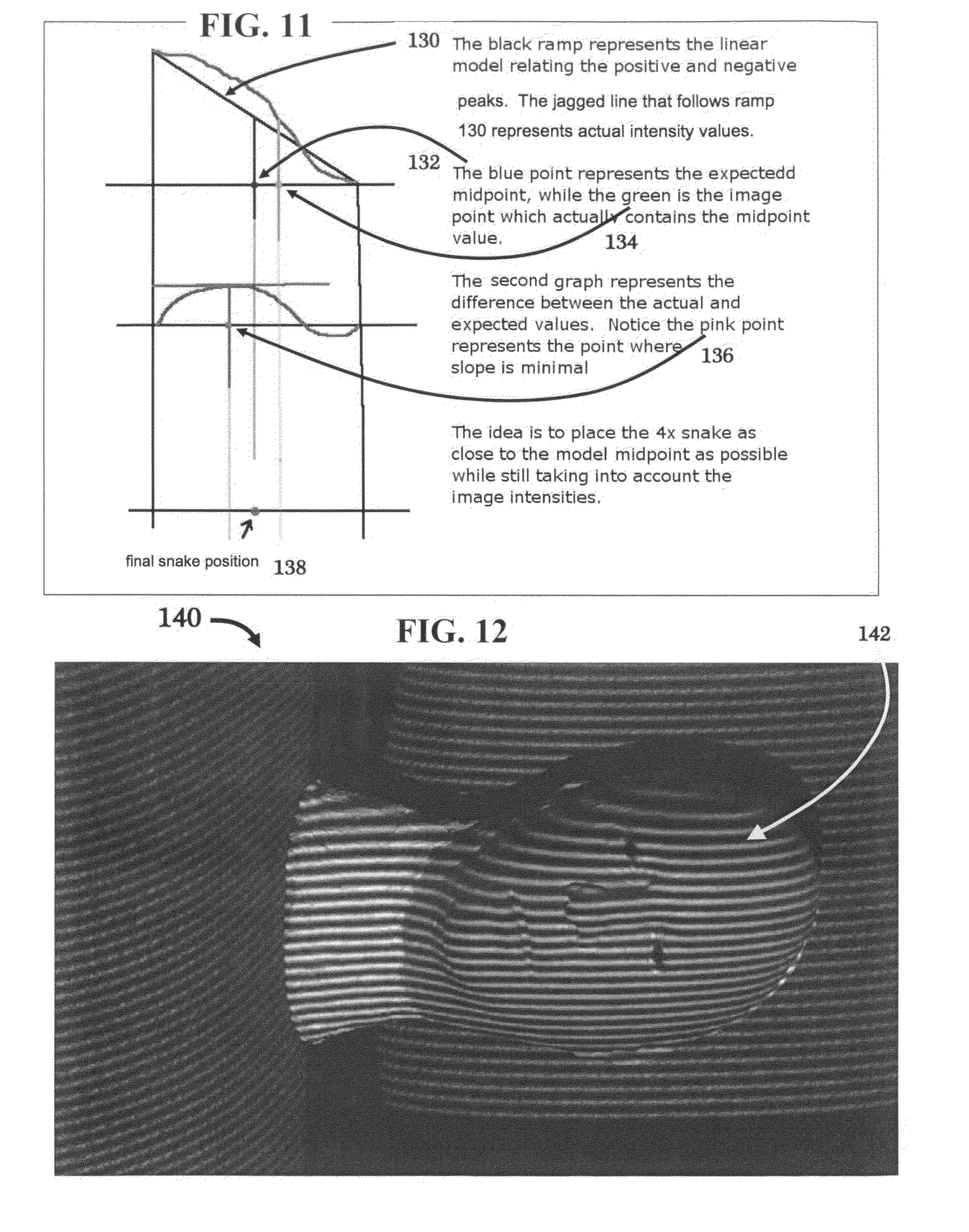
Structured-light scanners work by projecting a striped or coded pattern at a surface and identifying which stripe is which in the camera image. That identification — figuring out which projector stripe corresponds to which camera pixel — is what makes depth recovery possible. It is also what tends to fall apart when the surface is moving quickly.
The conventional response is to project denser, more elaborate patterns that re-identify every stripe from scratch on each frame. This works, but it is computationally heavy, and the resolution still degrades as motion increases. Real-time 3D video of a moving face or a beating heart sits just out of reach for standard scanners.
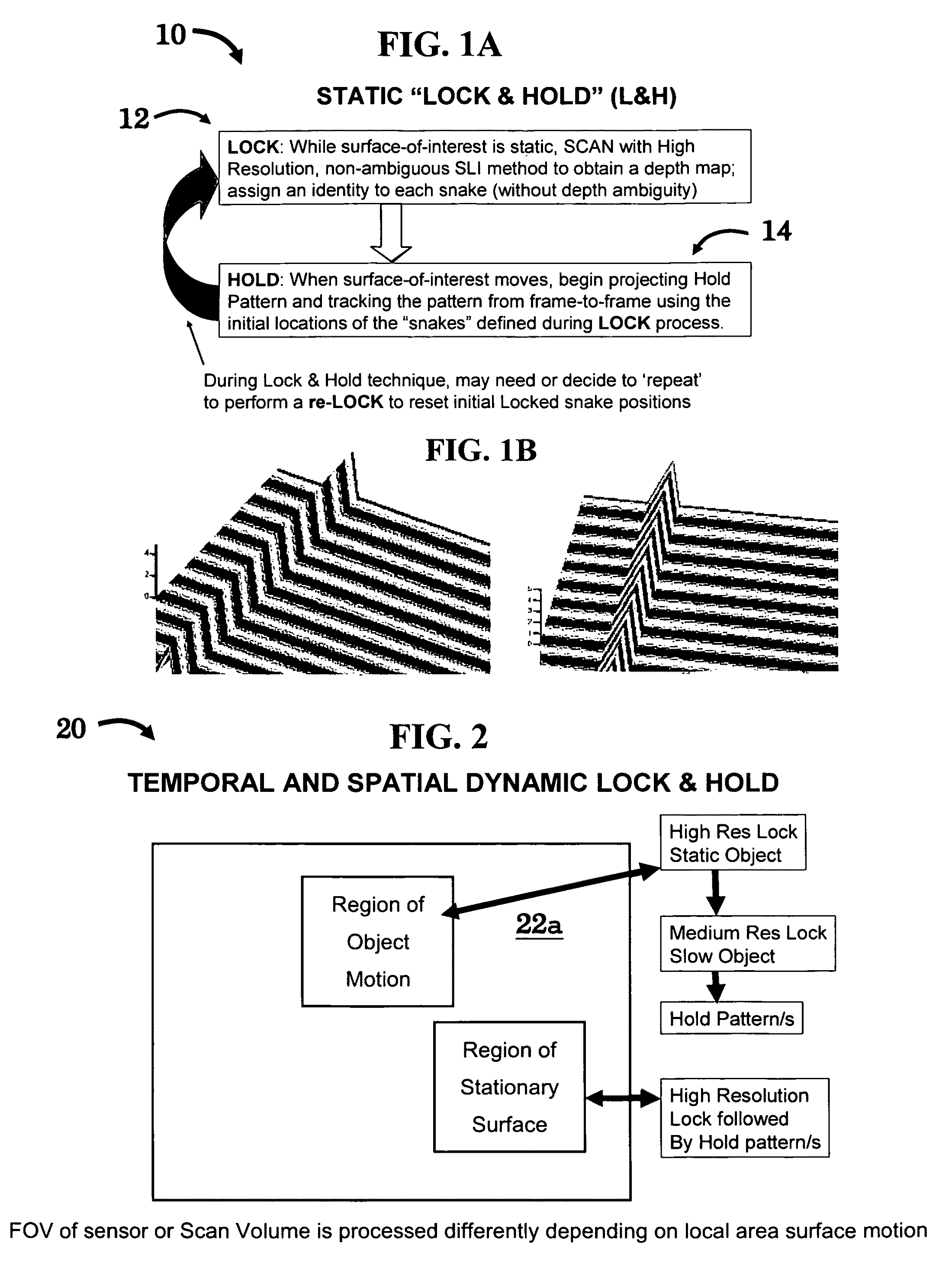
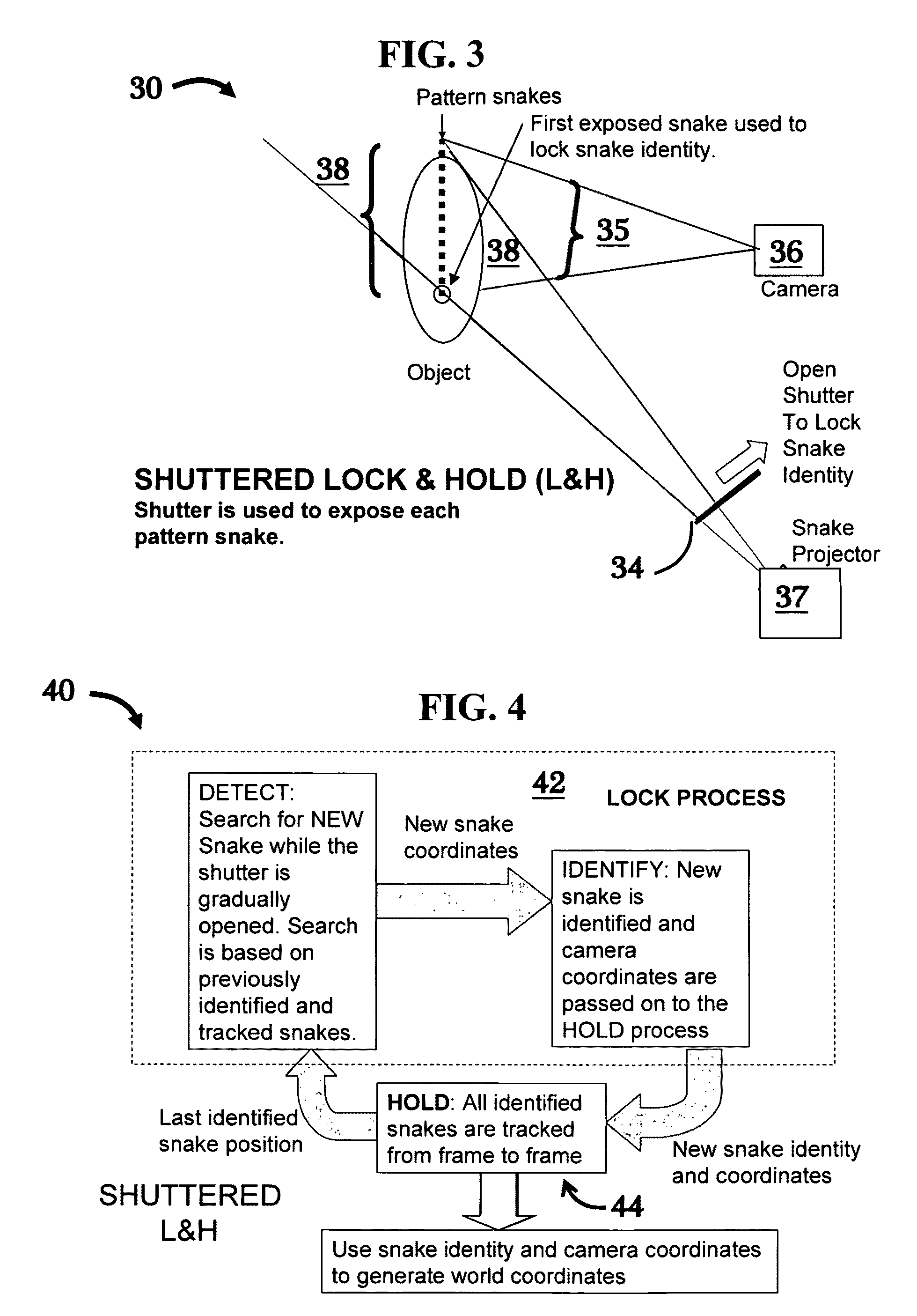
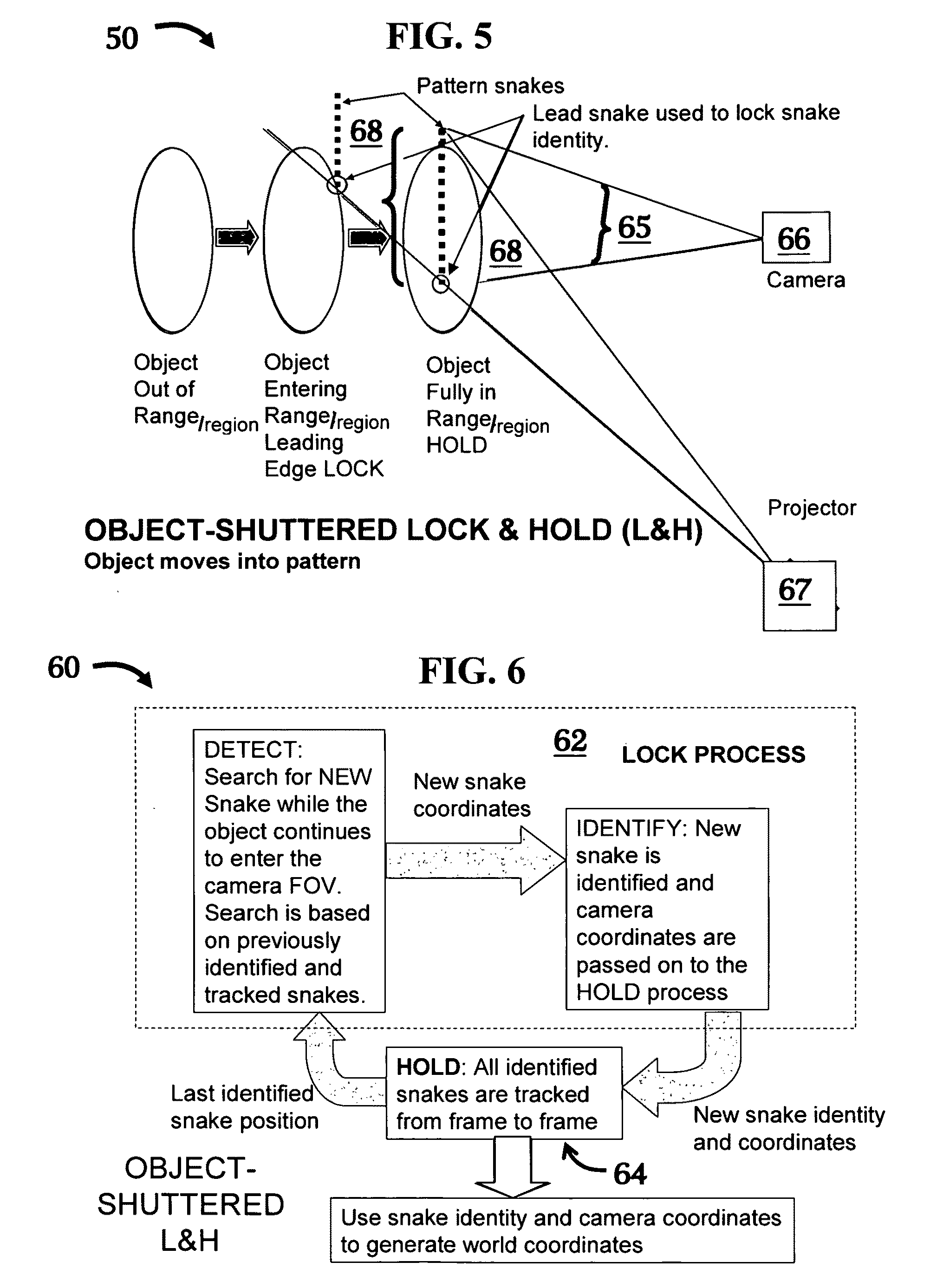
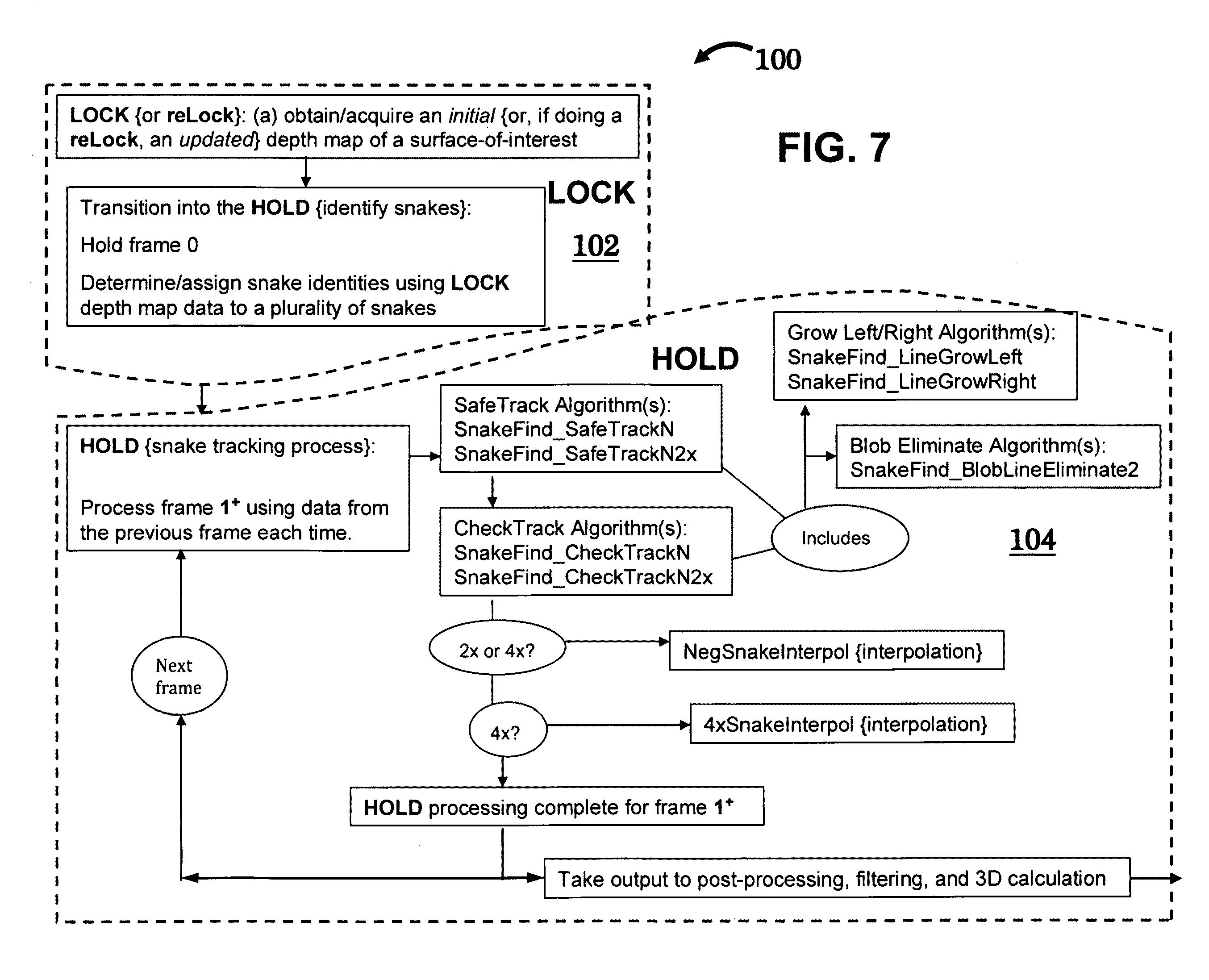
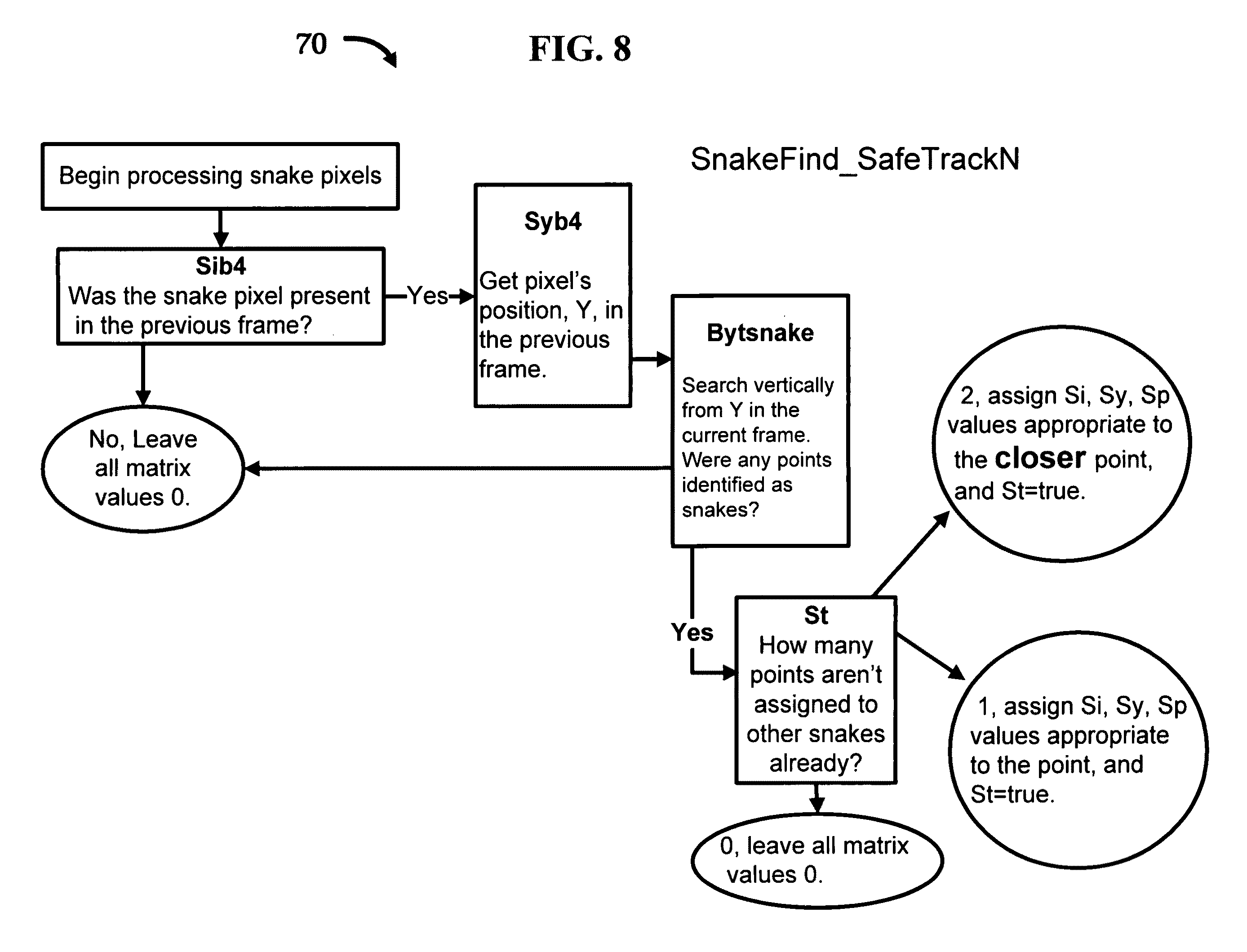
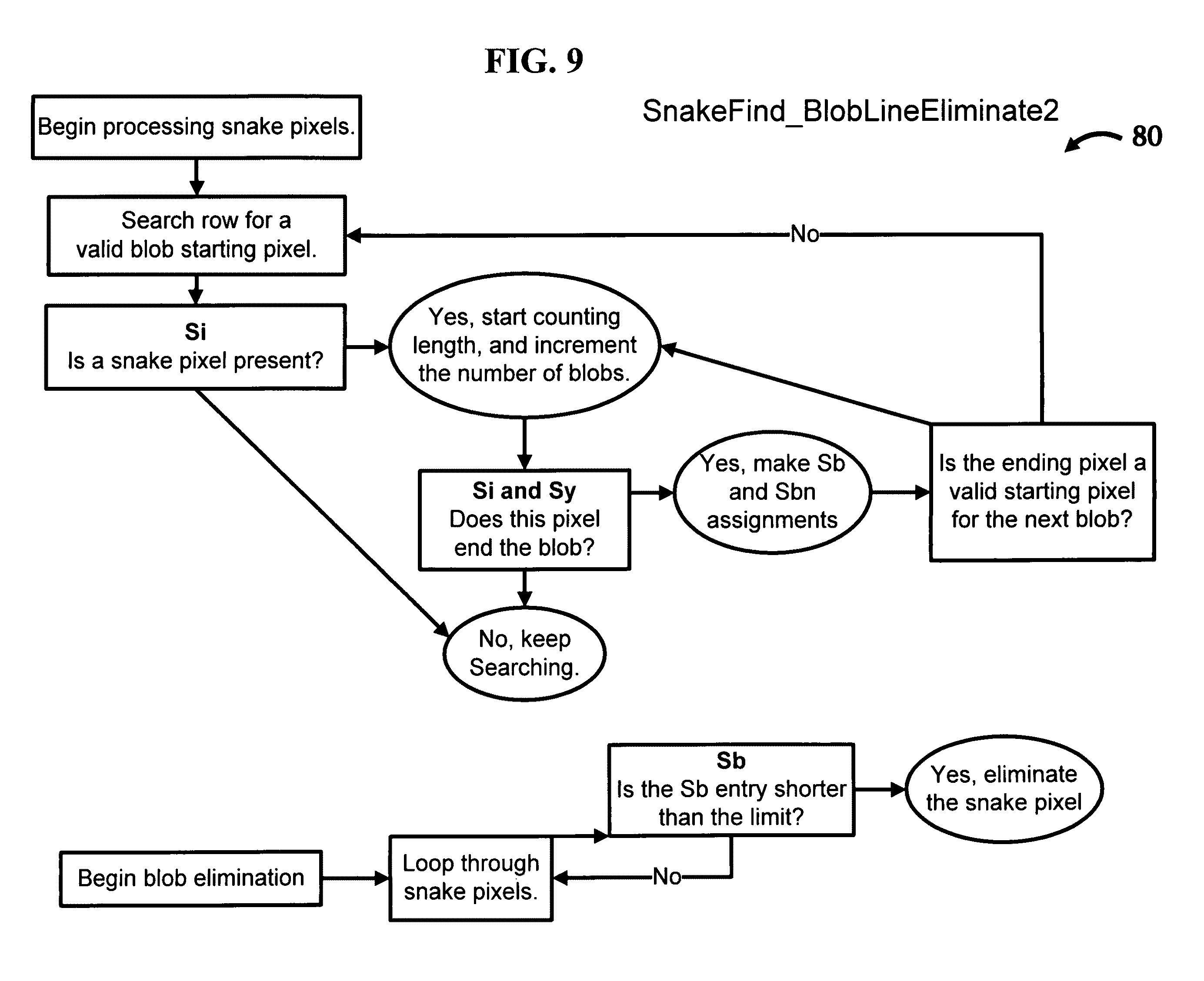
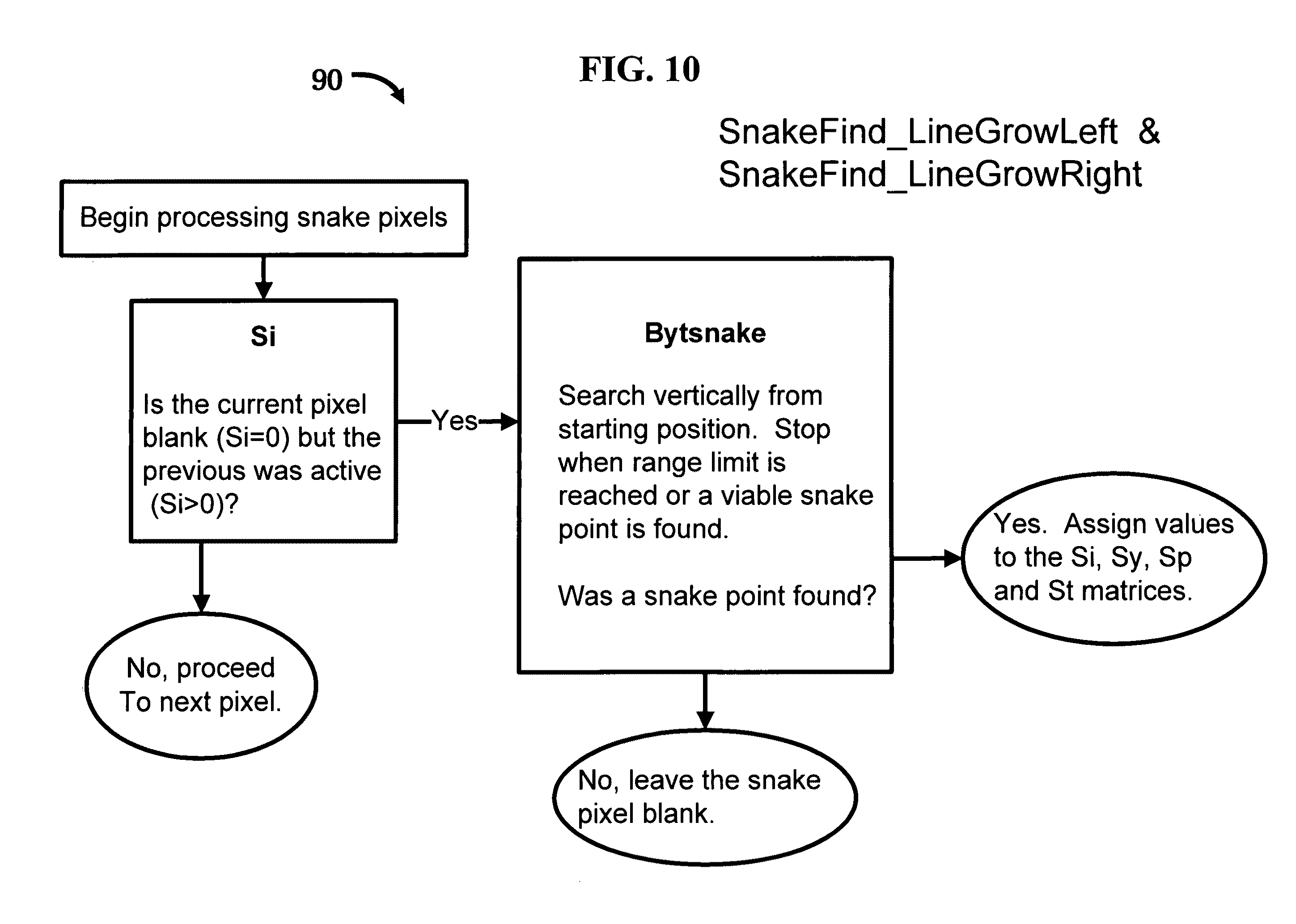
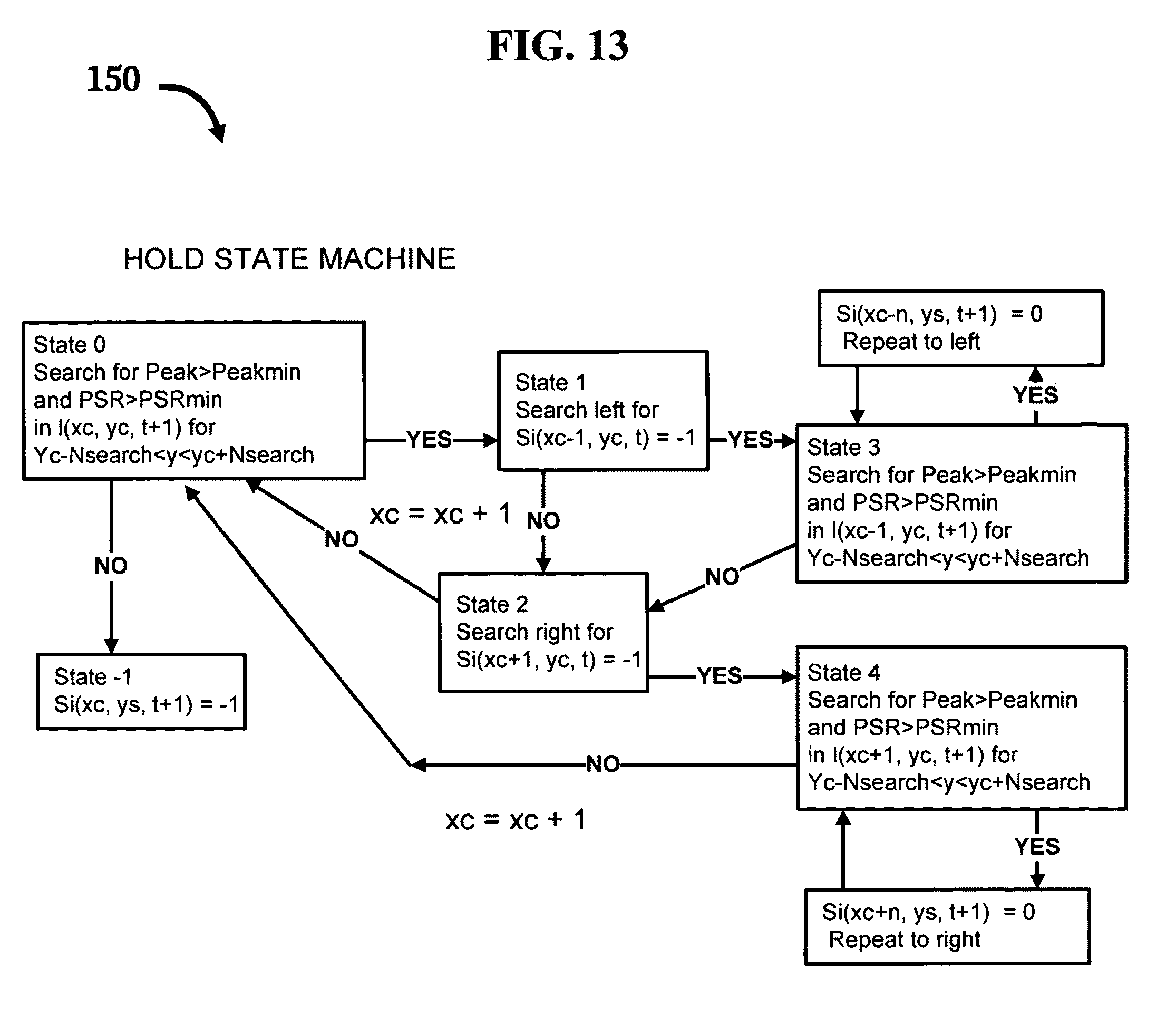
This patent borrows an idea from RF communications: lock, then hold. When the scene is briefly still, a rich identification pattern locks each stripe to a known position. Once the lock is established, the system switches to a much simpler “hold” pattern that only has to track the stripes from frame to frame — the way a phase-locked loop tracks a carrier signal once it has acquired it. The result is dense 3D video of moving subjects — facial expressions, speech, breathing chests, deforming materials — on conventional hardware that previously could only handle static scenes.
Figures