System and technique for retrieving depth information about a surface by projecting a composite image of modulated light patterns
Summary
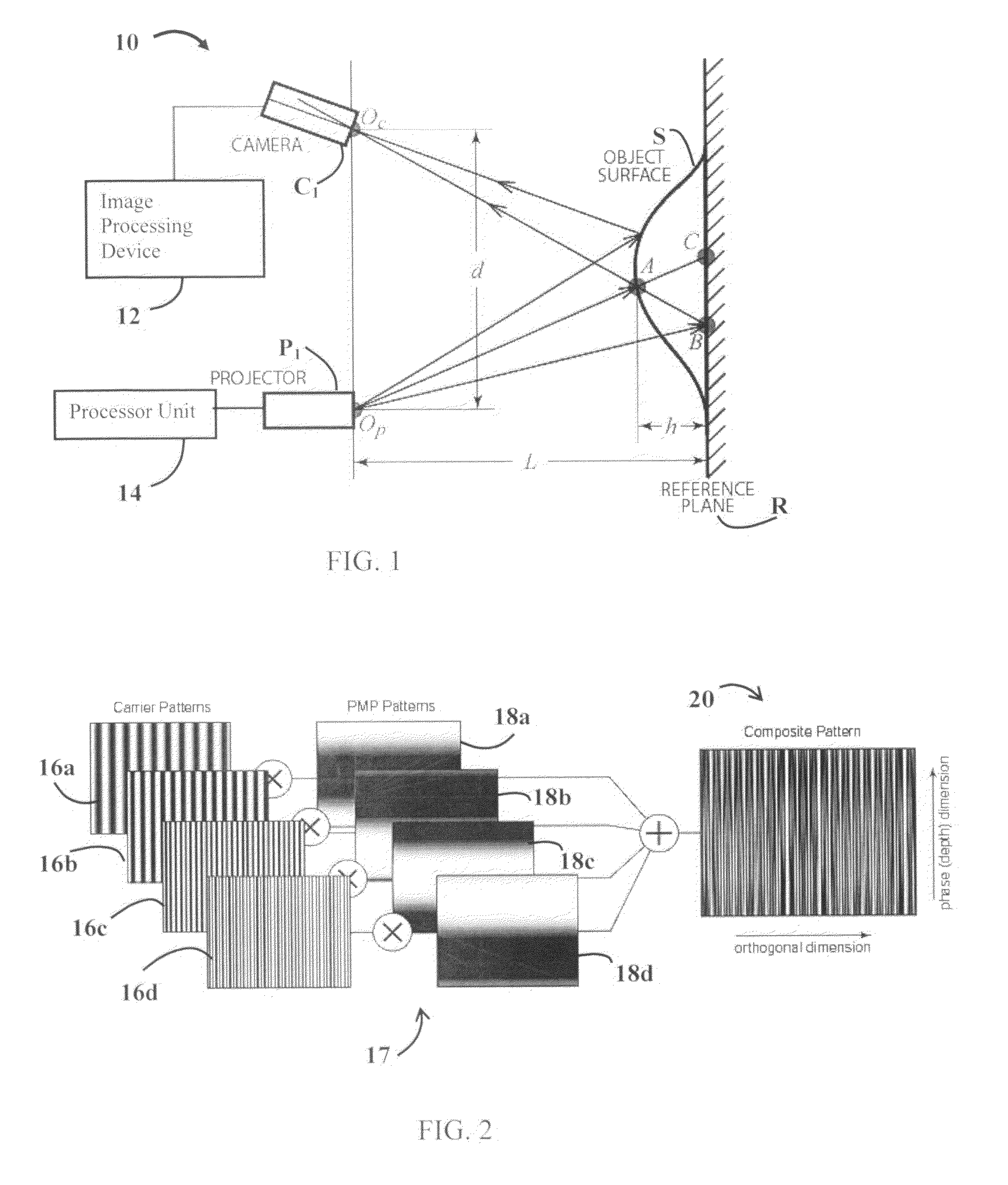
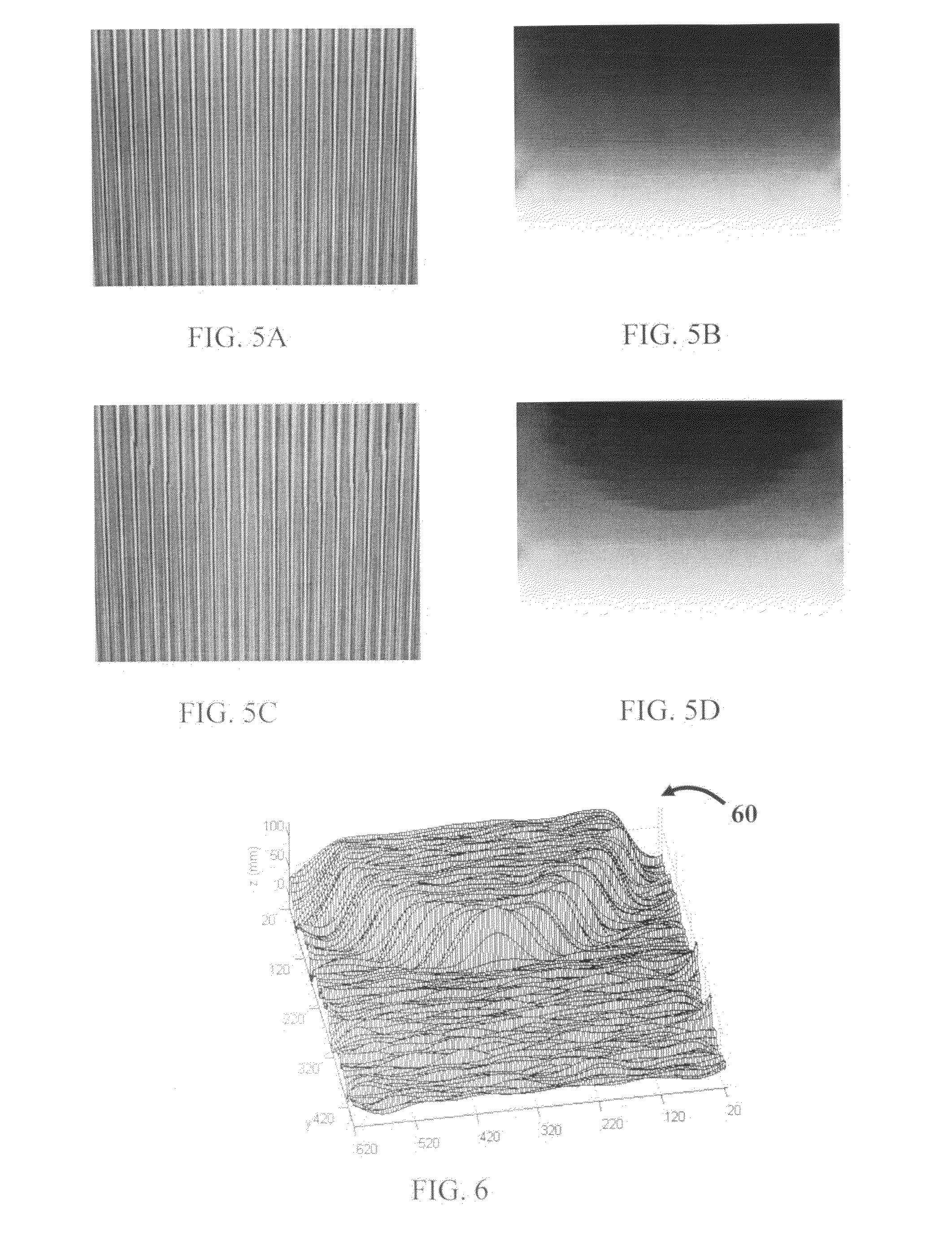
The parent patent (7,440,590) showed that several structured-light patterns could be overlaid into a single projected image, letting a 3D scanner recover an entire depth map from one camera frame instead of a sequence of shots. That made single-shot 3D capture of moving subjects practical for the first time.
But the underlying idea can be implemented in many ways. The component patterns can be separated by frequency, by phase, by polarization, by wavelength, or by staggering a small number of composites in time. Each choice has different consequences for projector hardware, lighting conditions, and the kinds of surfaces that scan cleanly.
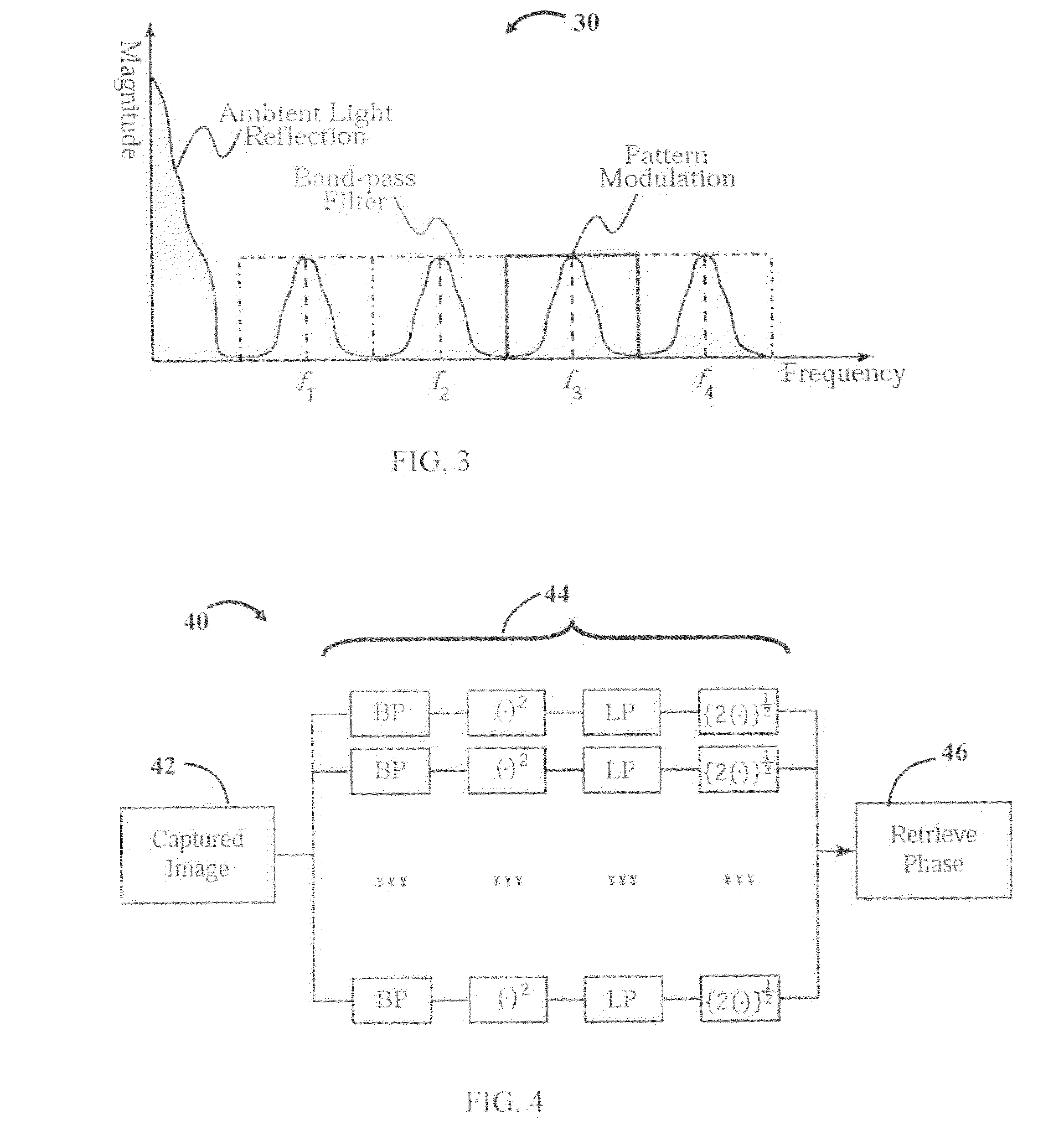
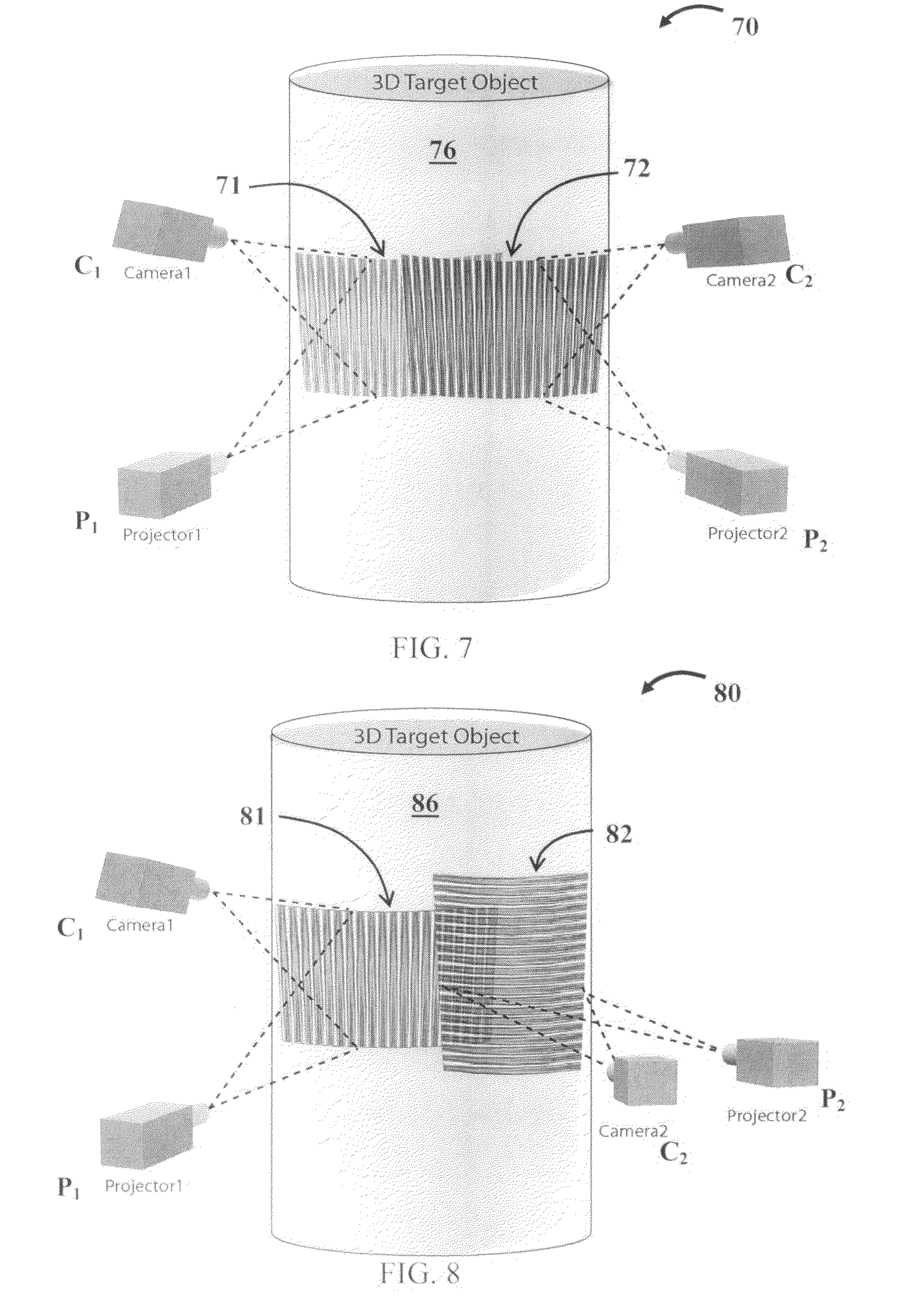
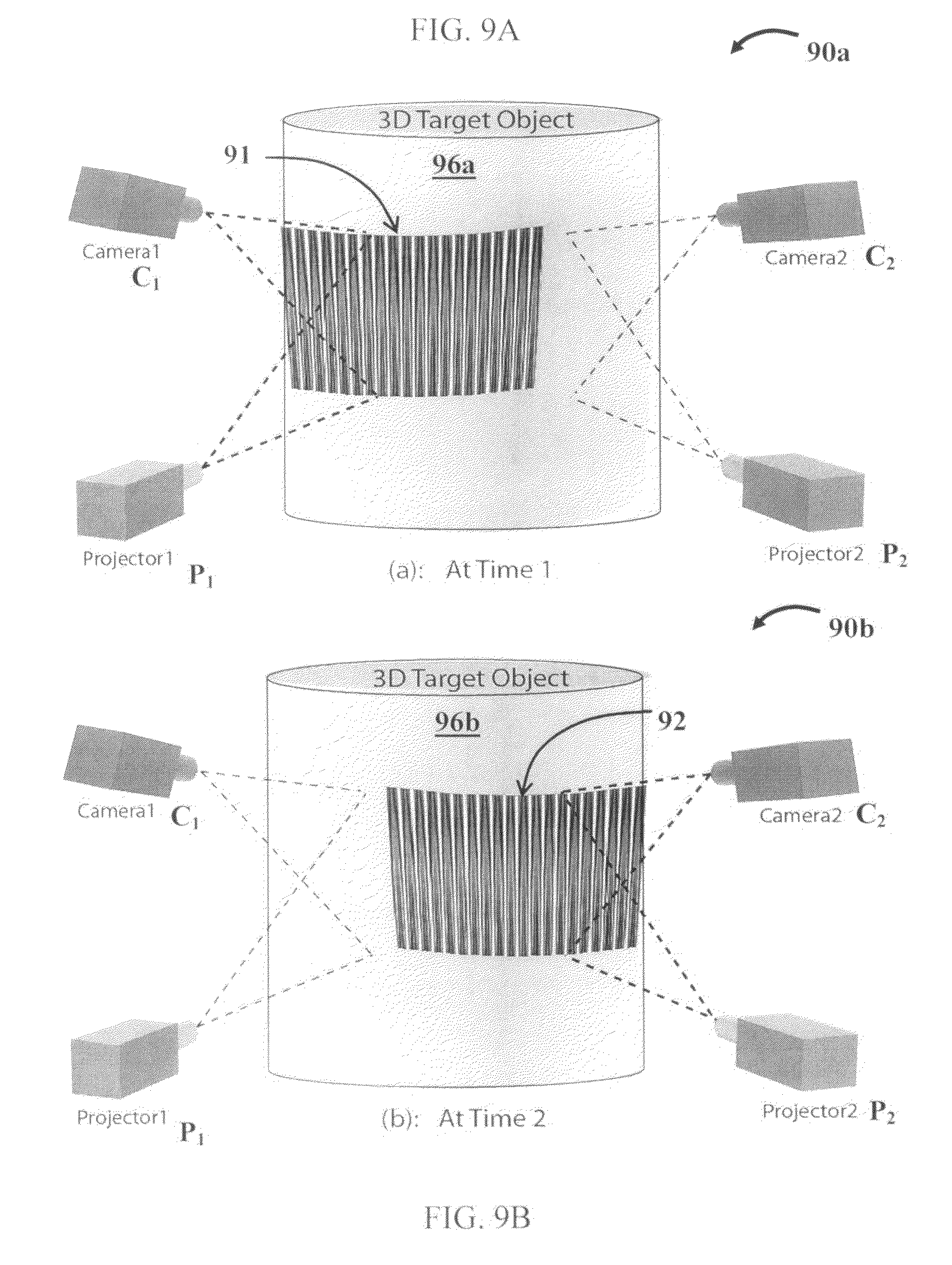
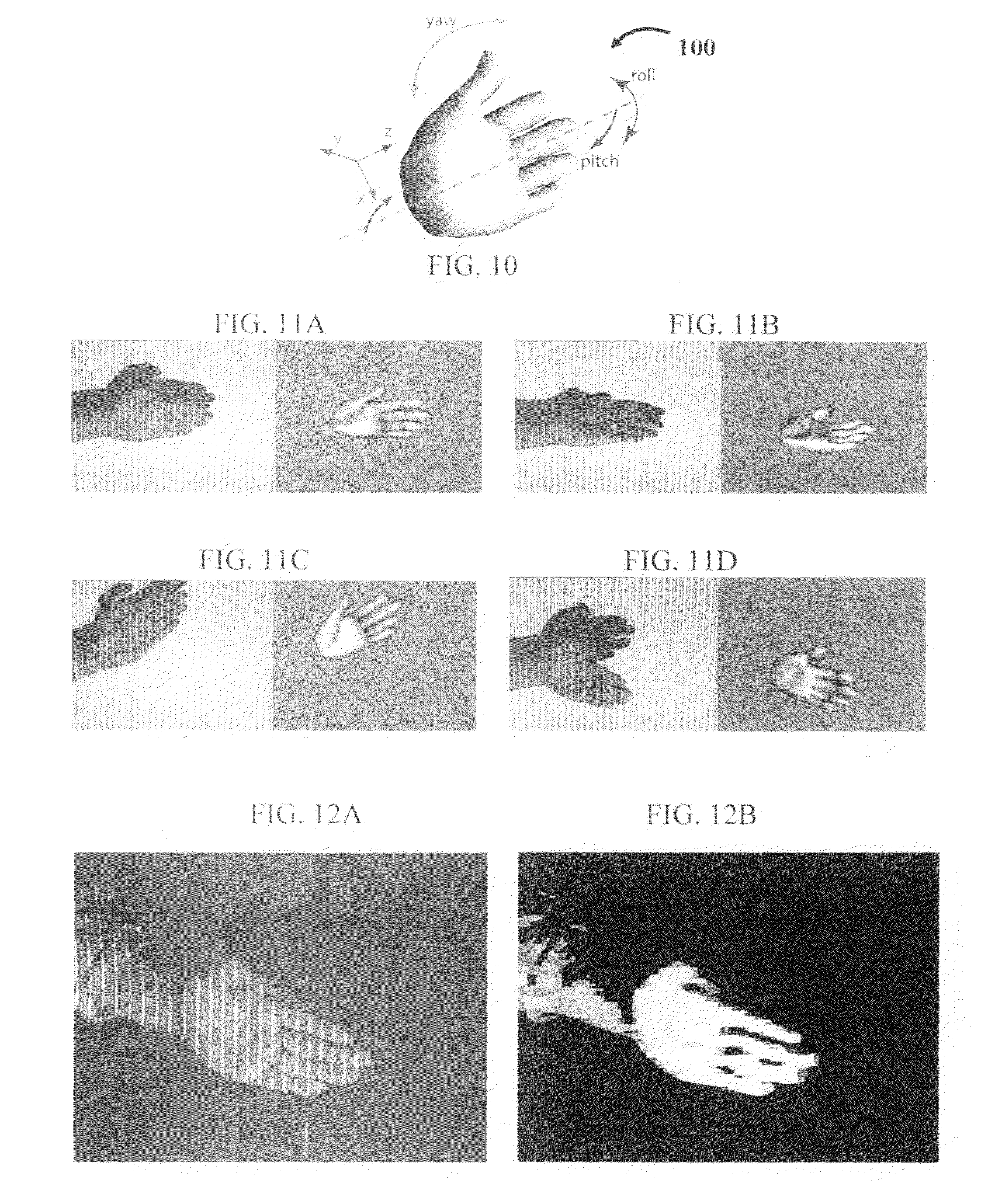
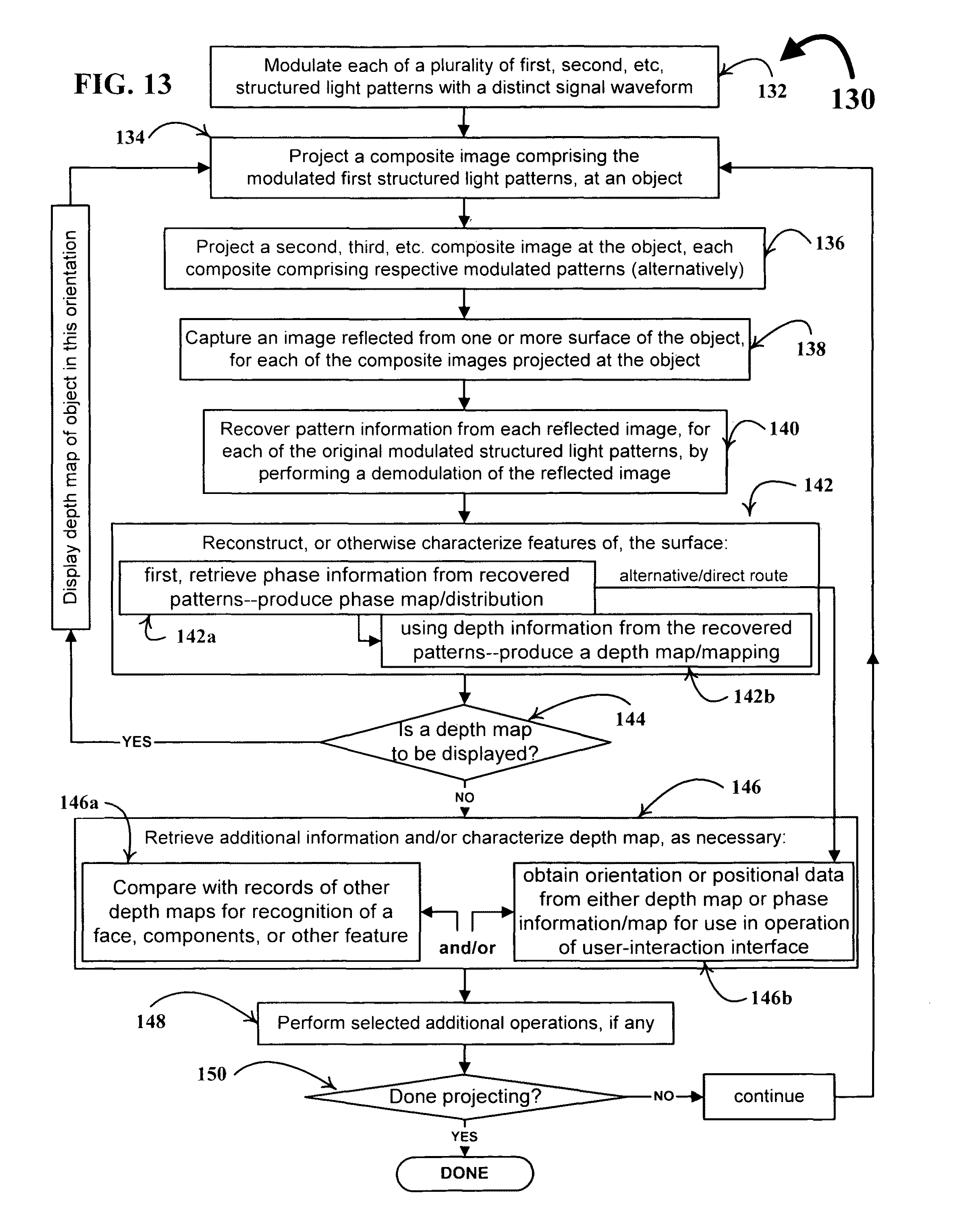
This continuation tightens the mathematics of how the composite patterns must be uncorrelated, specifies the demodulation pipeline — band-pass filtering and amplitude detection — and claims several alternative projector architectures. These include layouts where two projectors share the scene at non-overlapping wavelengths, layouts where the projectors sit at different angles, and short time-sequenced bursts of composites. The practical effect is broader coverage of real-time 3D capture systems used in face and hand tracking, gesture interfaces, and motion-robust depth imaging.
Figures