System and technique for retrieving depth information about a surface by projecting a composite image of modulated light patterns
Summary
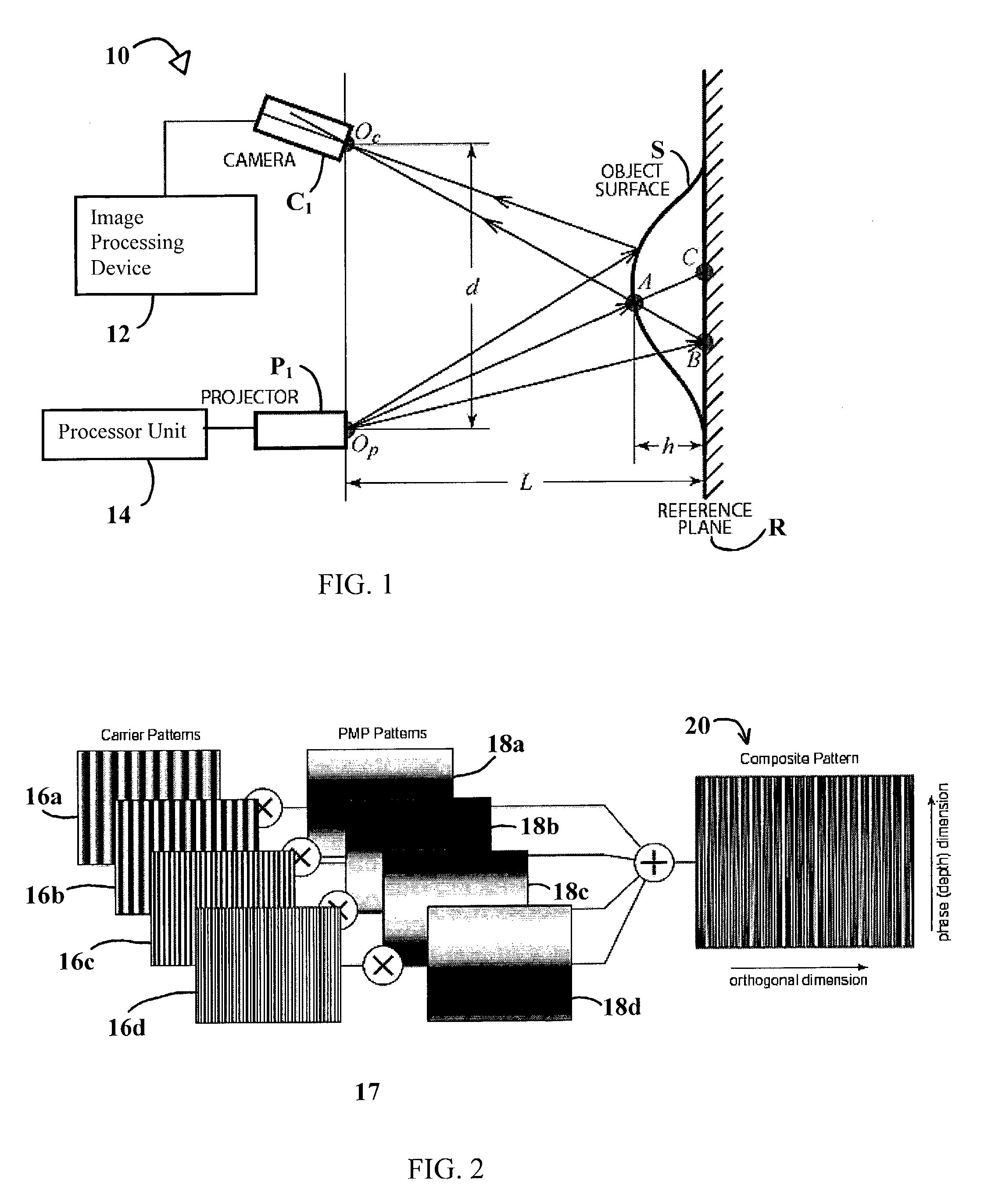
Structured-light 3D scanning works by projecting a known pattern of light — think of stripes or a fine grid — onto an object and using a camera to watch how that pattern bends across the surface. The way the pattern deforms reveals the surface shape, point by point.
The standard approach needs to project several different patterns one after another and combine multiple photos to recover an accurate depth measurement. That only works if the object stays perfectly still. Move a fraction of a millimeter between shots and the result is corrupted.
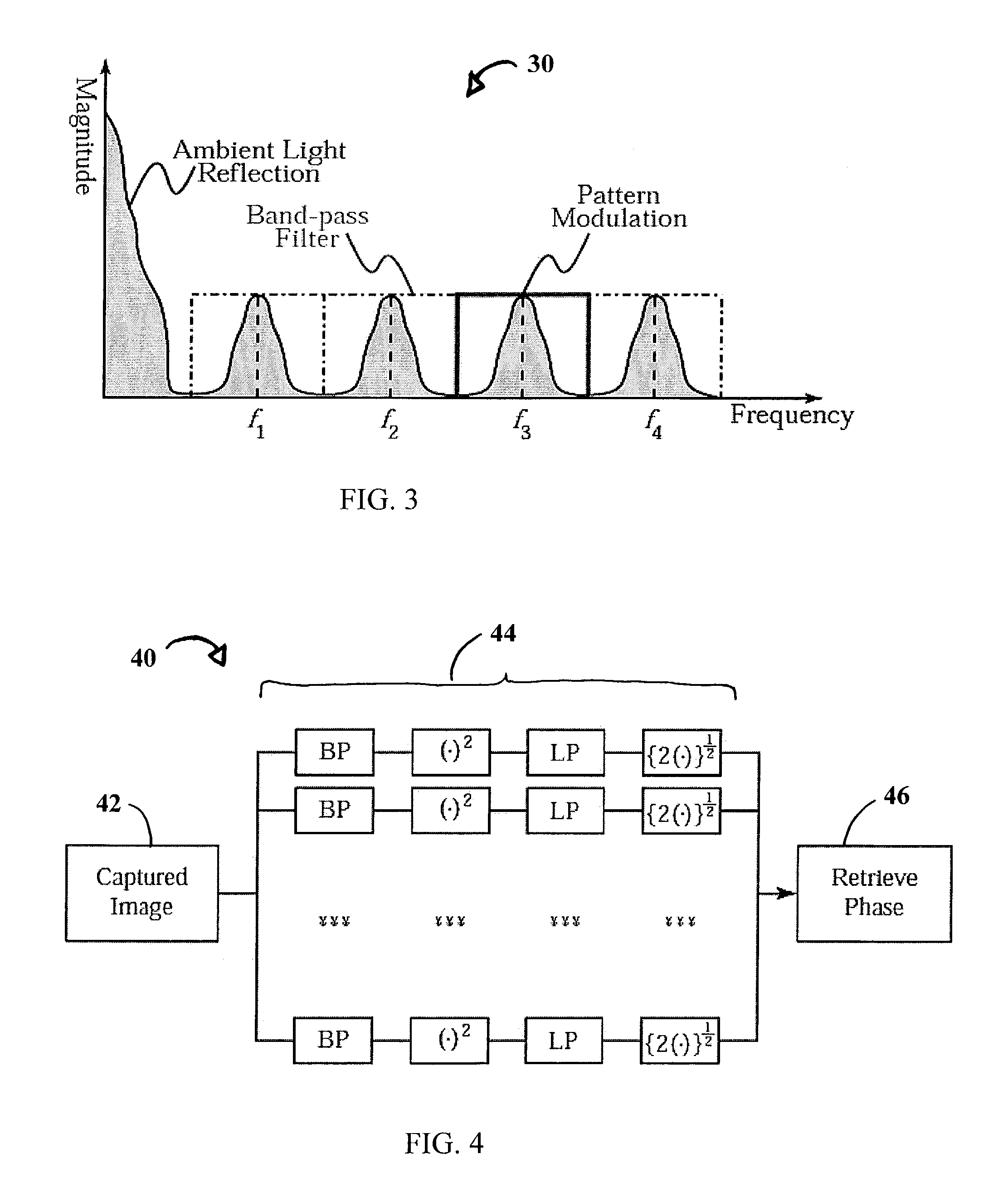
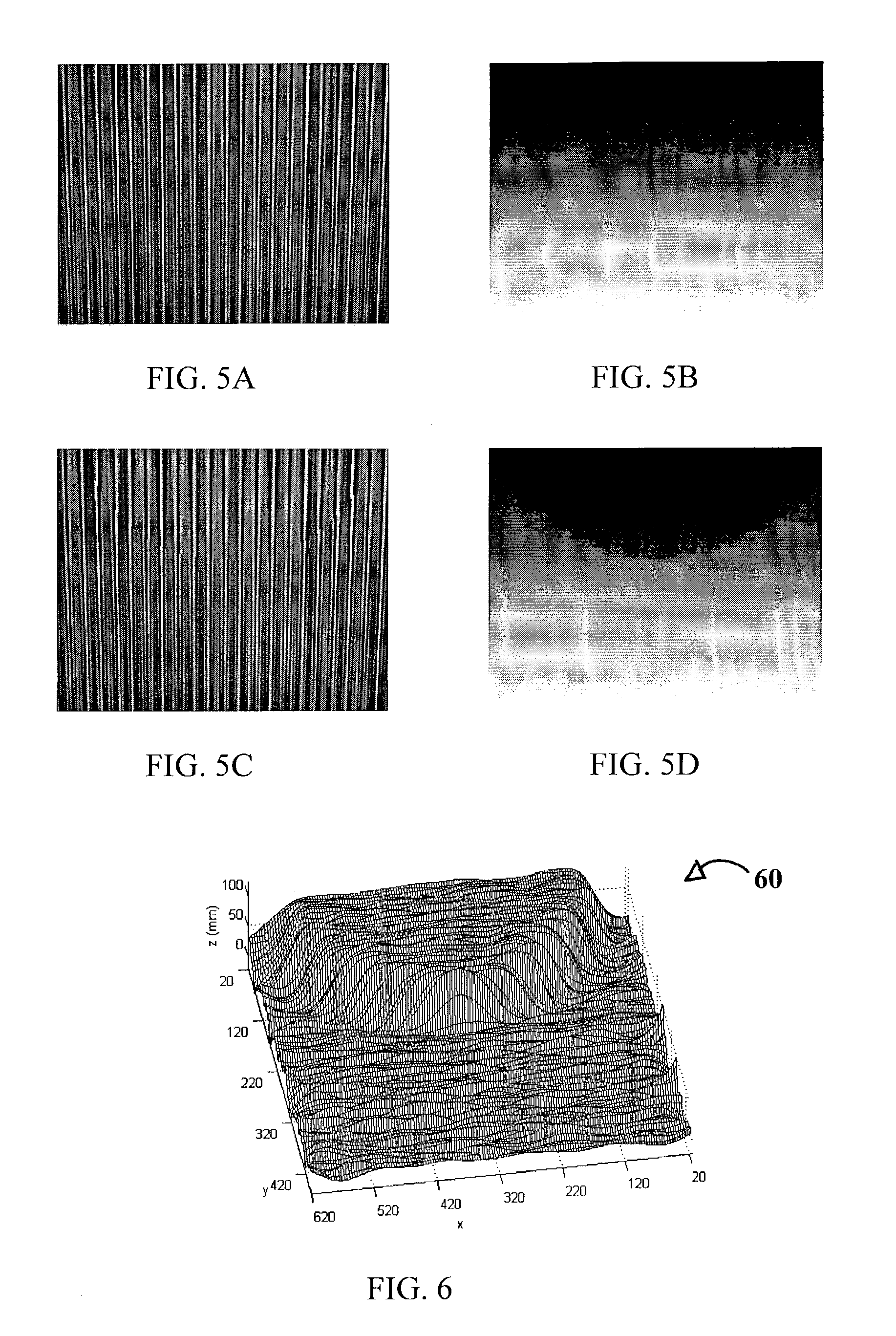
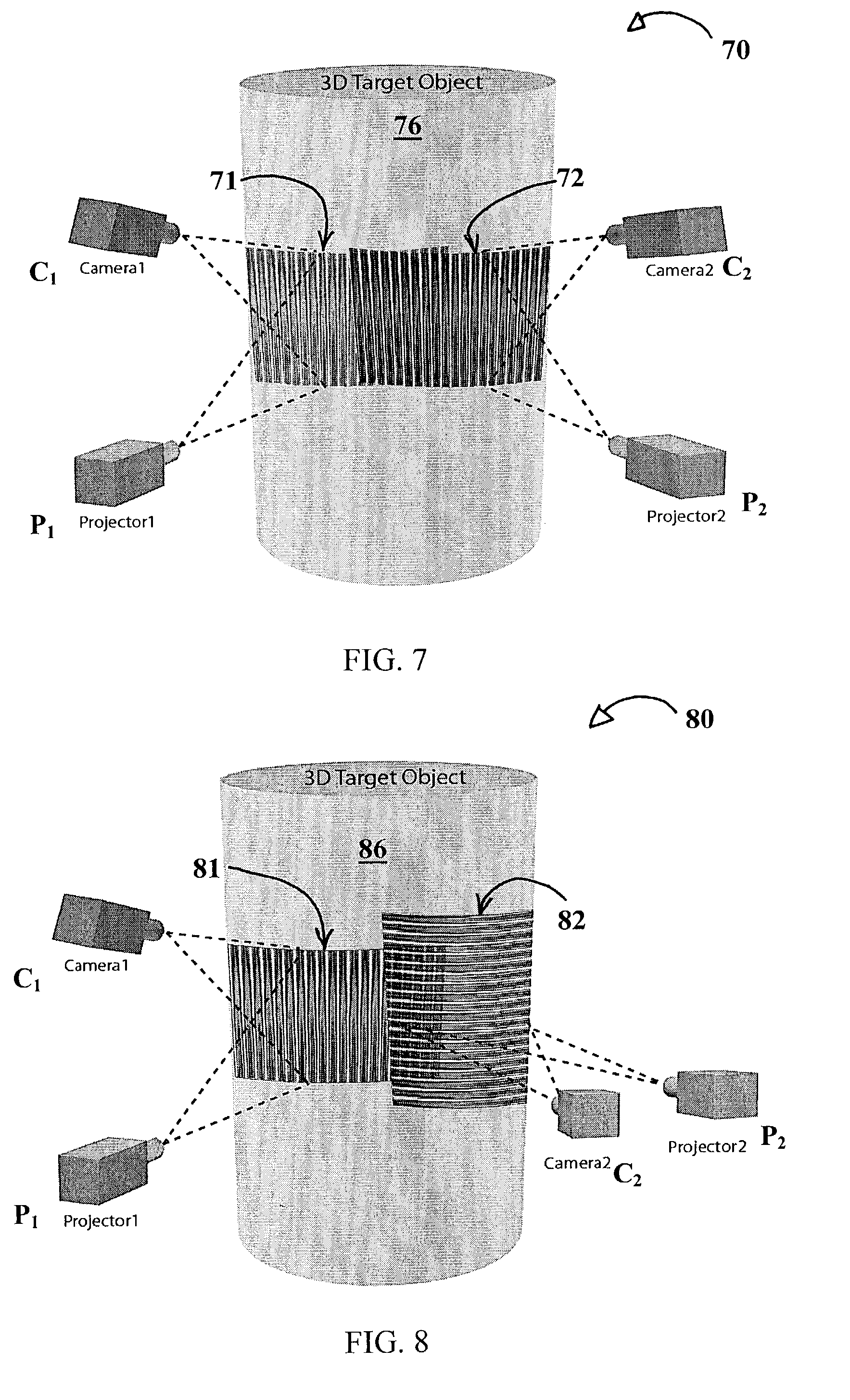
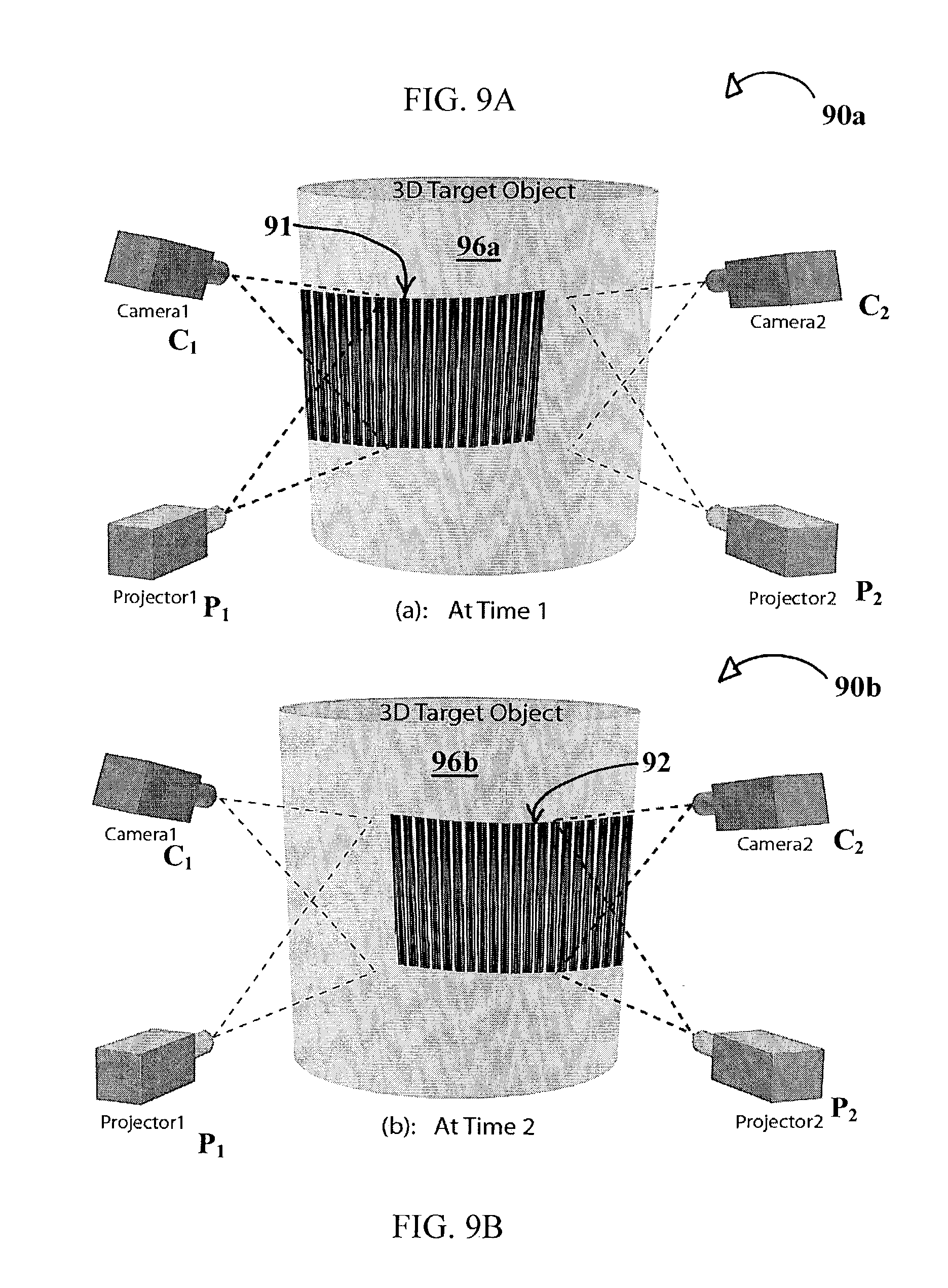
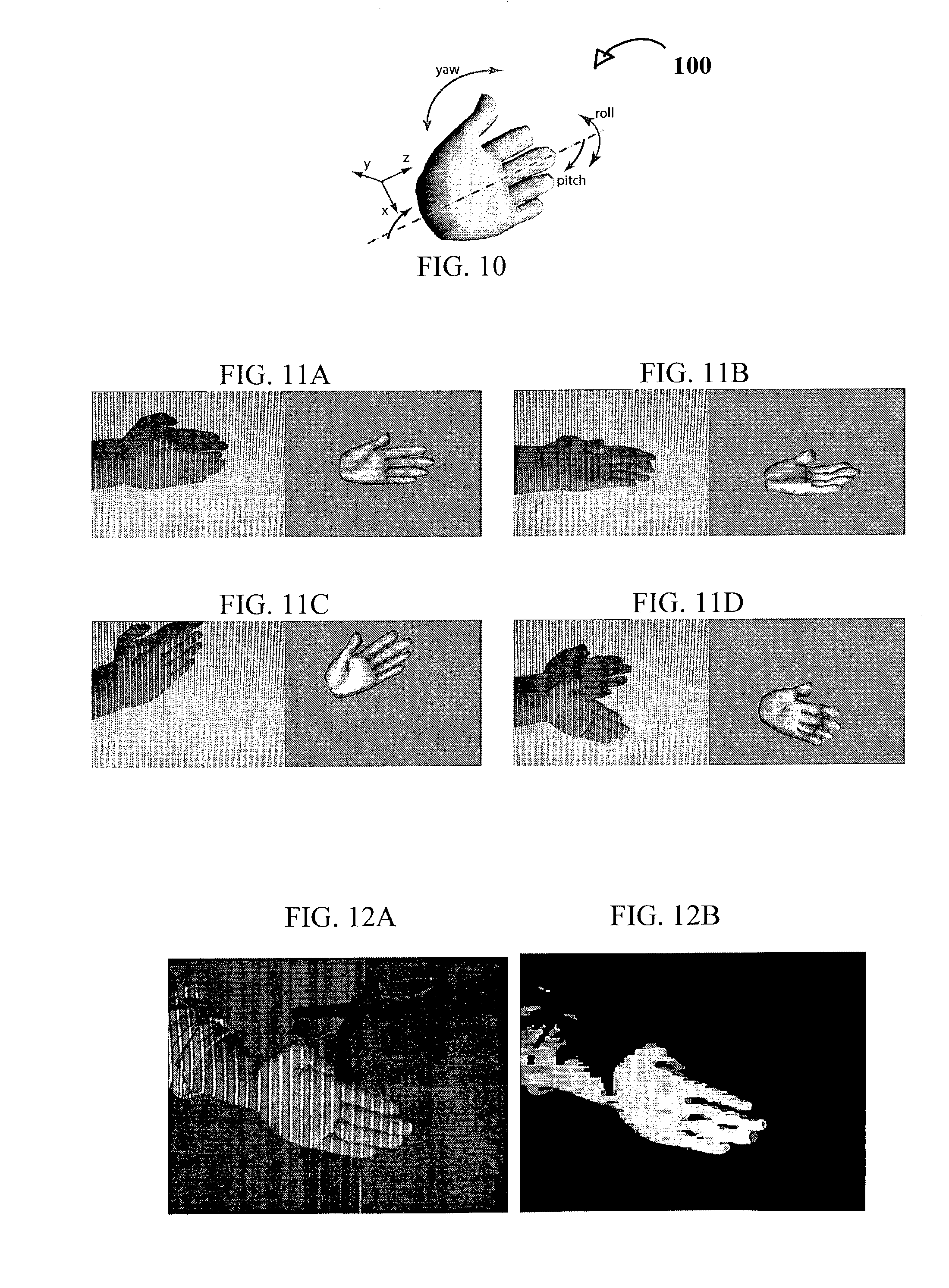
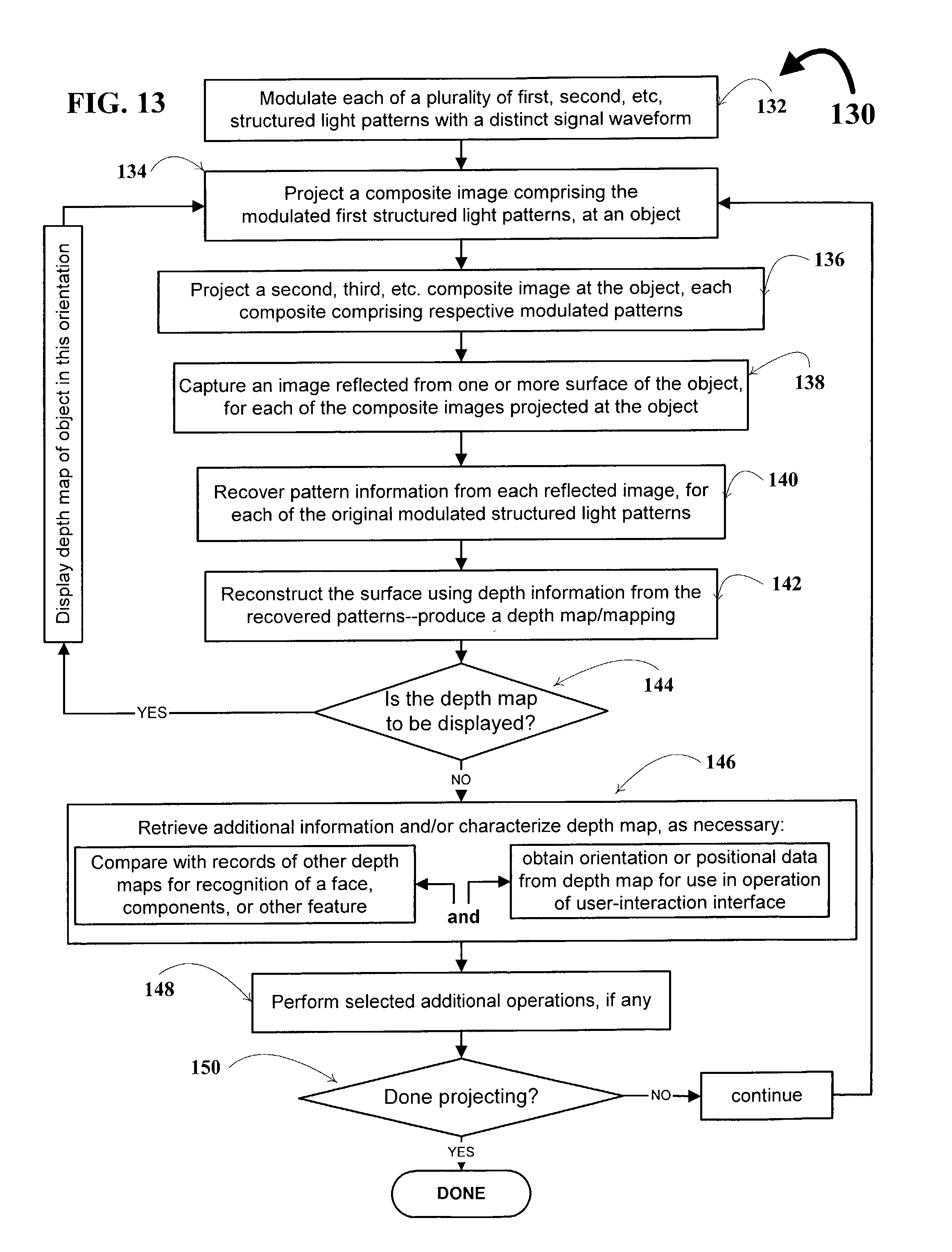
This patent describes a way to overlay (multiplex) several patterns into a single projected image, so that all the depth information can be captured in a single camera frame. By encoding multiple patterns onto distinct “carriers” within one composite, the system recovers each pattern’s contribution from one snapshot rather than from a sequence. The result is single-shot 3D measurement of moving subjects — faces, breathing chests, parts on a conveyor — at accuracies that previously required a static subject.
Figures