Method and apparatus for producing halftone images using green-noise masks having adjustable coarseness
Summary
Printers can only put down a dot of ink or leave the paper blank — they cannot print a shade of gray directly. The illusion of gray is built from clever arrangements of black dots, a process called halftoning. Hold a magnifying glass over a black-and-white newspaper photo and you can see it is really thousands of tiny dots; the eye blends them into smooth tone at normal viewing distance.
For decades the standard approach was “blue-noise” halftoning, which scatters dots as randomly and evenly as possible. In theory this should look smoothest to the eye. In practice, real printers don’t lay down perfect dots — ink spreads, toner clumps, and adjacent dots merge unpredictably. The very uniformity that makes blue-noise look good on paper makes it fragile on the press: every small distortion becomes a visible artifact, especially in mid-tones.
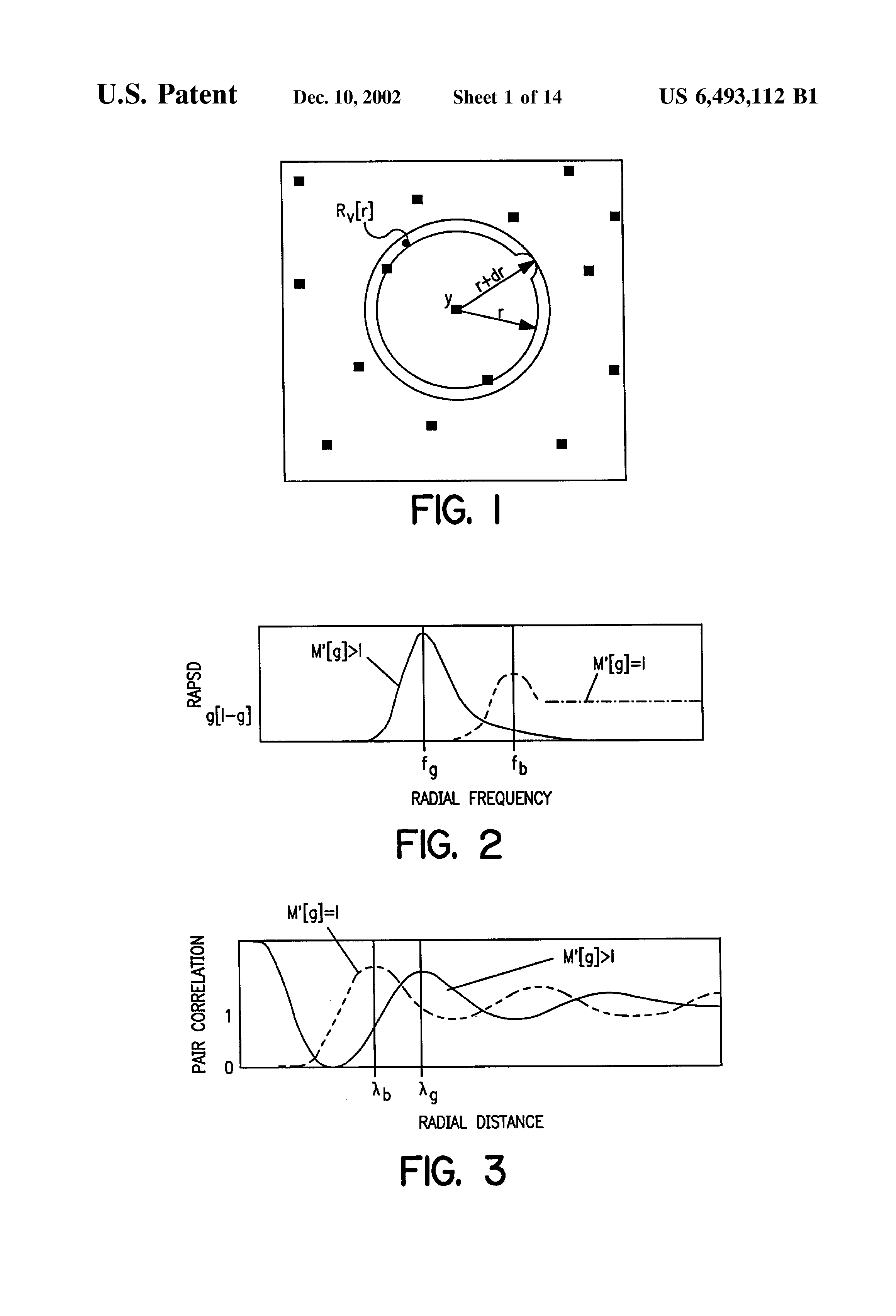
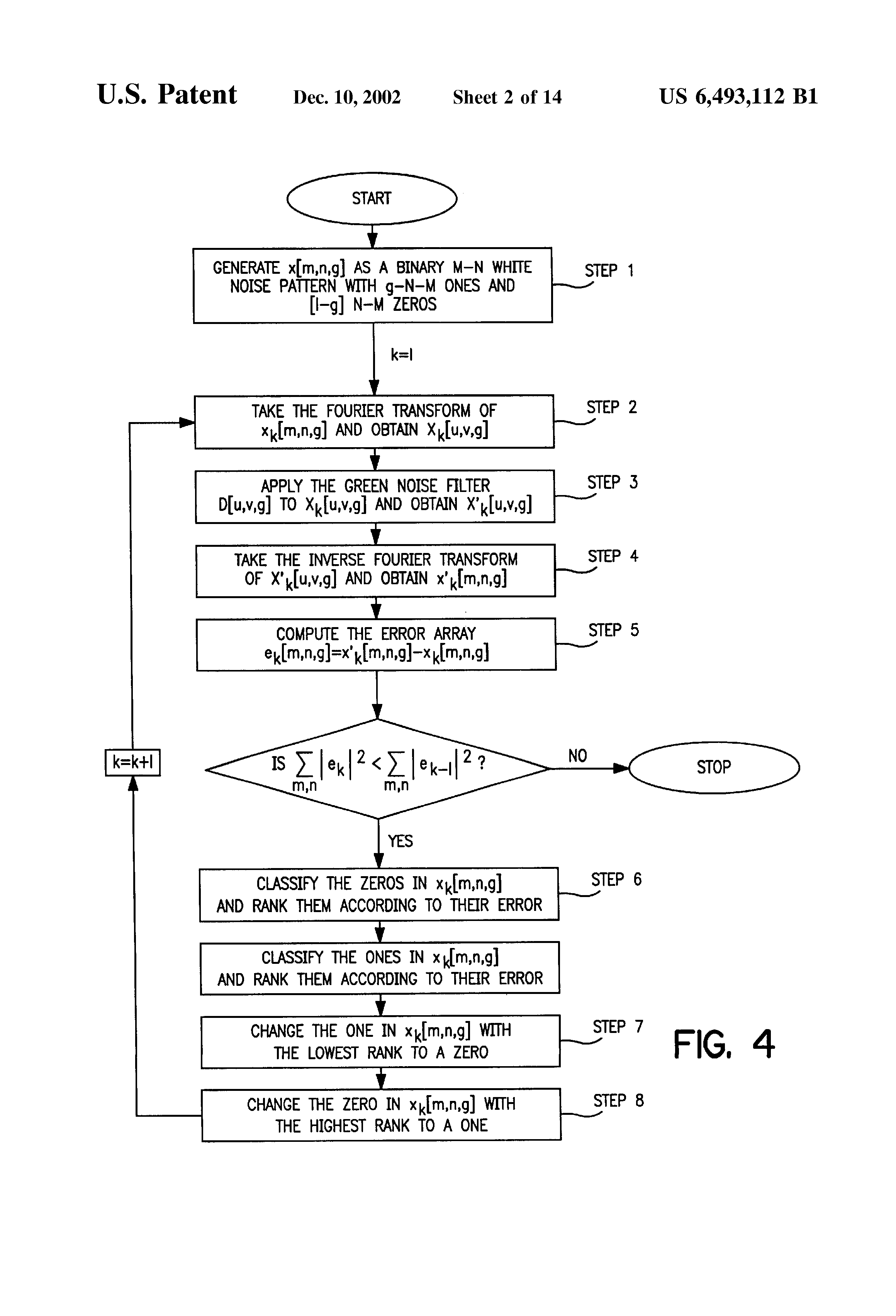
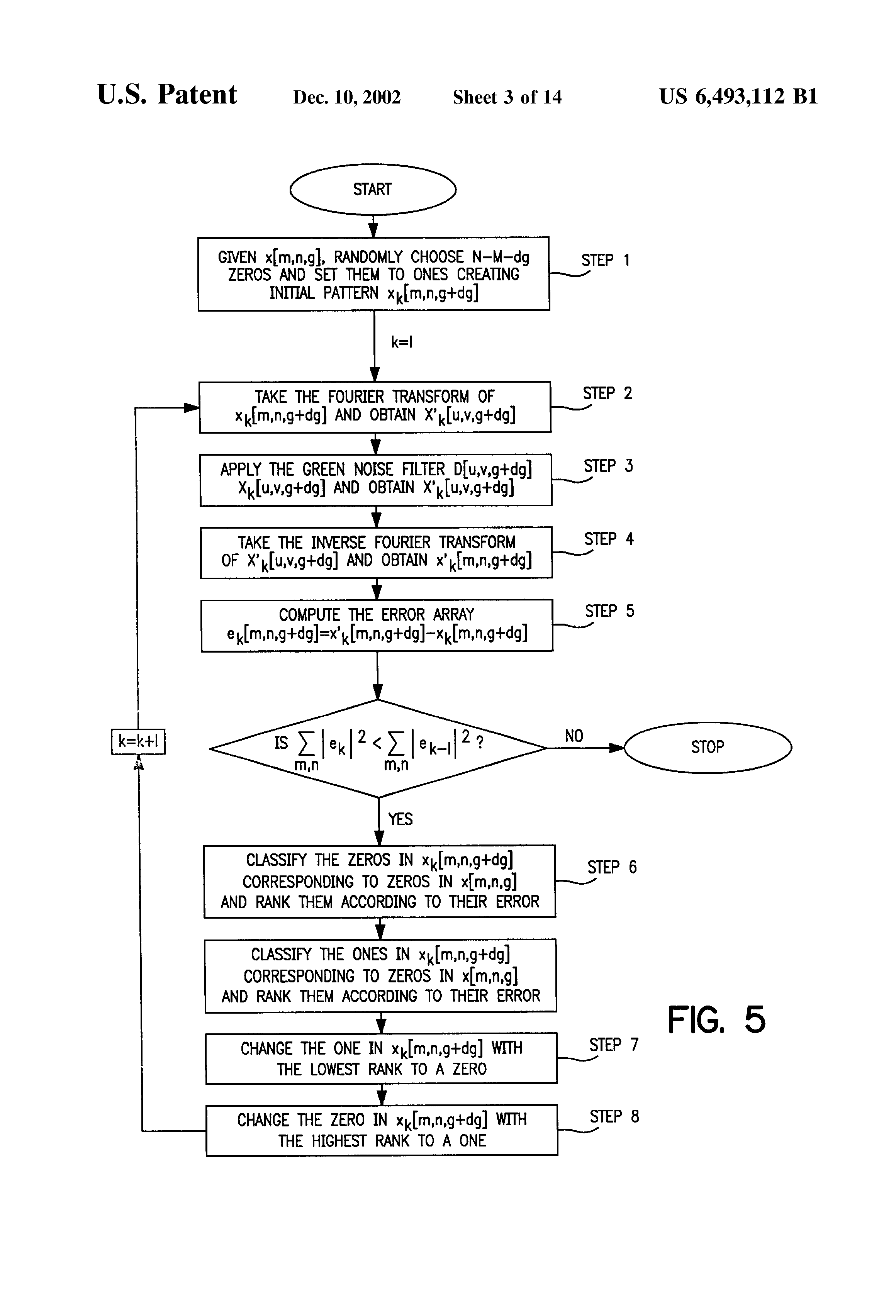
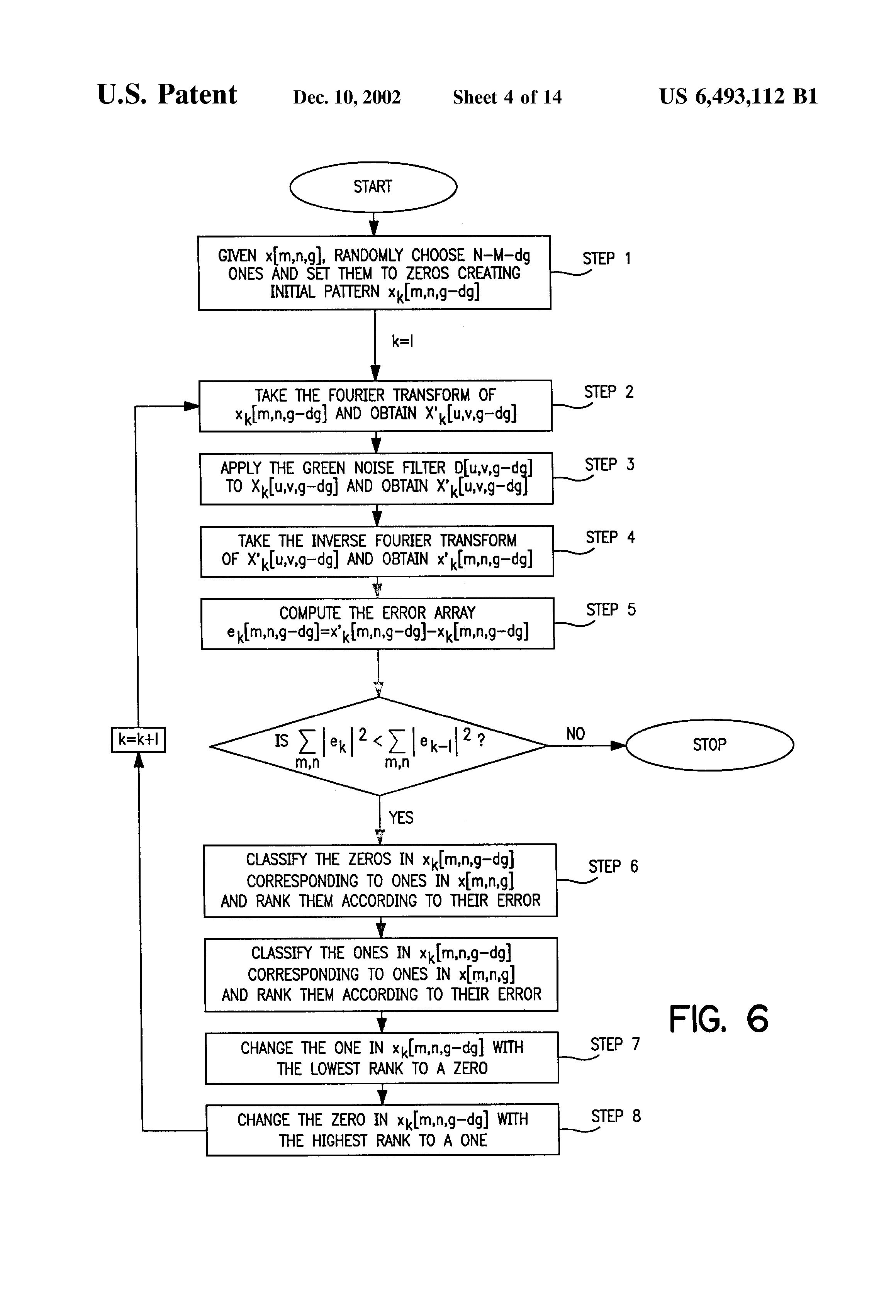
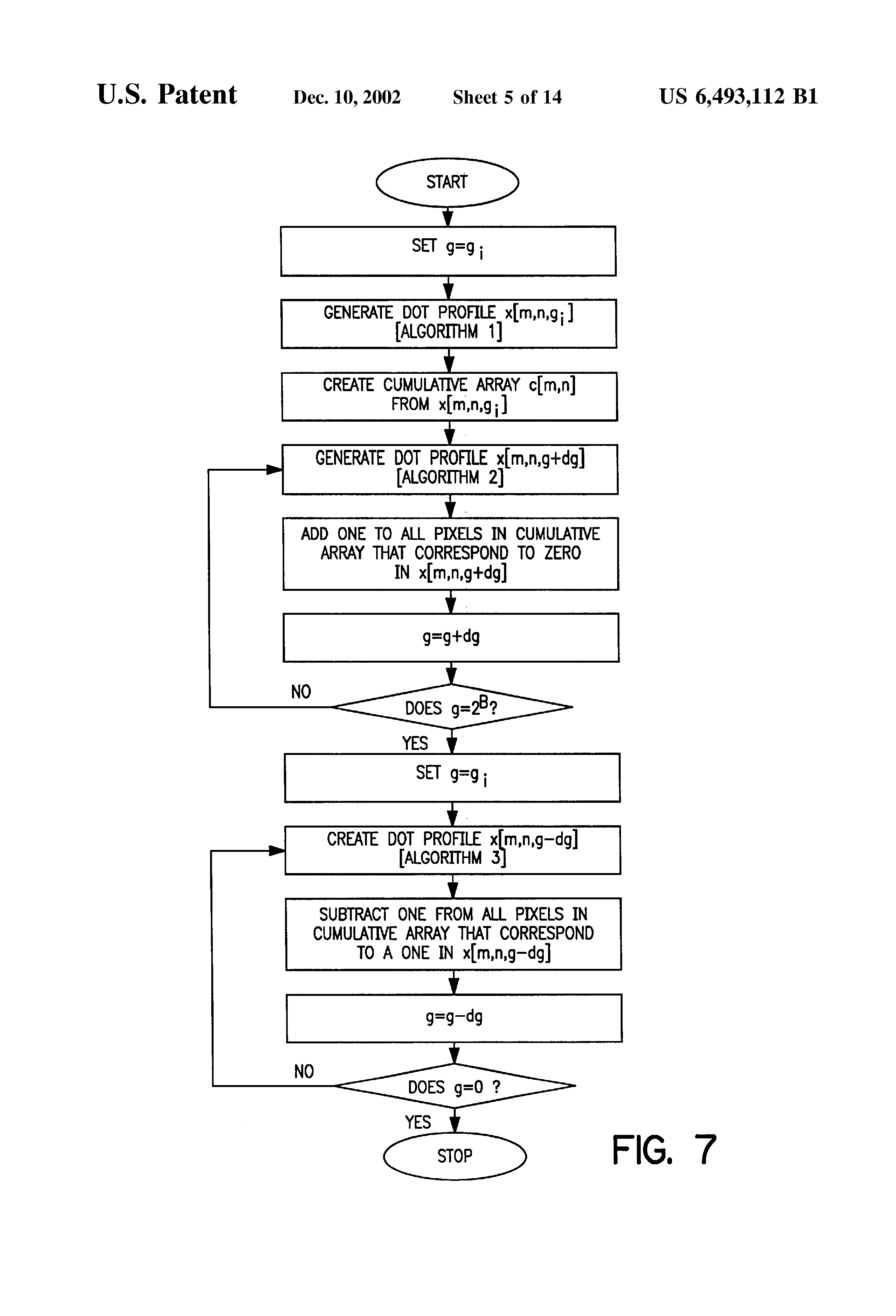
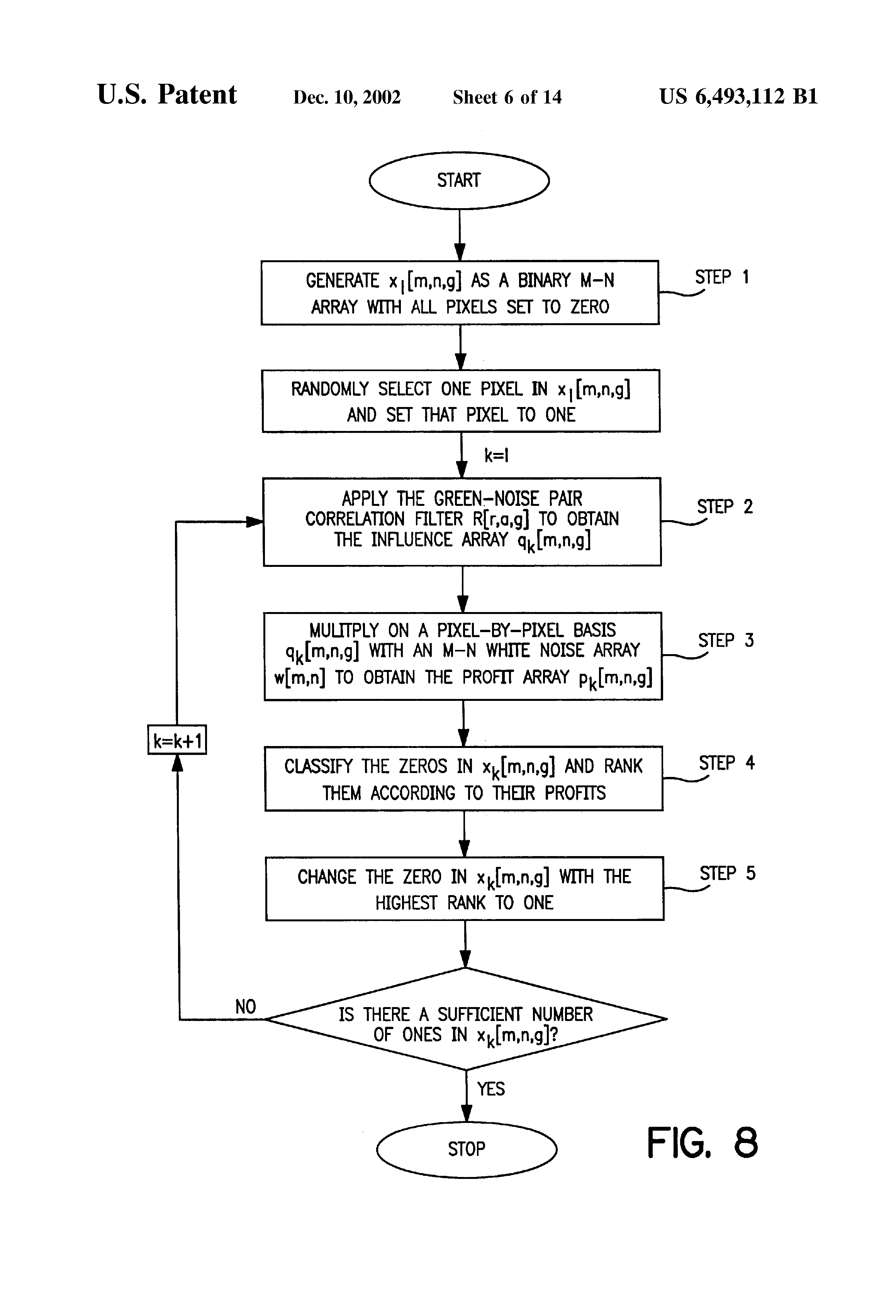
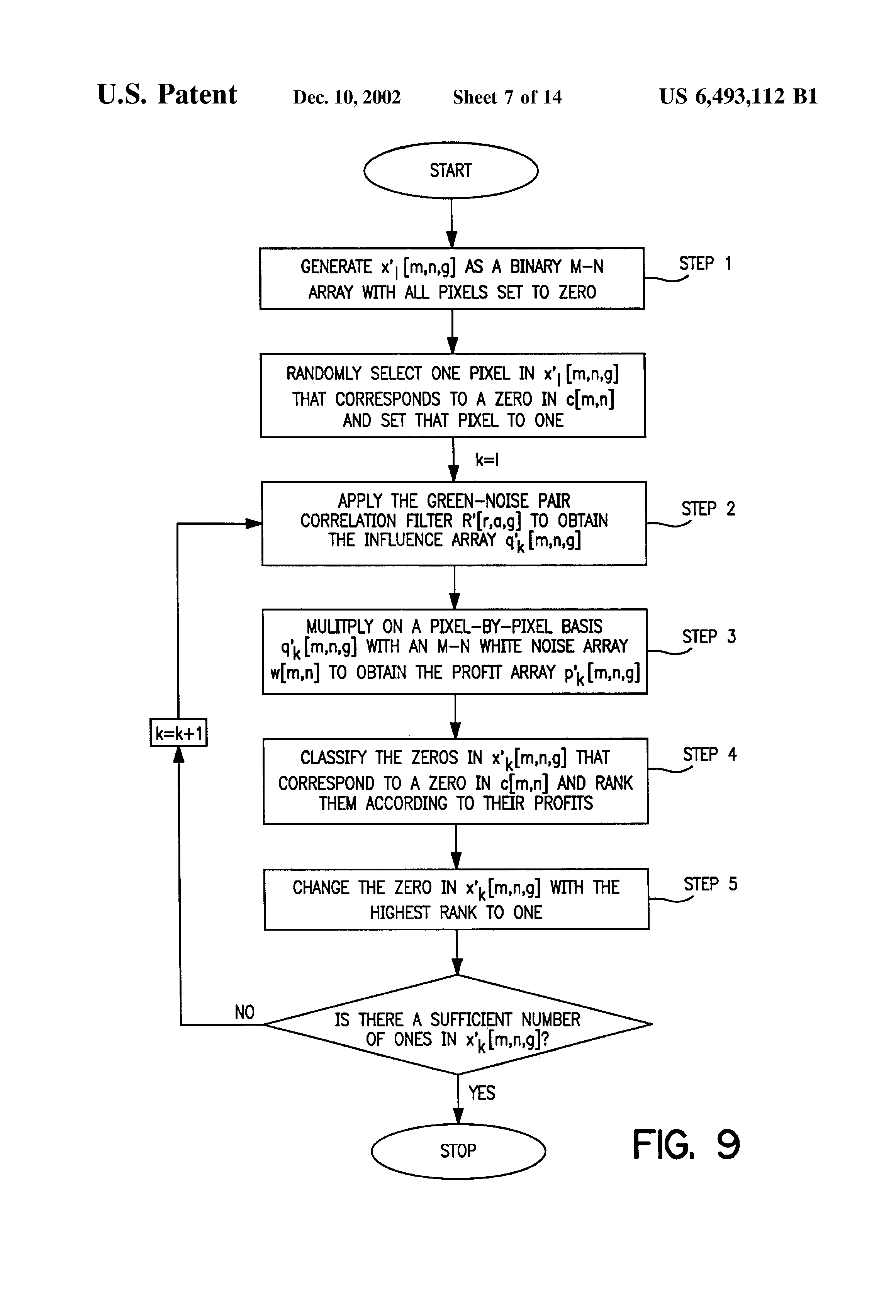
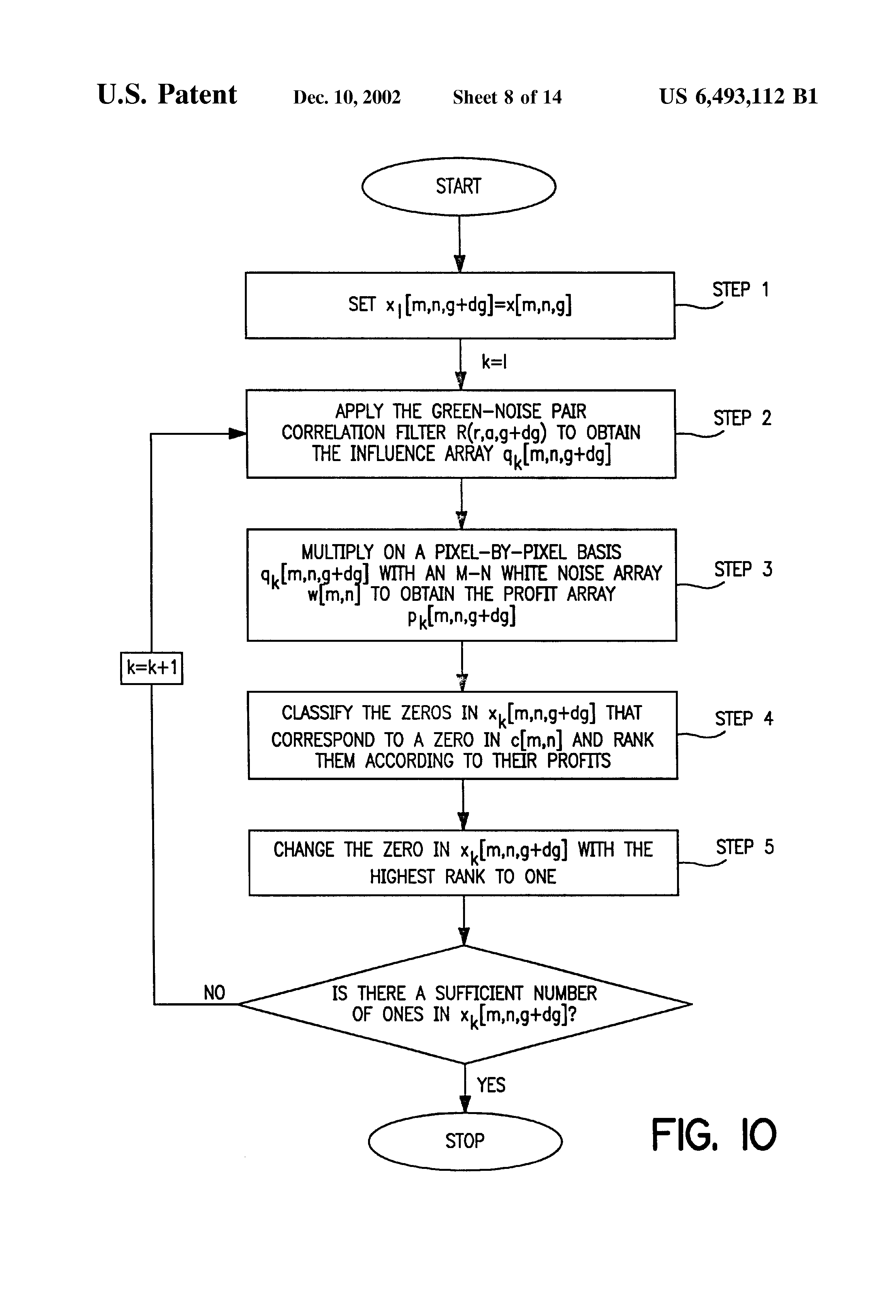
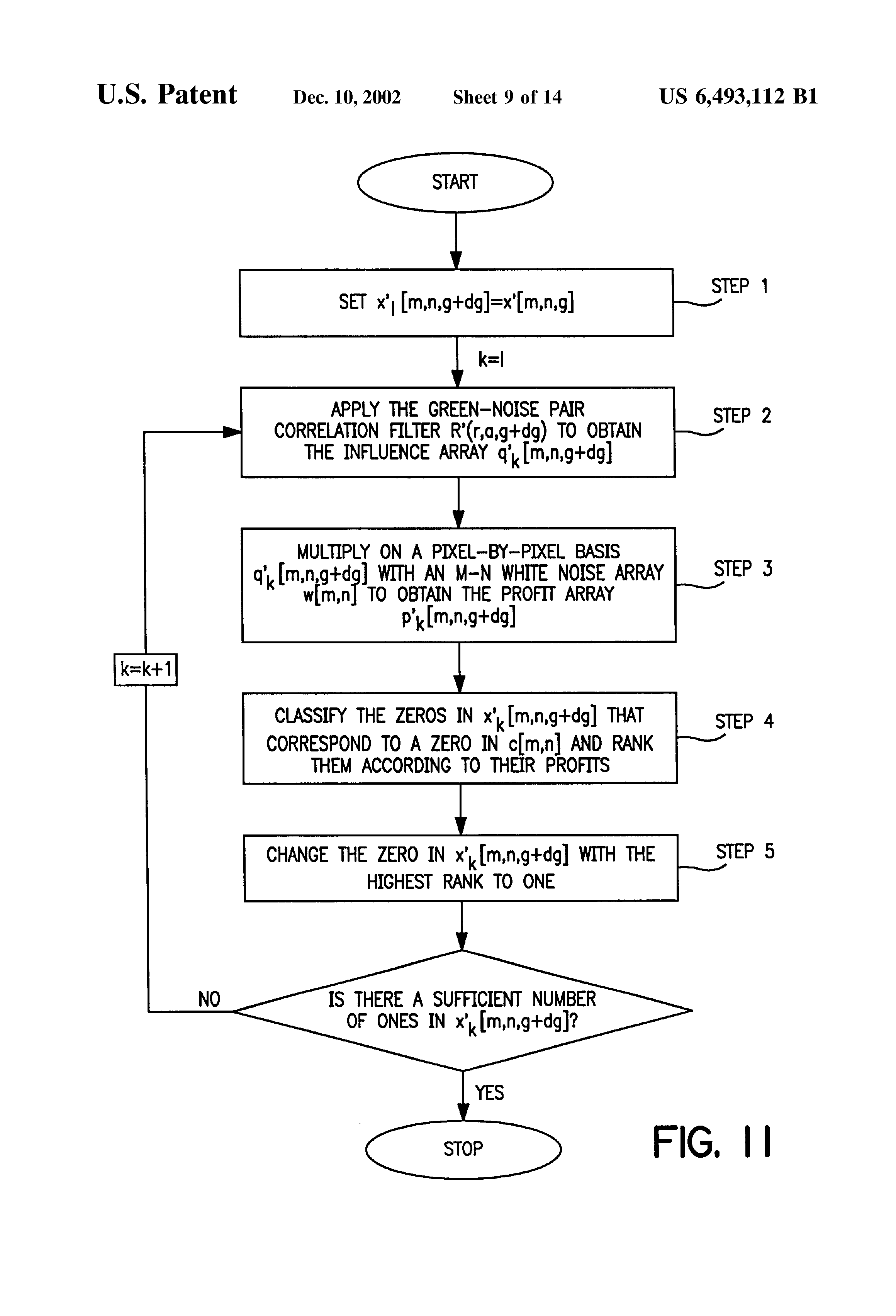
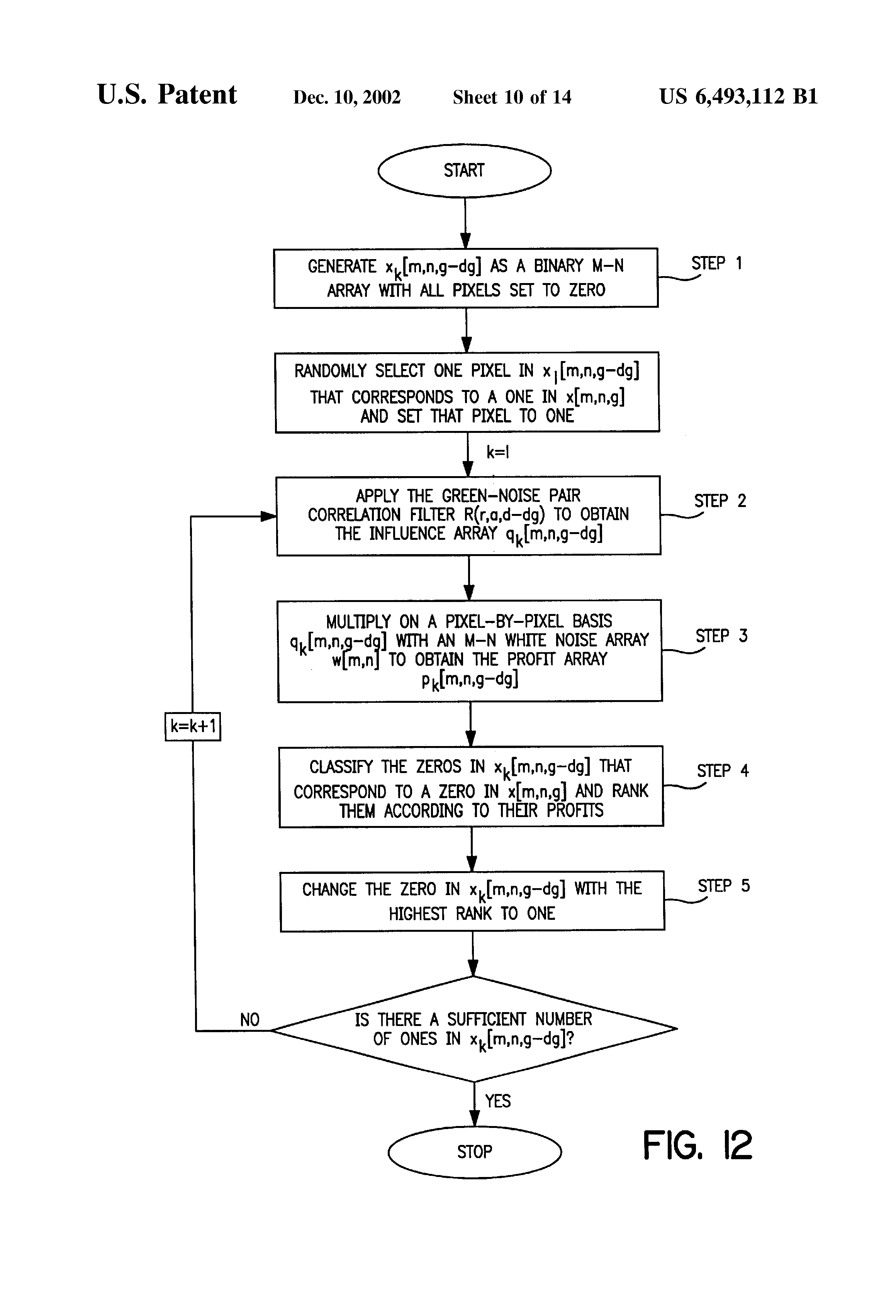
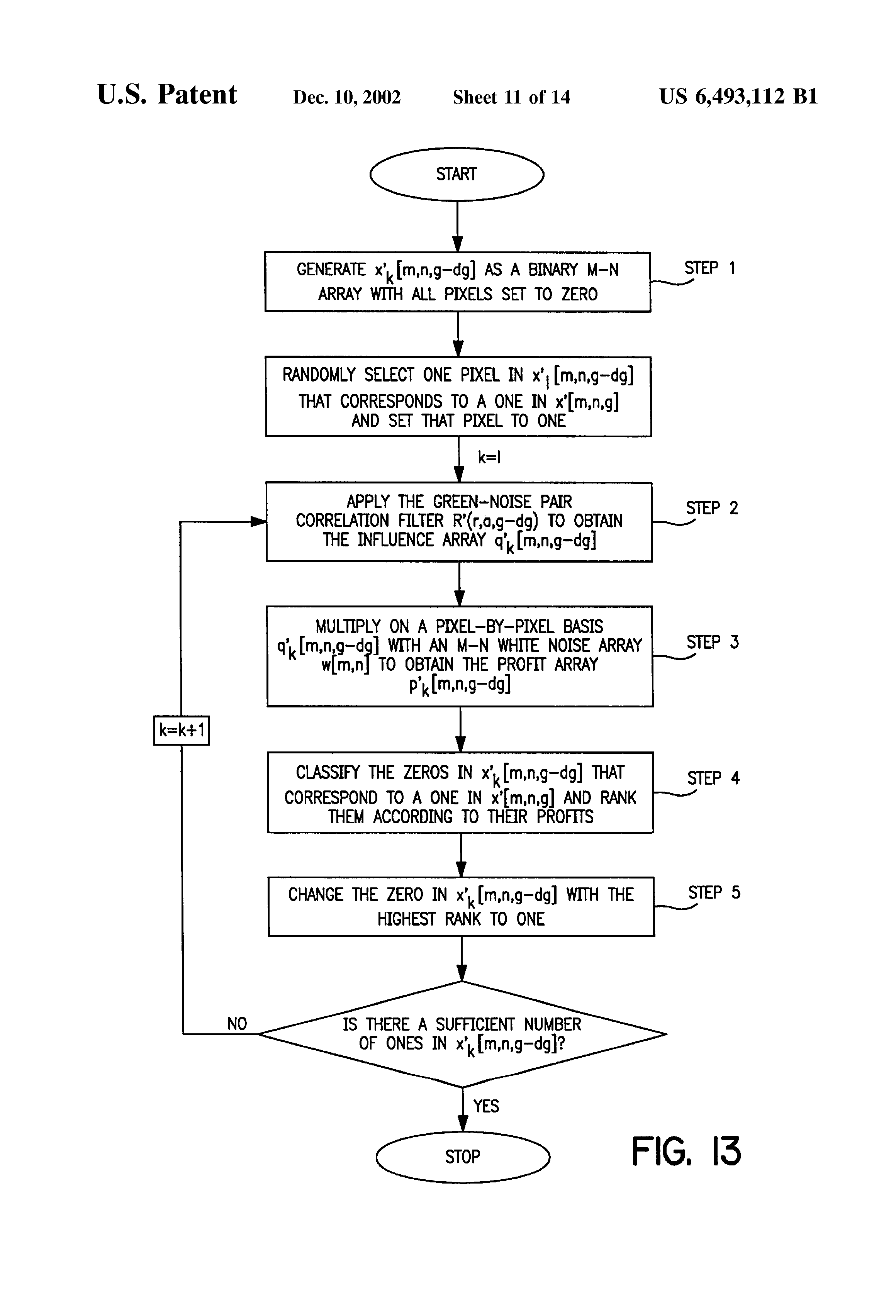
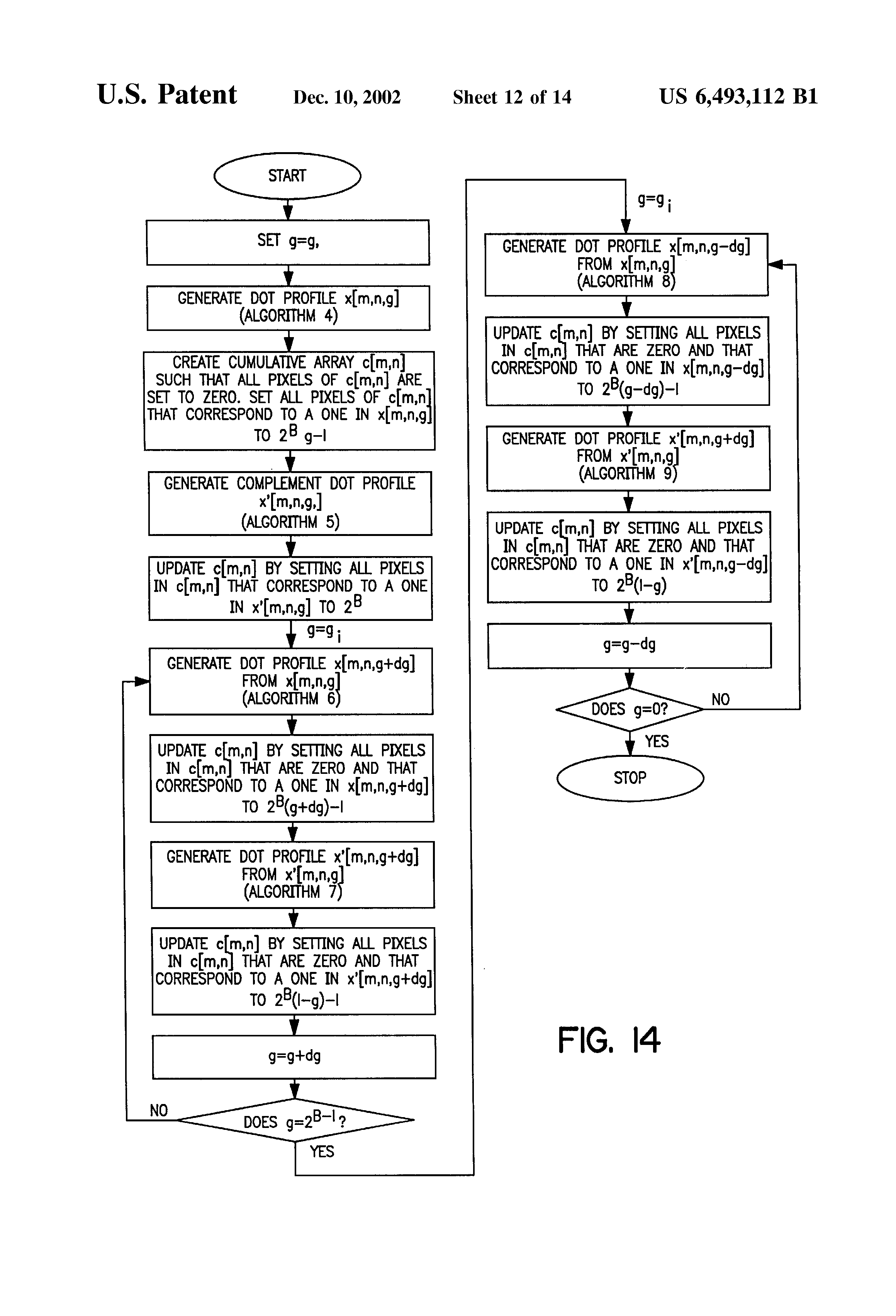
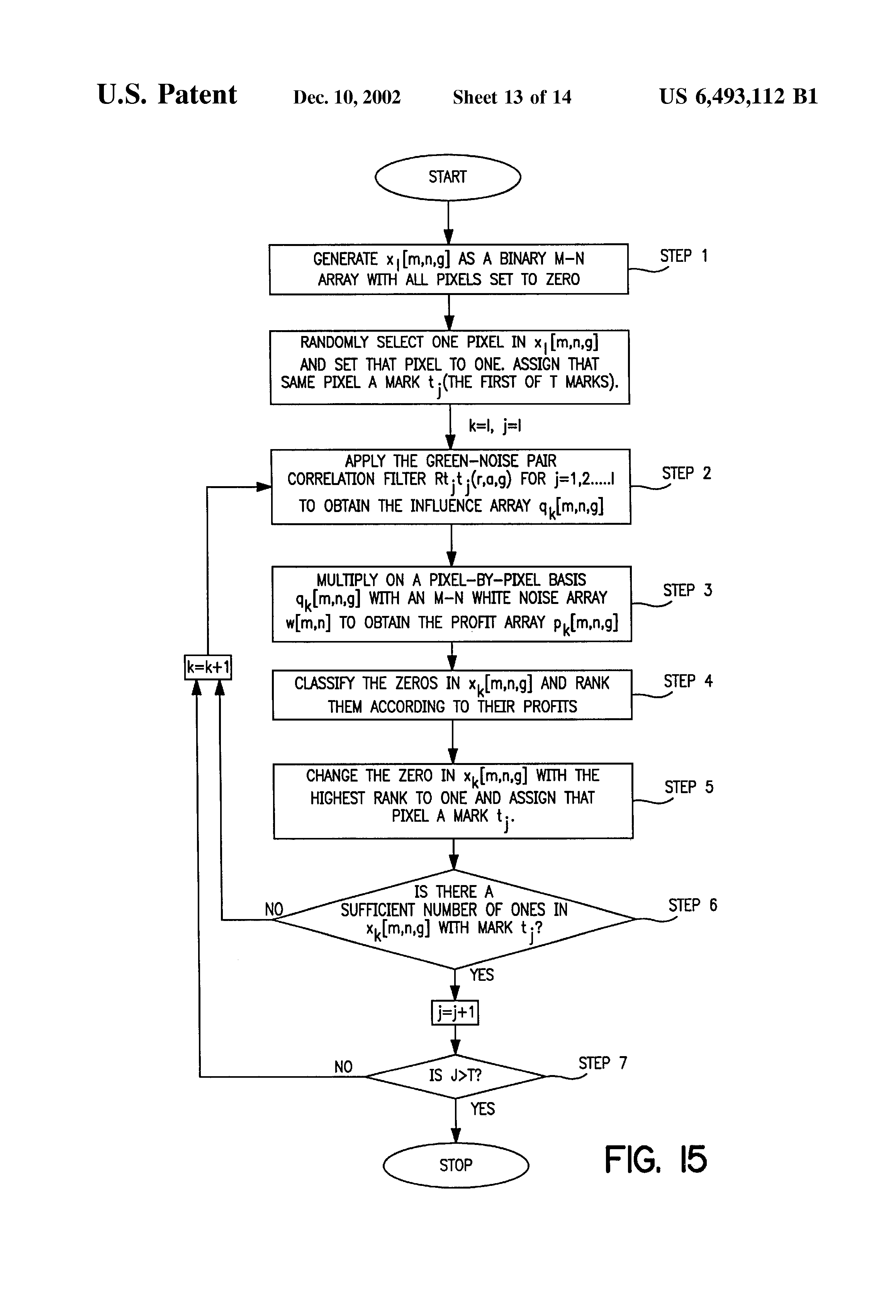
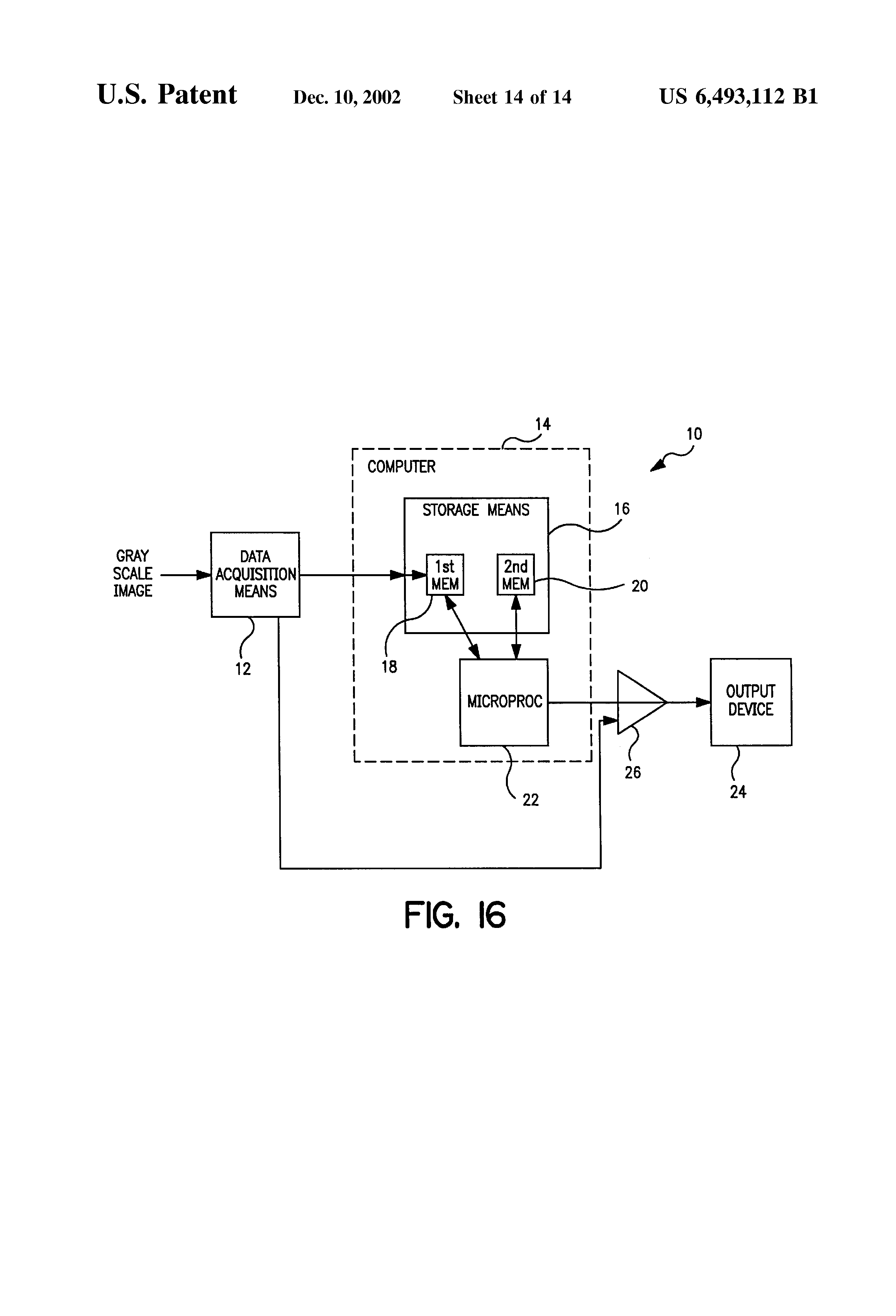
This patent introduces “green-noise” halftoning, which deliberately lets dots cluster into small clumps, with a tunable knob — coarseness — that sets how tightly they bunch. Because the clusters are designed in, the inevitable spreading of real-world ink degrades the image gracefully instead of producing blotches. The coarseness can be tuned independently at each gray level — loose in highlights, tight in mid-tones where artifacts are most visible. The technique applies to laser printers, inkjets, fax machines, and any device that has to fake continuous tone using only dots.
Figures