Product alignment using a printed relief
Summary
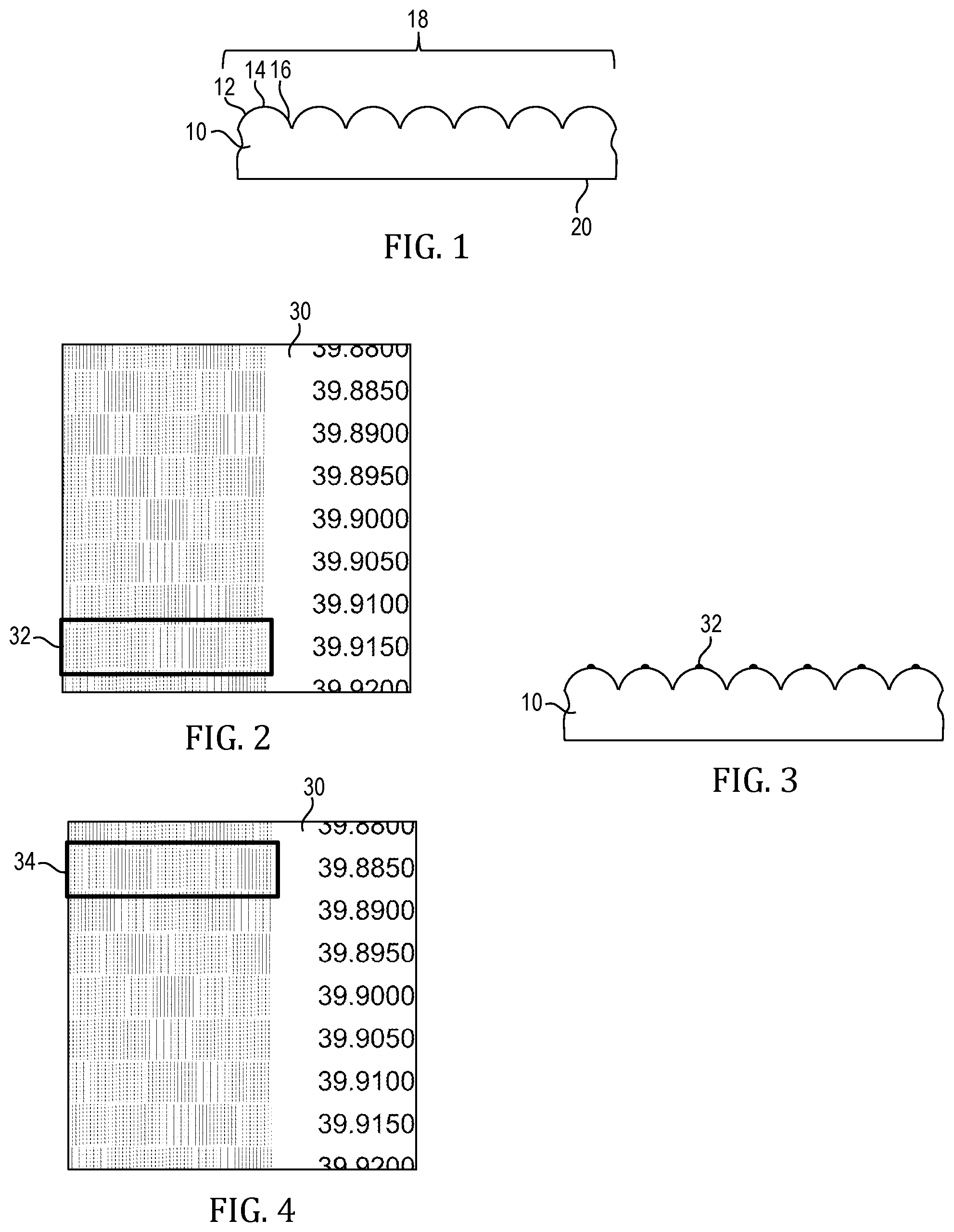
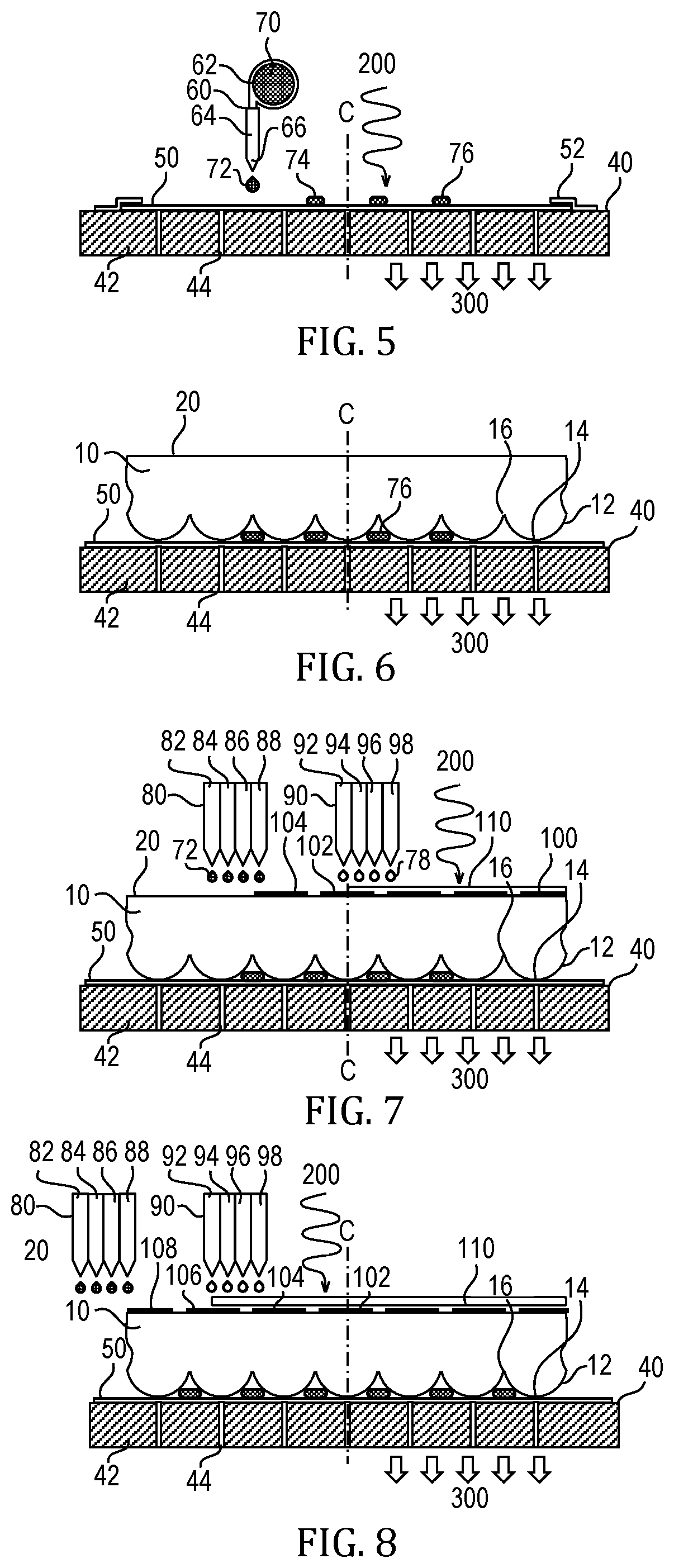
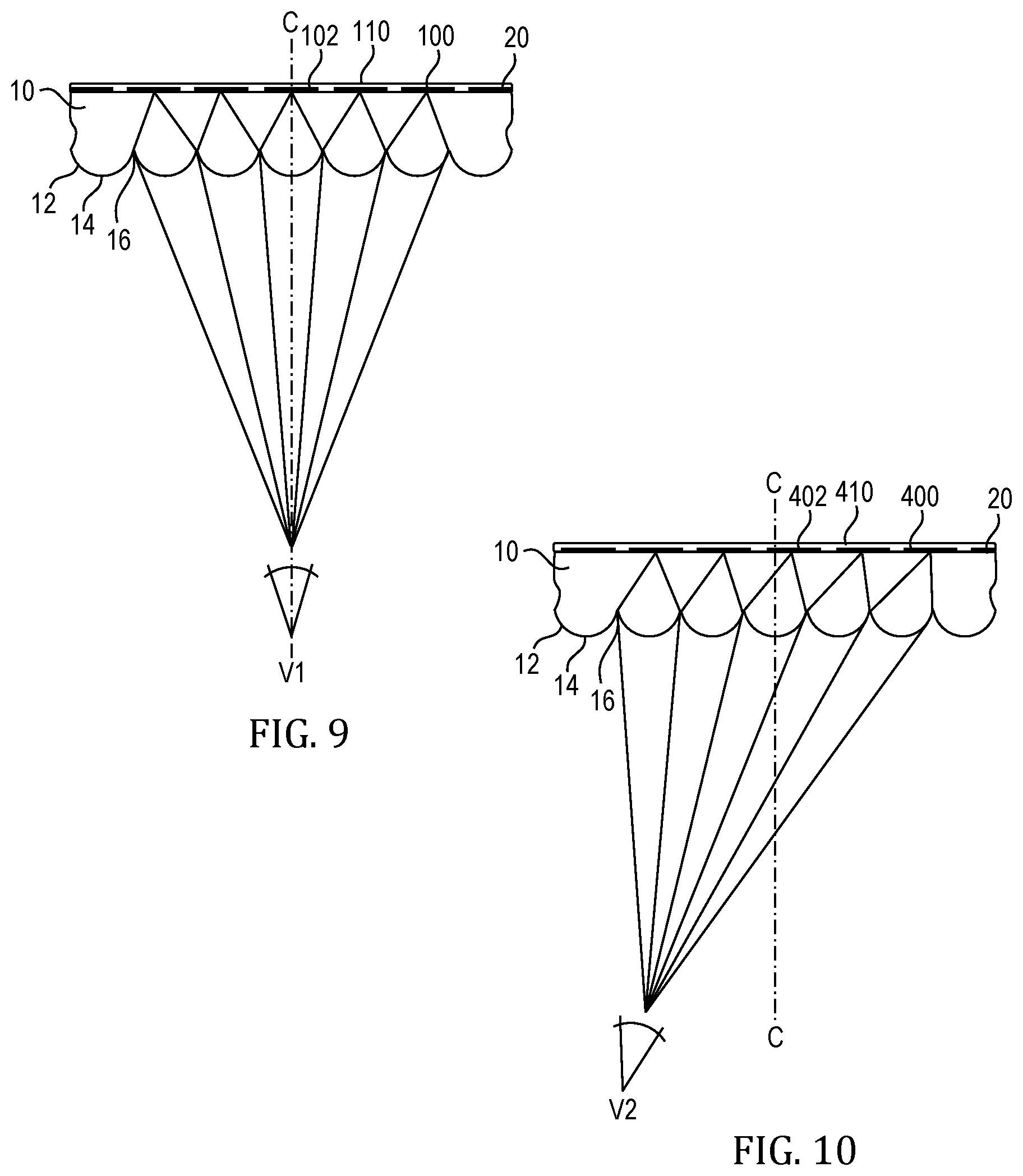
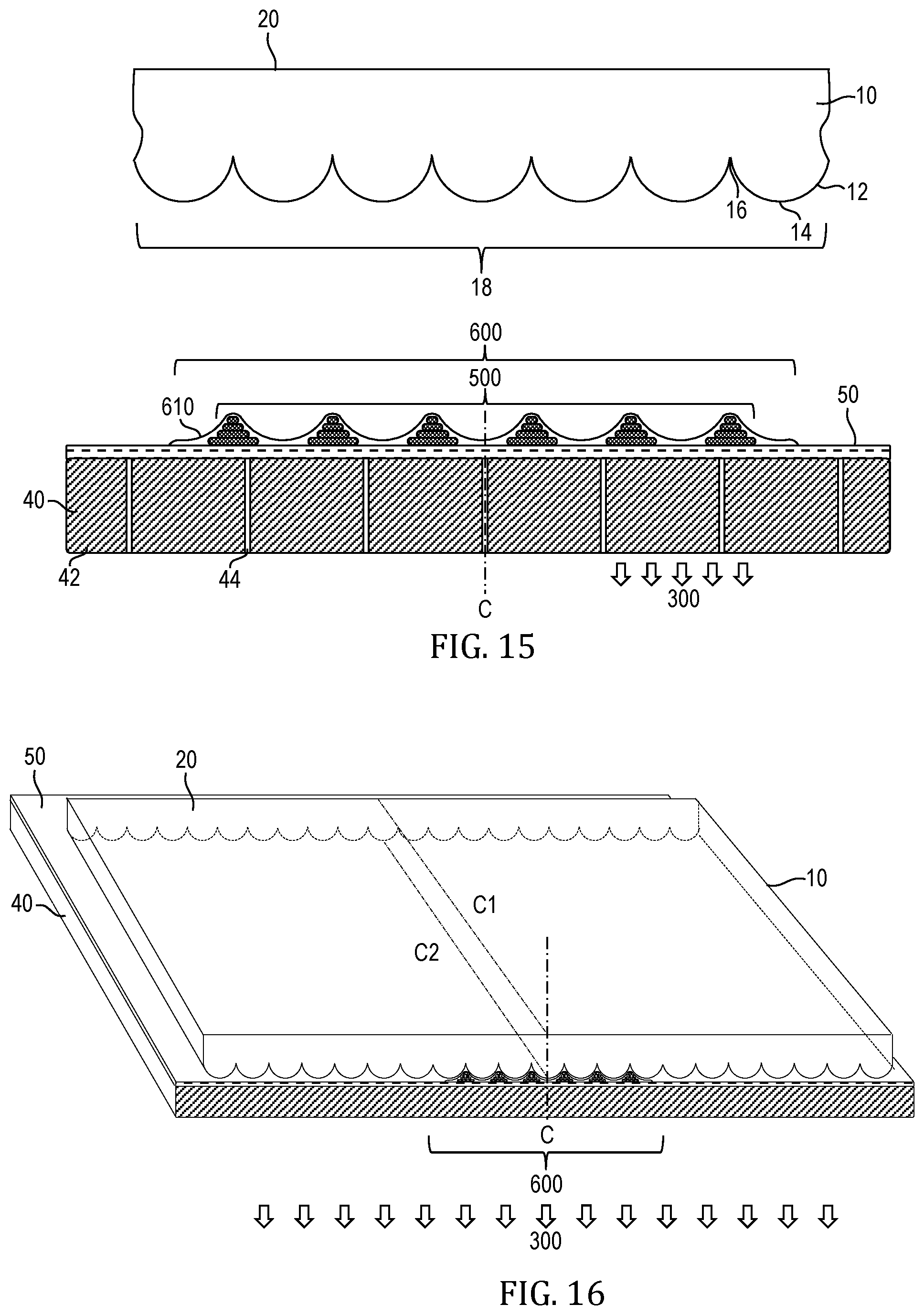
Another continuation of the tactile-relief lenticular registration family. The shared idea is to replace mechanical alignment jigs with raised ink ridges printed directly onto the substrate, so the lens sheet self-seats into the print at exactly the pitch the printer just measured.
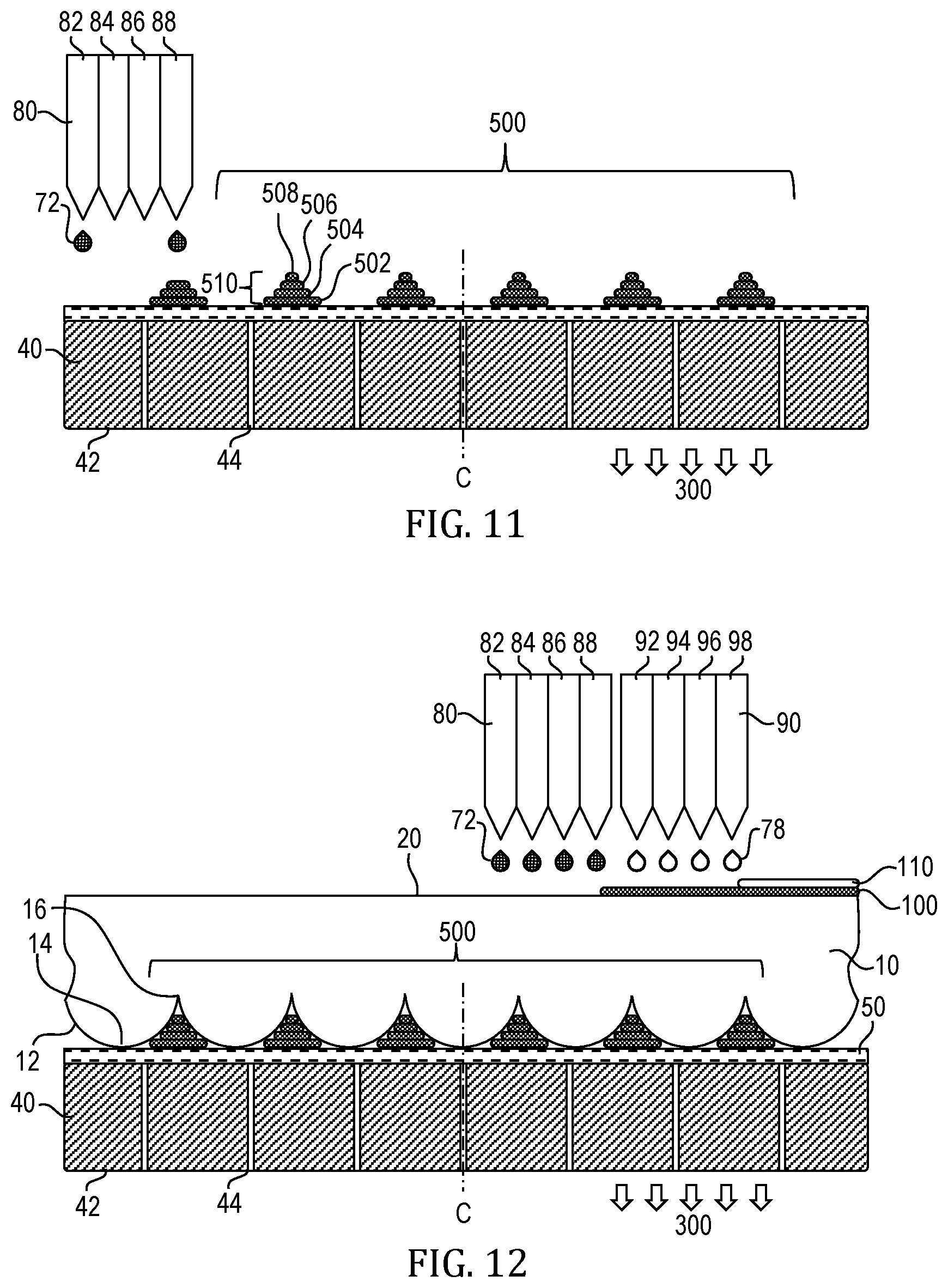
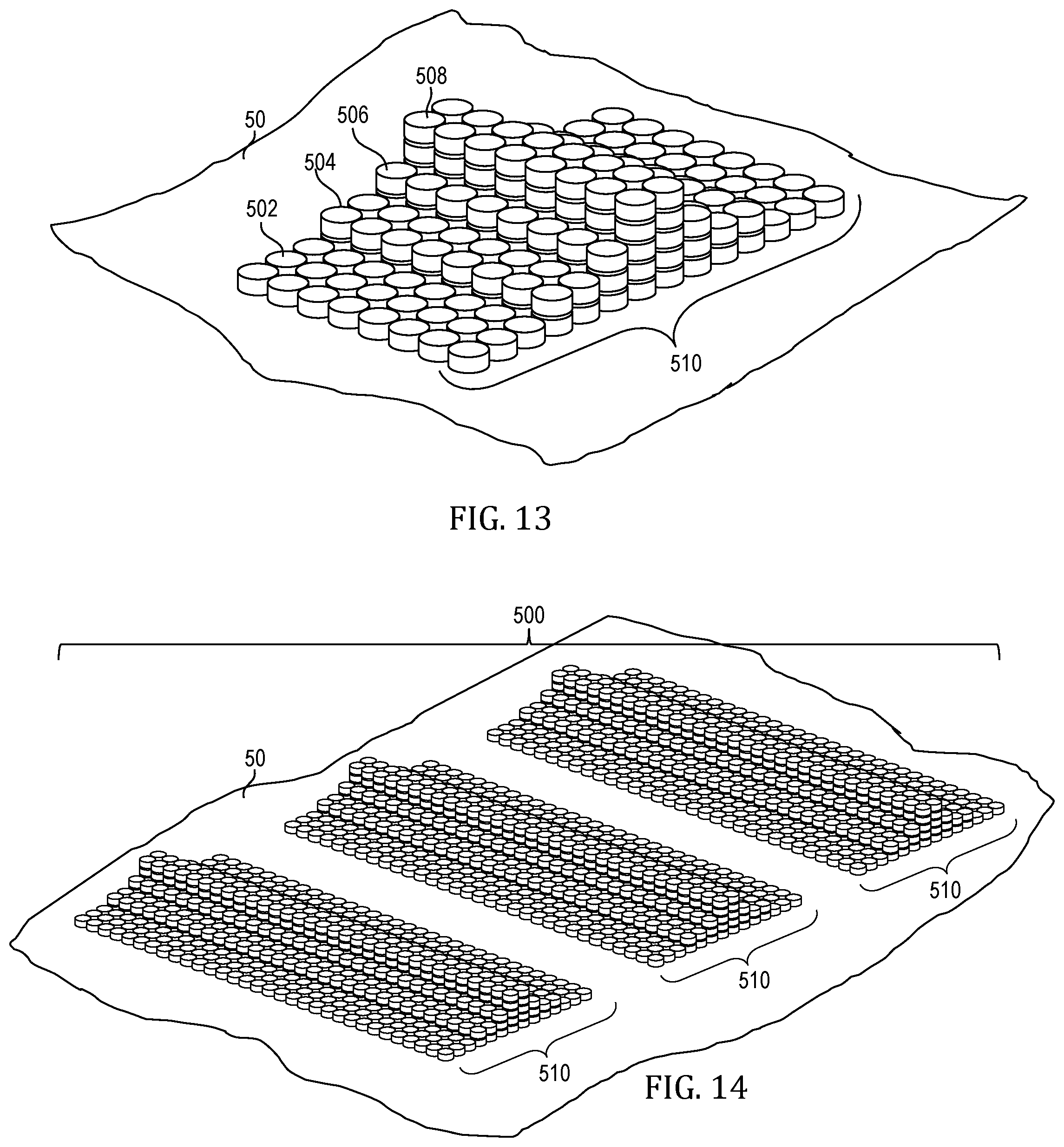
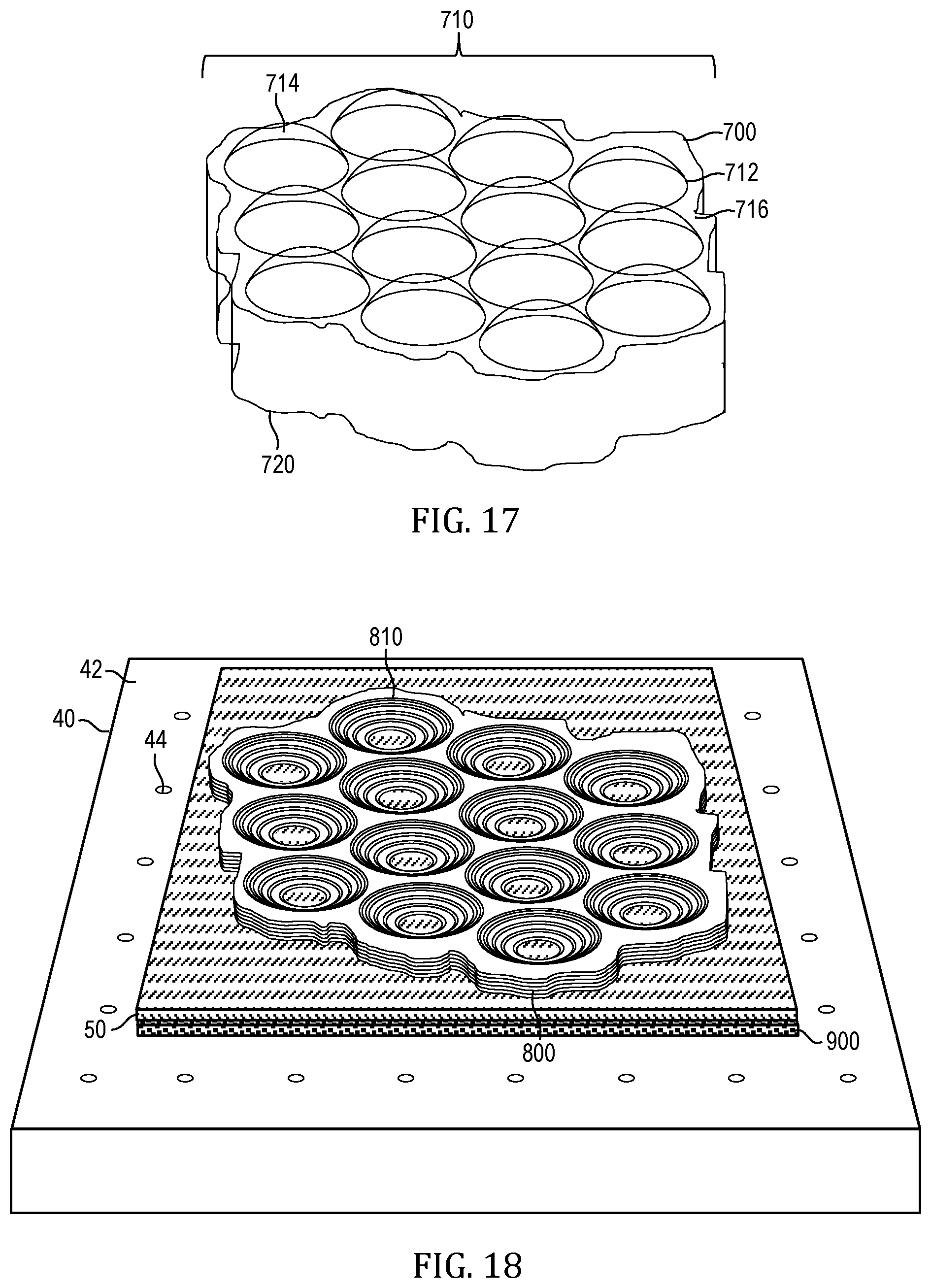
This continuation focuses on the two-dimensional case — spherical, or fly’s-eye, lens arrays that produce full-parallax 3D imagery rather than the one-axis effect of cylindrical lenticulars. Aligning a 2D array requires a concave alignment grid rather than parallel ridges, and that grid has to seat the lenses in both axes simultaneously without crushing them.
The patent claims the use of multi-layer quantized ink structures that accumulate into the required concave geometry, an optional selective coating that smooths the printed steps into a surface conformal to the lens shape, and a small but practical detail: a catchment layer around any vacuum port used to hold the sheet during printing, to keep stray ink droplets from clogging the port. Together these refinements push the tactile-relief registration approach into the higher-precision, two-axis market needed for full-parallax 3D prints.
Figures