System and method for embedding of a two dimensional code with an image
Summary
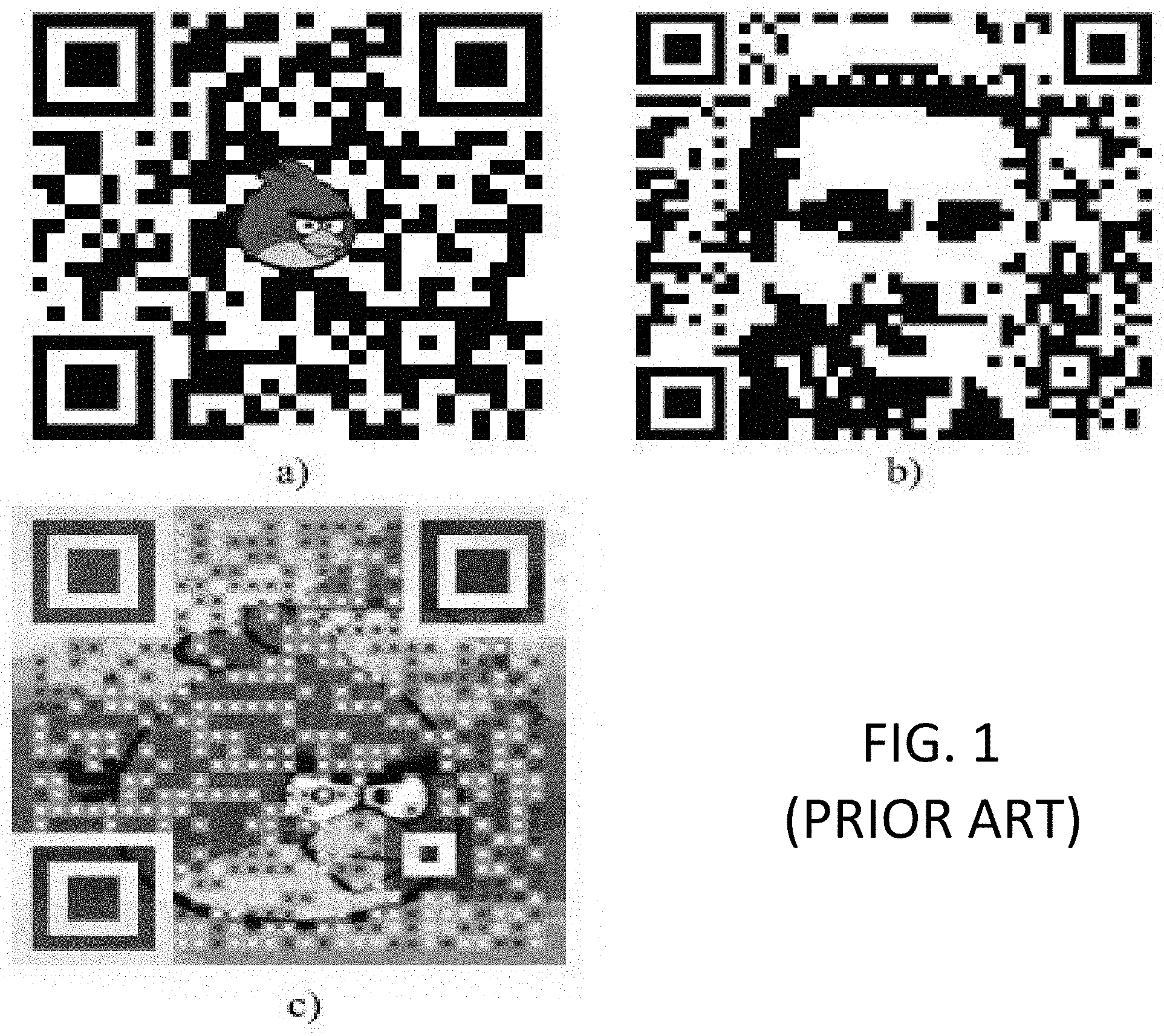
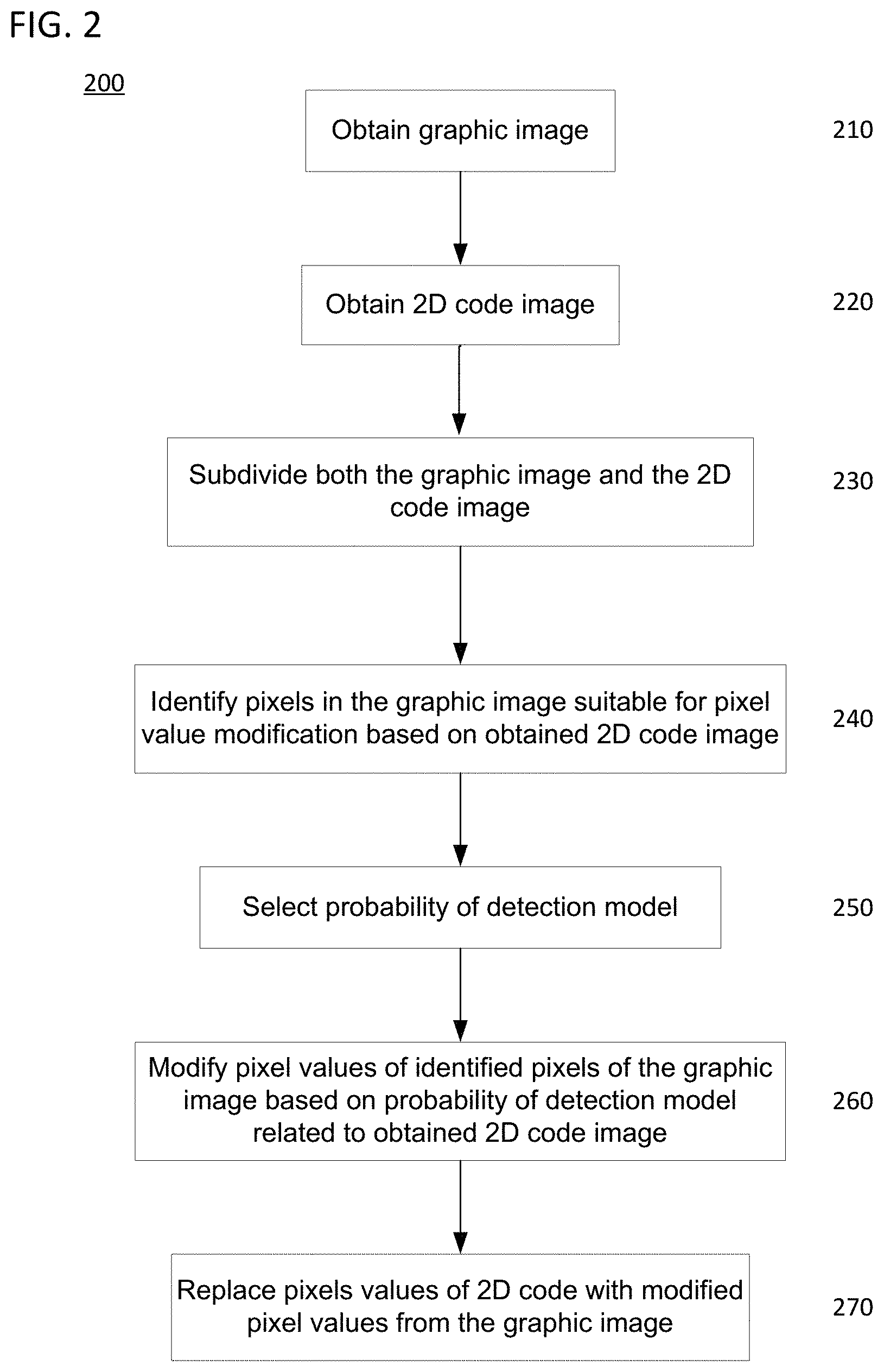
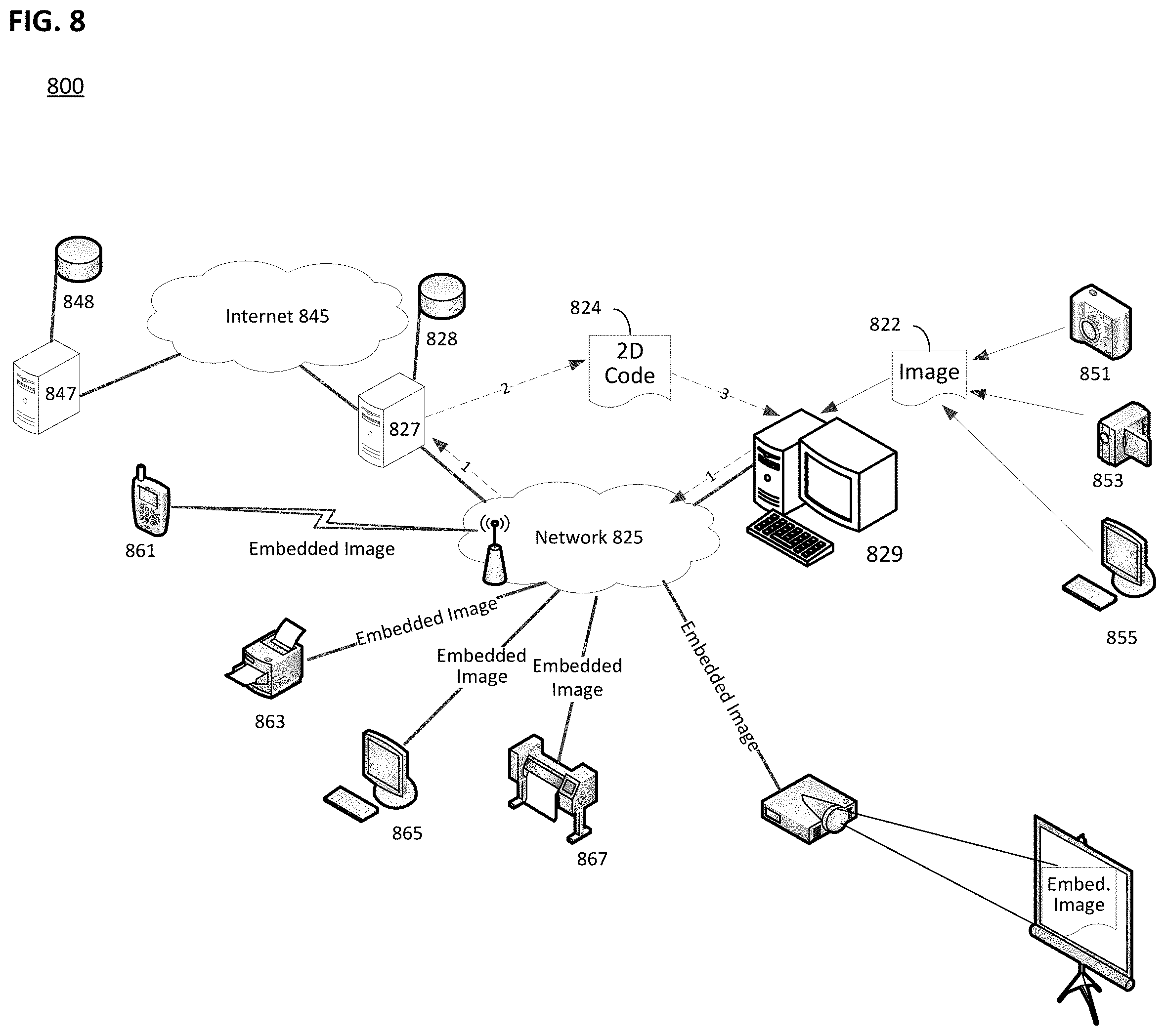
A continuation of the “QR hidden inside an image” family. The parent (9,865,027) framed the embedding as a constrained optimization — minimize the visible deviation from a host image subject to a bounded probability of QR decoding error. This continuation tightens that framework and broadens the kinds of host images it can handle.
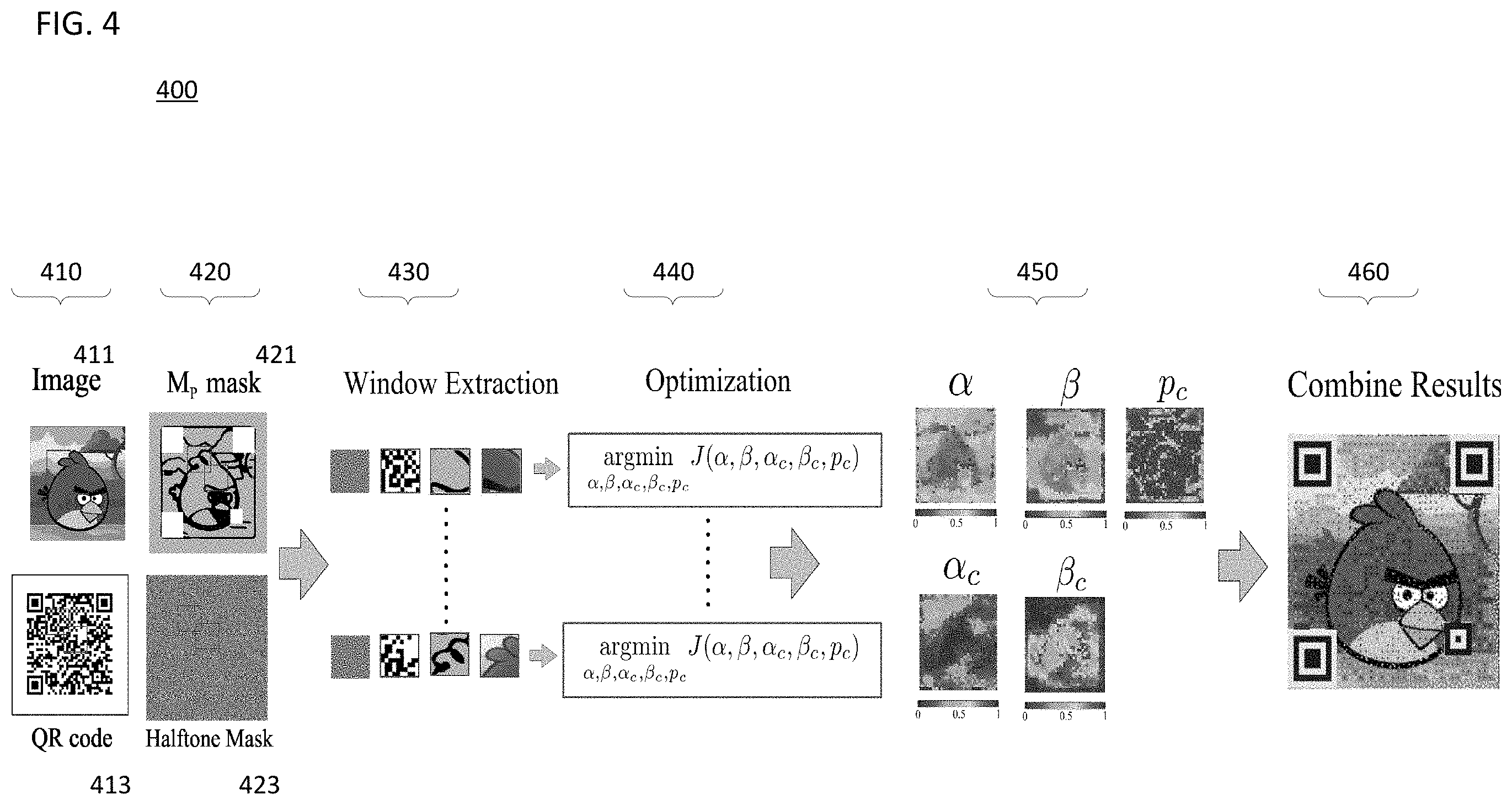
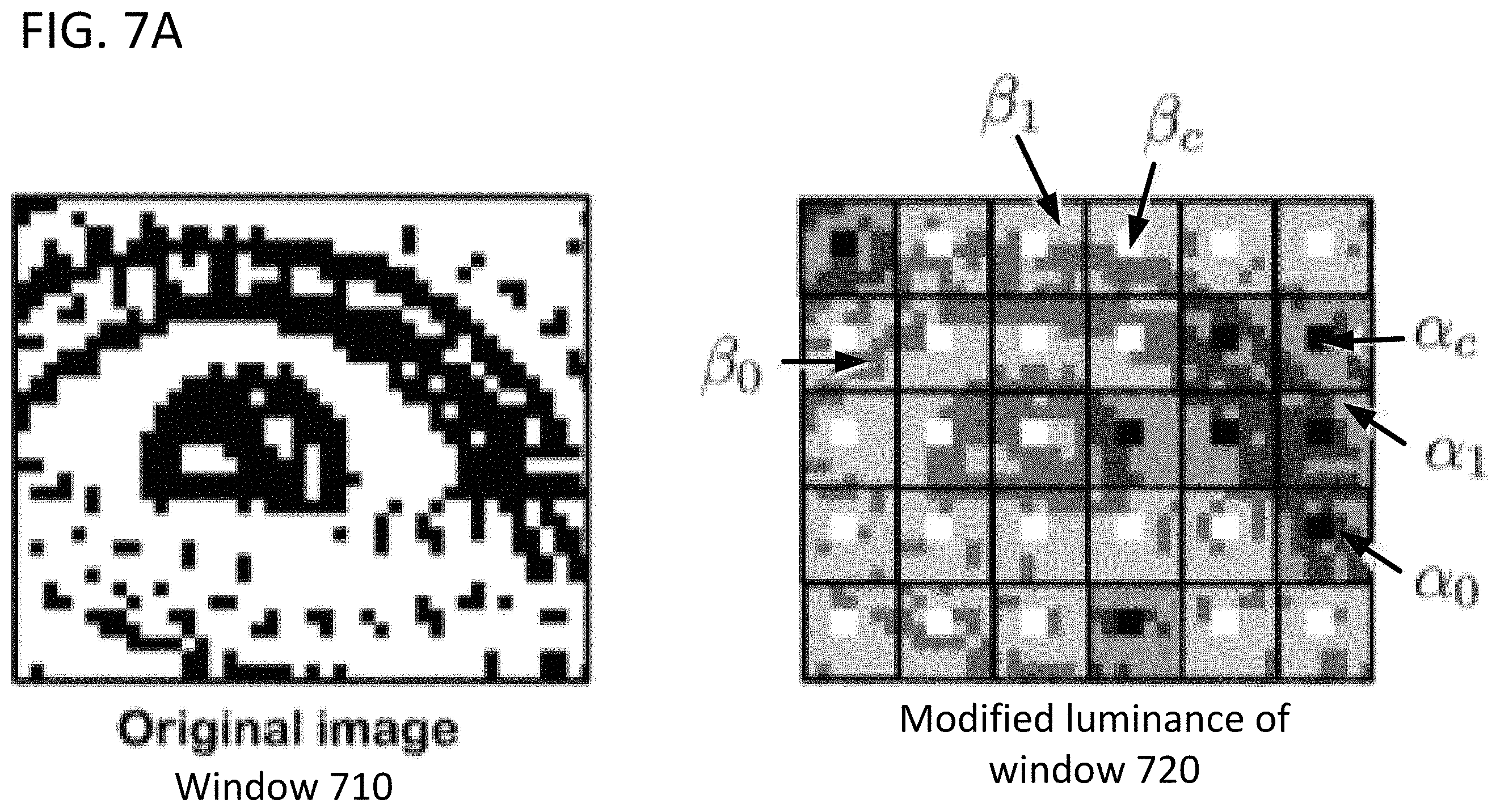
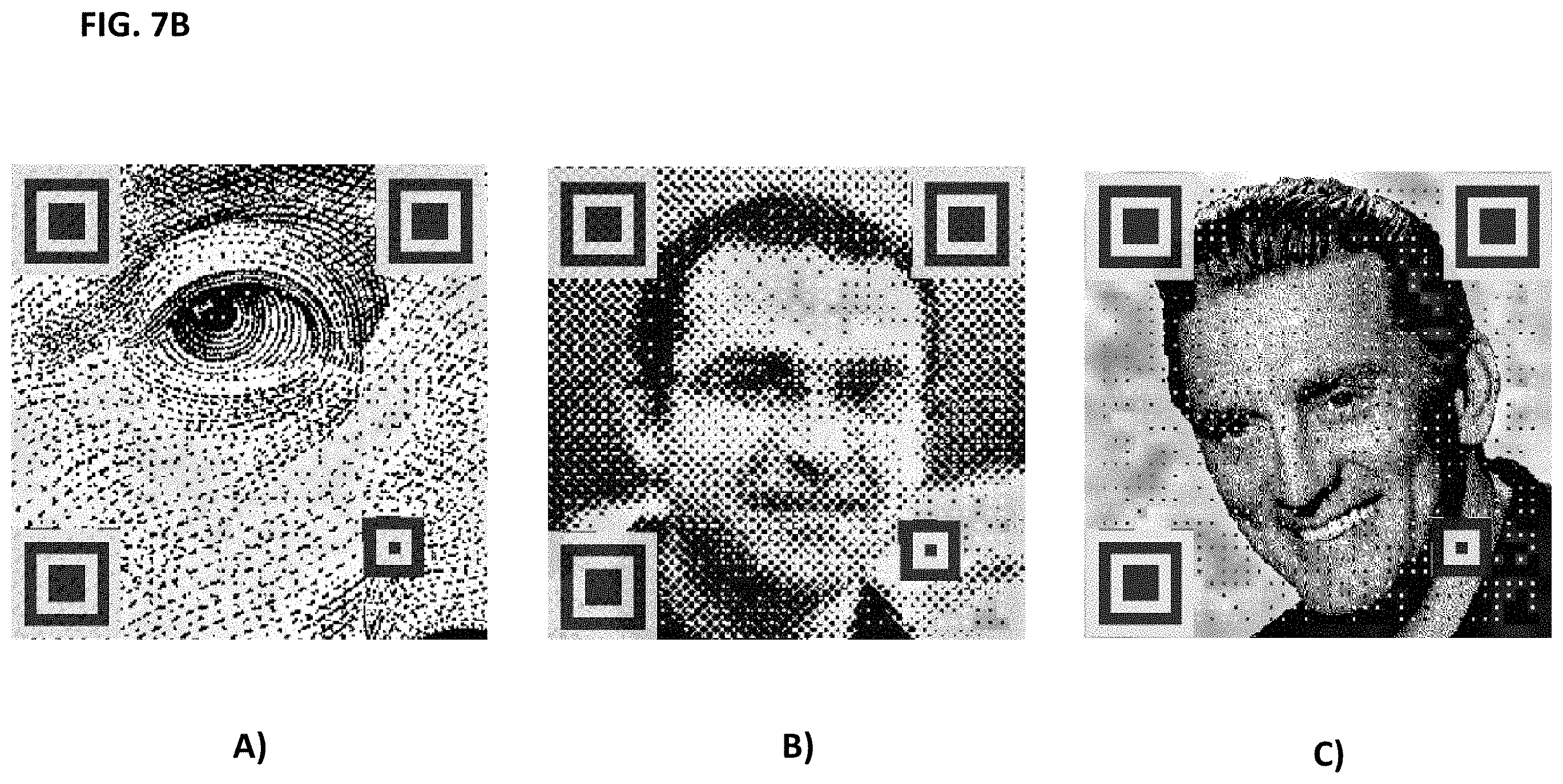
On the model side, the patent formalizes a probability-of-detection model that accounts for viewing distance and printing resolution, so the optimizer can be tuned for how the result will actually be perceived, not just how it will be scanned. It also separates binary host images (line art, logos) from continuous-tone images, giving each their own luminance parameters because the constraints are different.
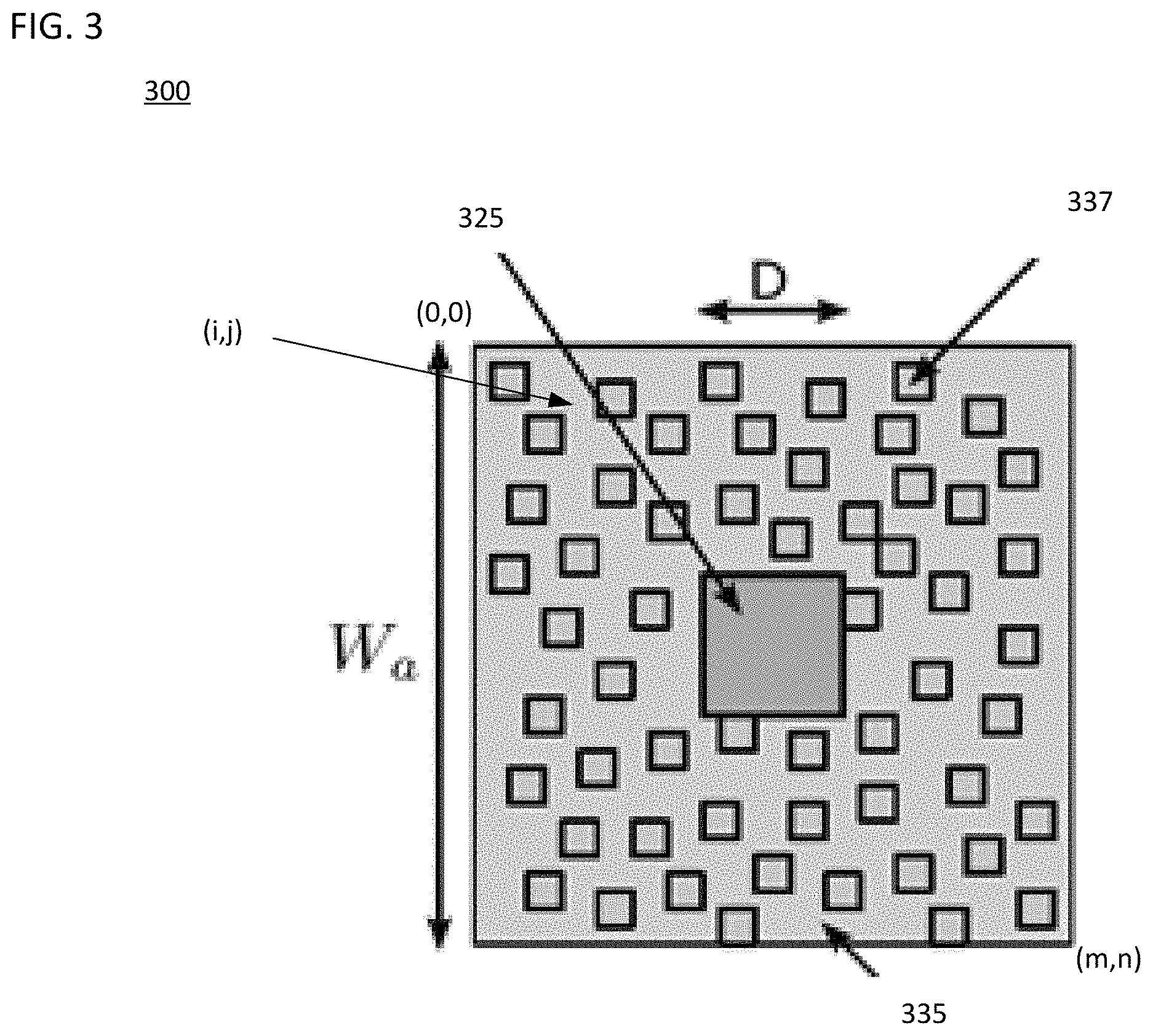
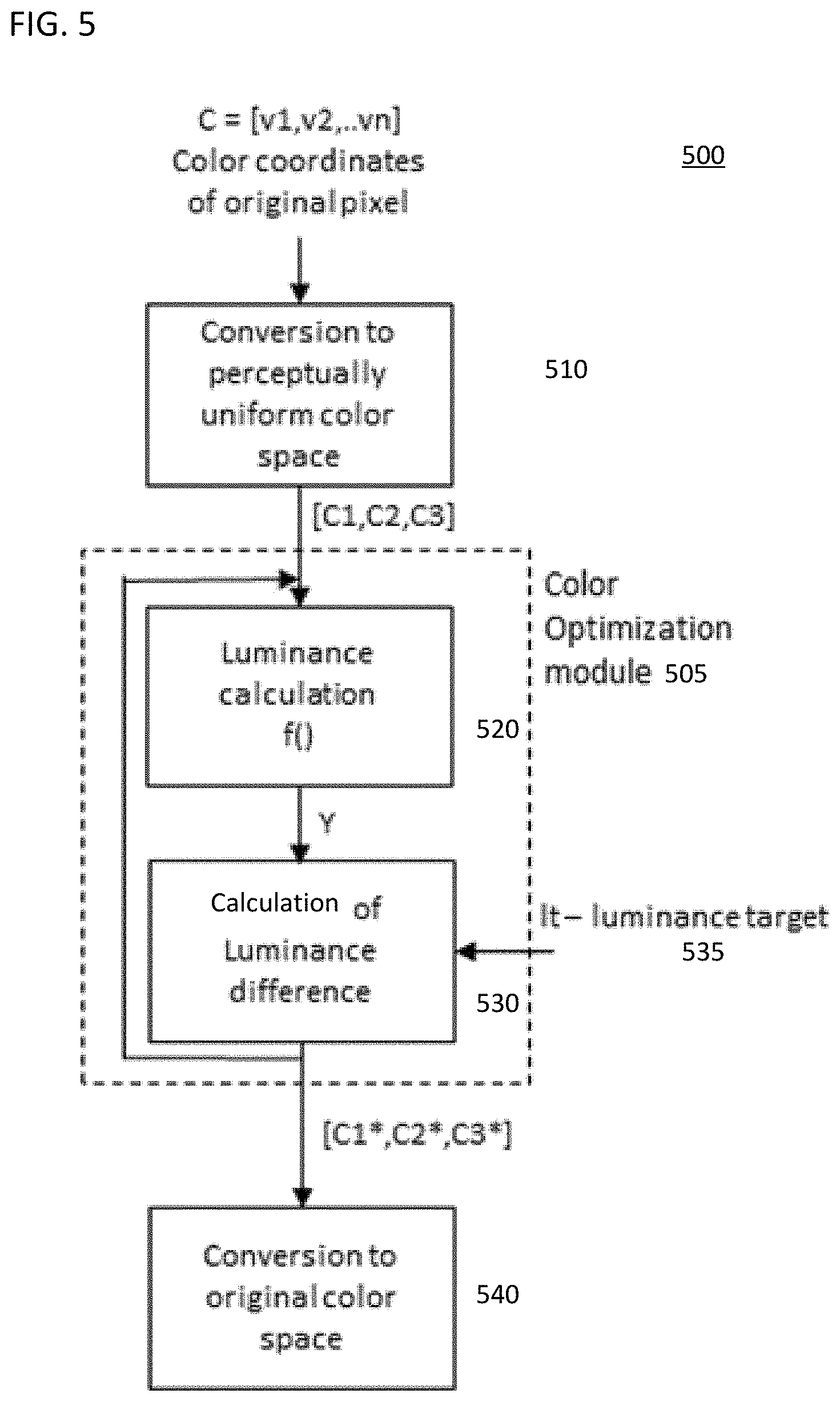
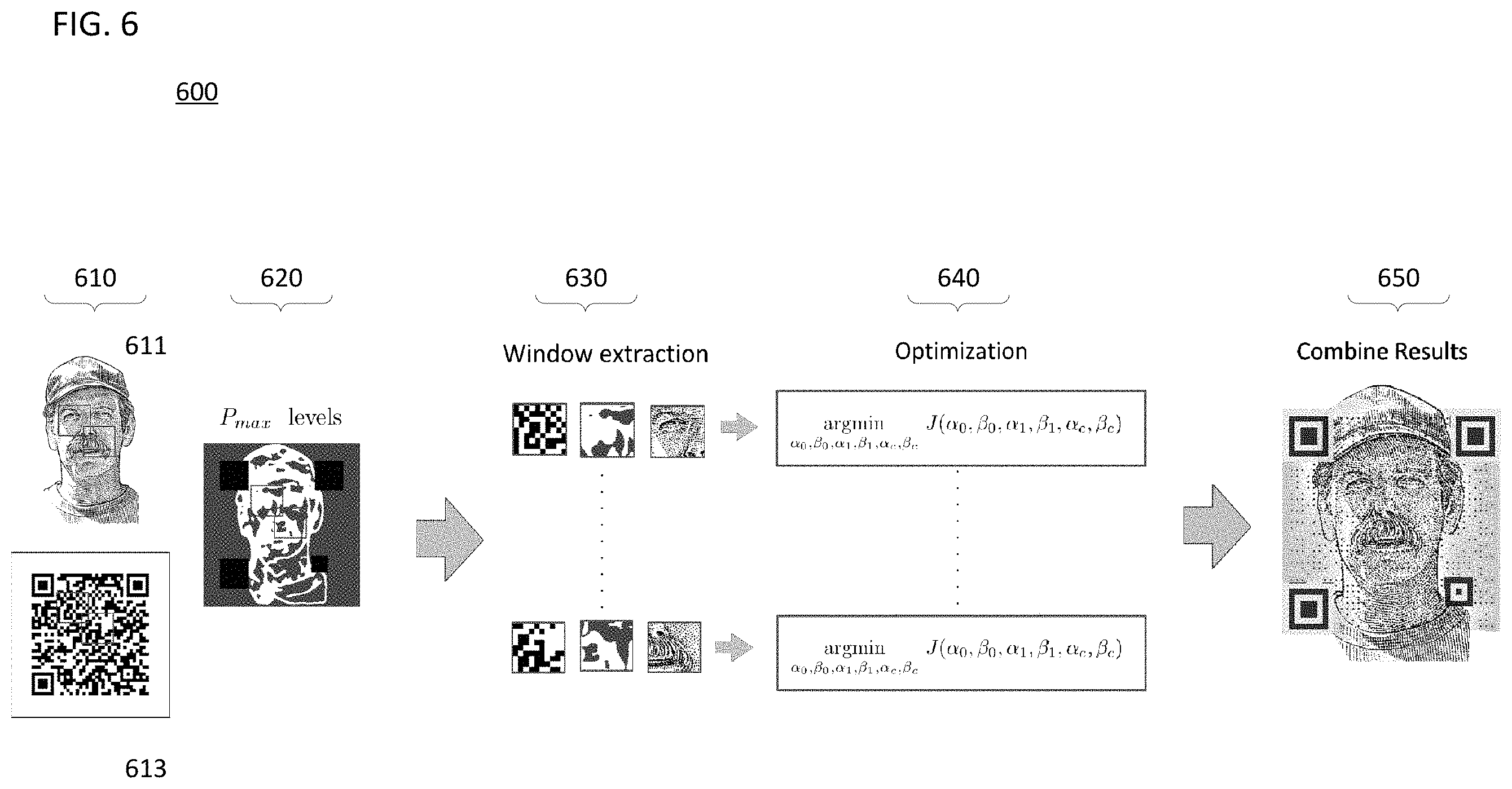
On the color side, the continuation routes the optimization through a perceptually uniform color space — HSL, Luv, or Lab — before mapping back to the original device color space. That lets the optimizer measure distortion the way the human eye measures it, rather than the way the printer or sensor encodes it. The patent also tightens the sub-block granularity, optimizing each region of the image independently and interpolating between them, so the embedded code matches local image content more closely.
Figures