System and method for embedding a two dimensional code in video images
Summary
Visible QR codes on a screen are easy enough to scan, but they also dominate the frame — they look like a code, they take up real estate that could be carrying picture, and they break the immersion of an ad, a film, or a broadcast. The natural question is whether a video can carry scannable codes inside its imagery, without the viewer noticing any code is there.
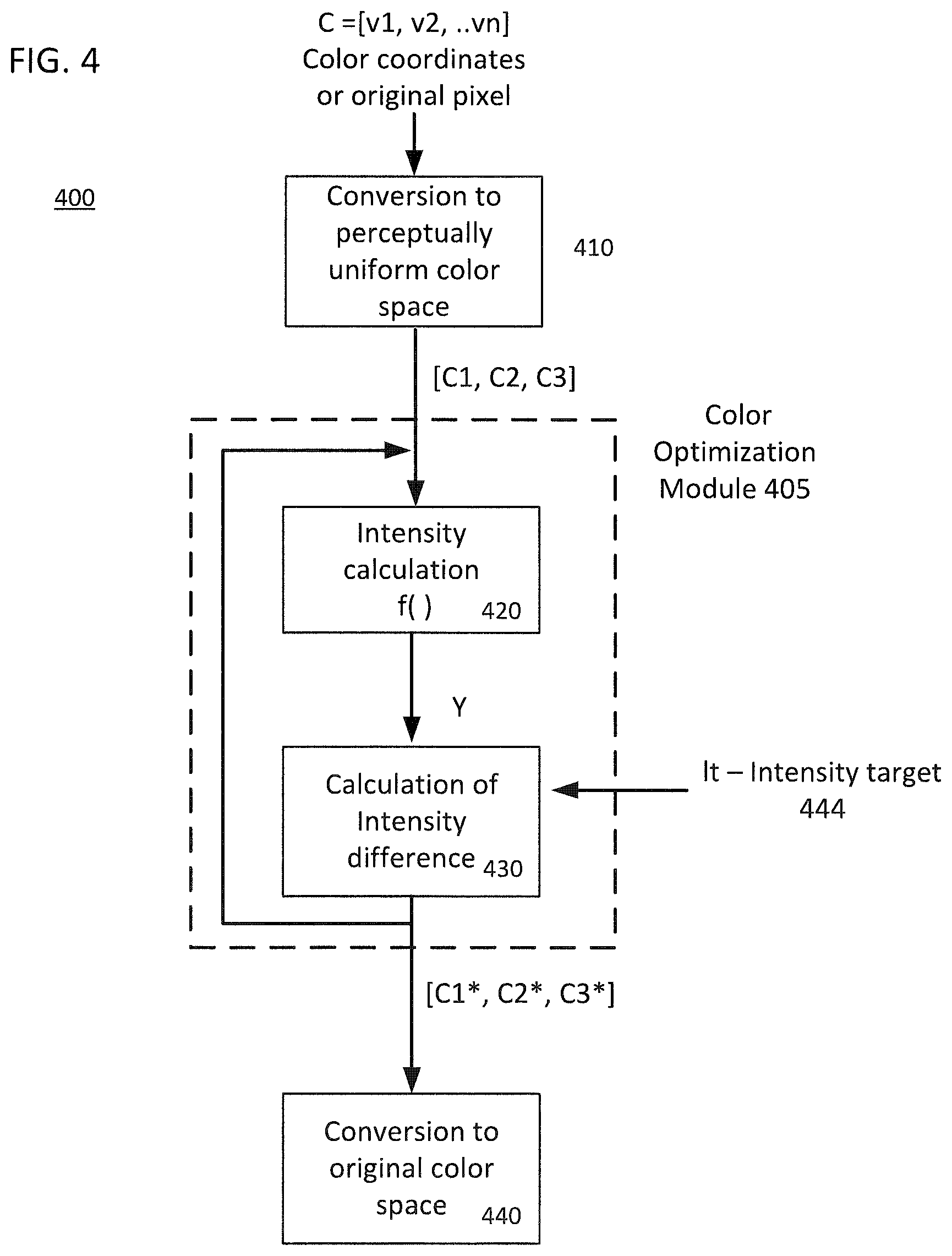
For still images, prior work in this family established a constrained optimization that nudges pixel brightness inside a host image to embed a QR while keeping the visible distortion small. Video raises a harder version of the same problem: each individual frame must still scan, but the eye is far more sensitive to flicker and pattern motion across frames than to small differences inside one frame.
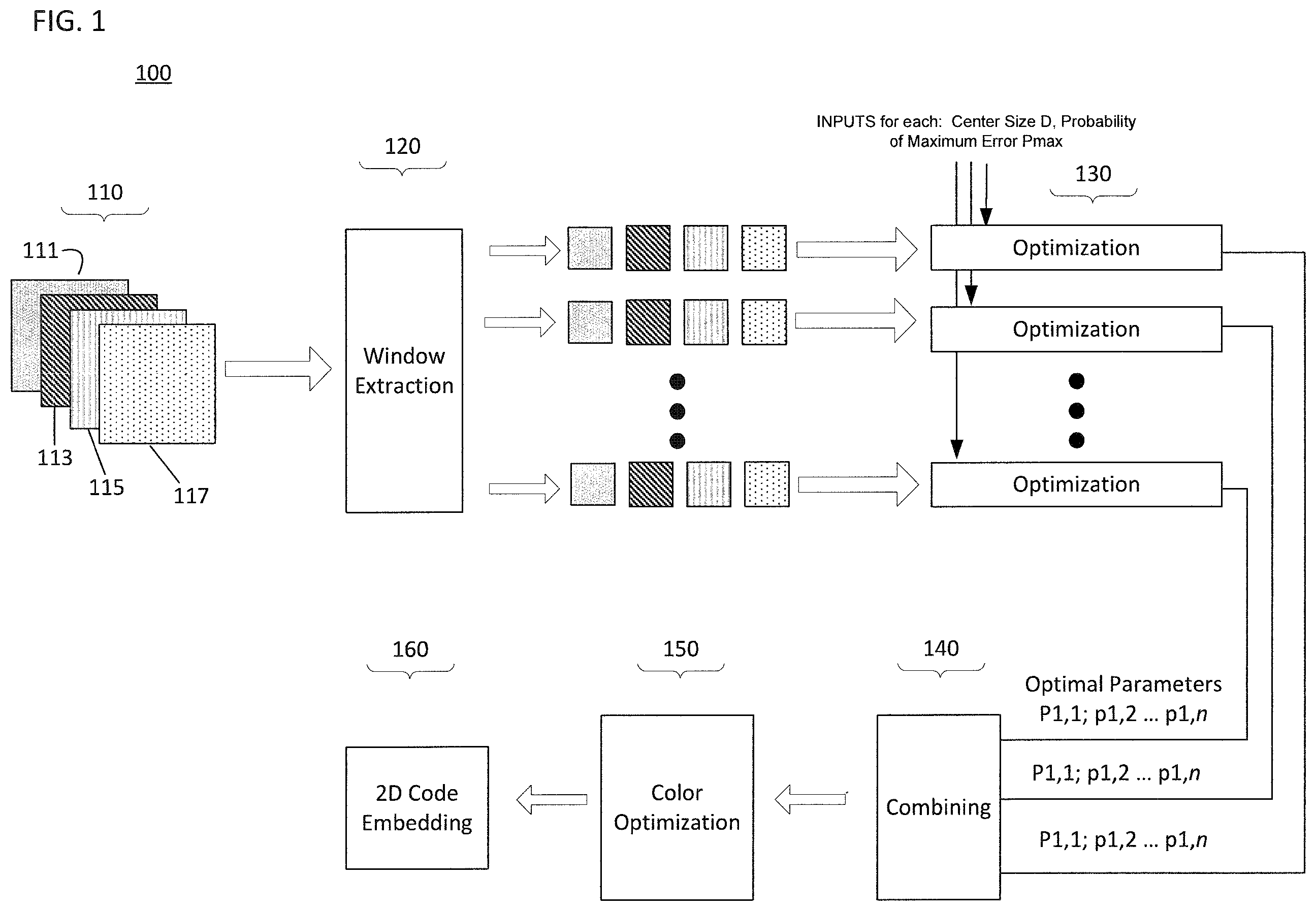
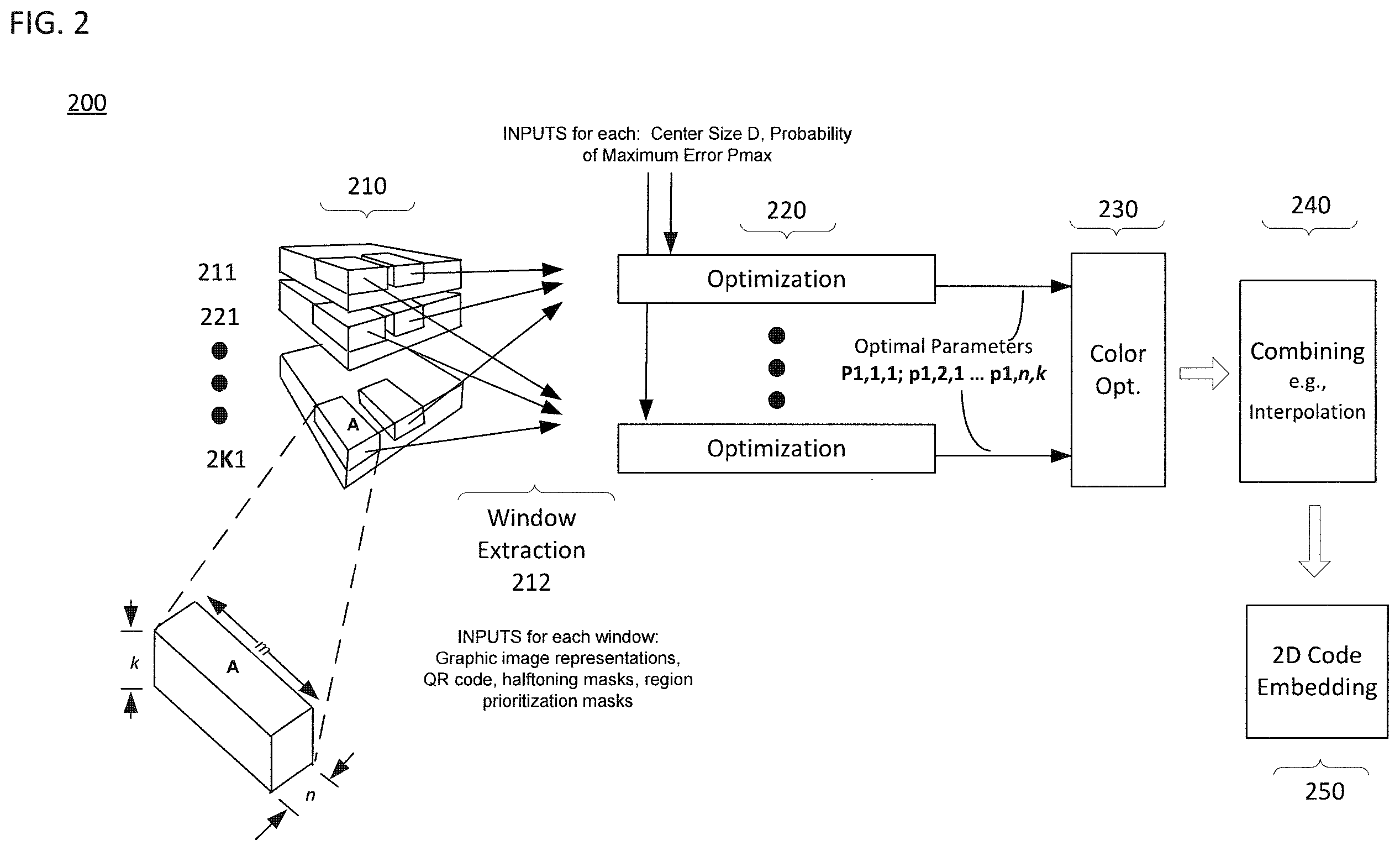
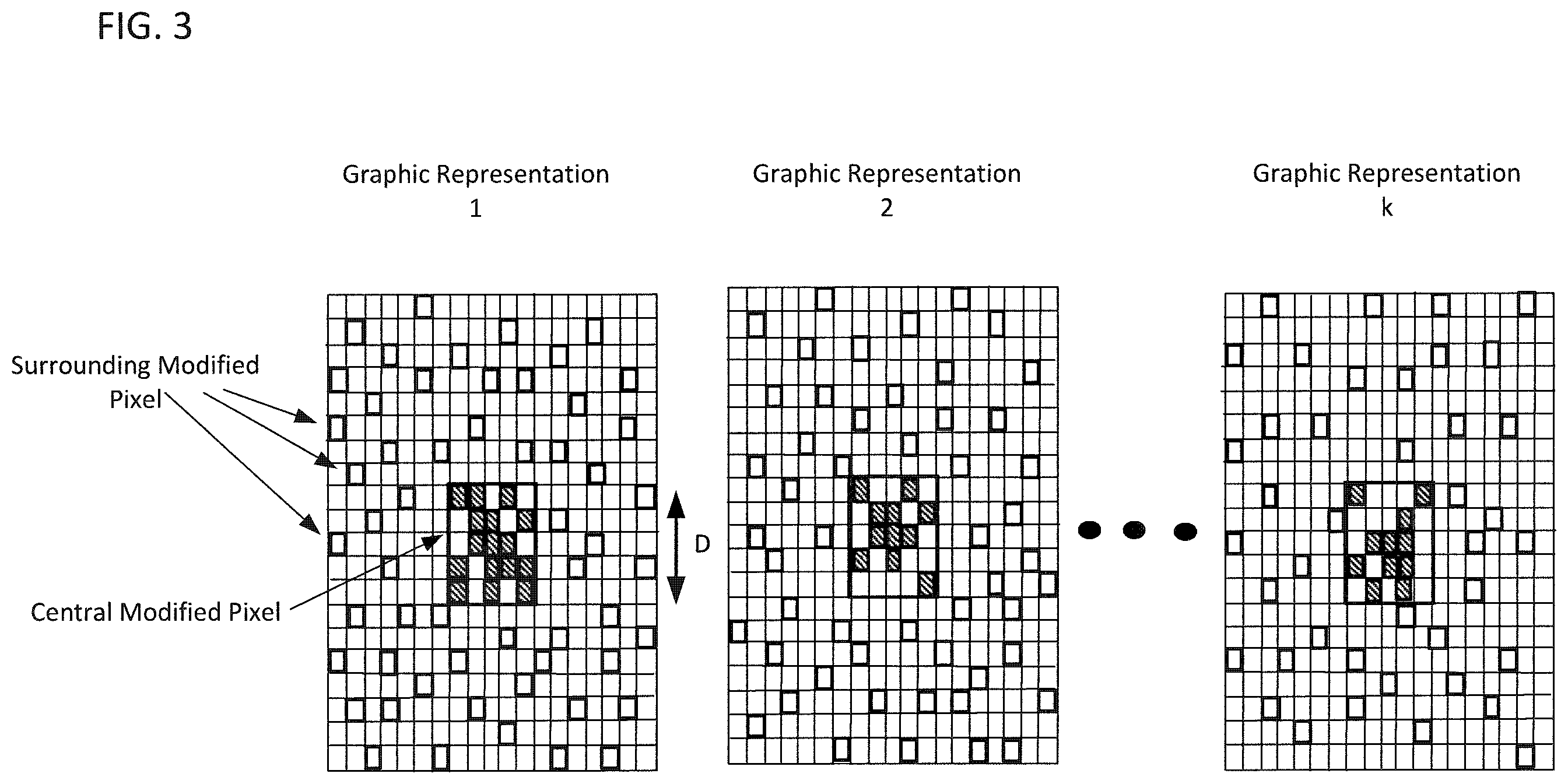
This patent embeds the QR signal into video by spreading its perturbations across both space and time. Within each frame, a halftone mask picks the pixels least susceptible to attracting attention, and an optimizer tunes their brightness within a bounded decoding-error probability. Across frames, the set of modified pixels rotates — a given QR cell might be carried by different pixels in frames one, three, and five — so the eye perceives smooth motion rather than the static texture of a code. A local-thresholding decoder on the receiving side recovers the QR from any frame. The technology applies to embedded advertising, broadcast overlays that don’t intrude on the picture, and metadata-rich product photography.
Figures