Method to store a secret QR code into a colored secure QR code
Summary
A QR code carries one payload of public information, and a normal phone scanner reads exactly that payload. There is no built-in way to attach a second, private payload — an anti-counterfeit signature, a serialization key, a routing token — that an authorized reader can verify but the public scanner cannot see. Earlier “pretty QR” work showed how to hide a code visually inside an image, but did not address how to carry two layers of meaning in the same code.
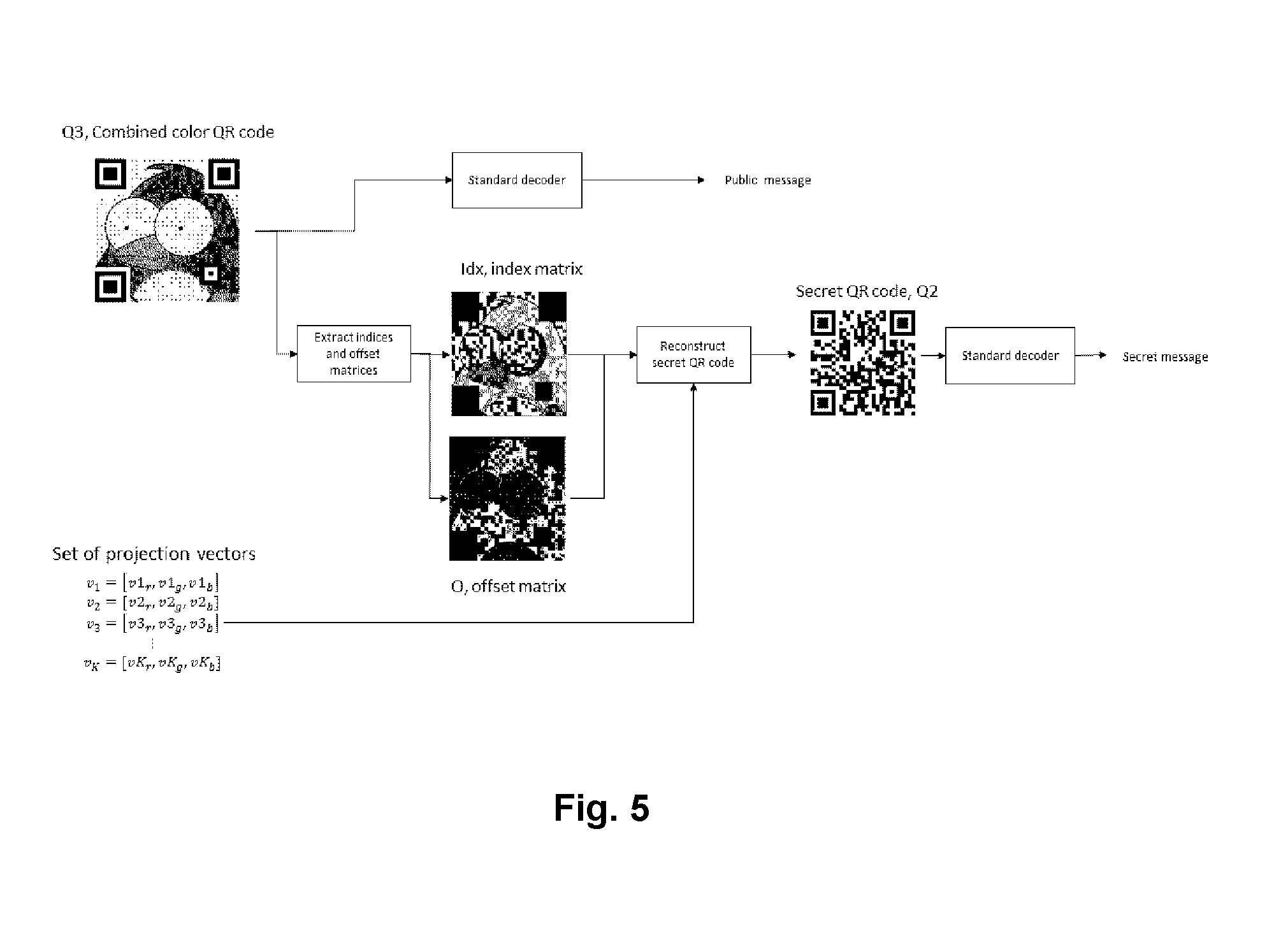
The key observation is that a standard QR scanner reads only luminance — how light or dark each cell is — and ignores hue and saturation. That leaves the entire color dimension free for a second payload, invisible to ordinary scanners.
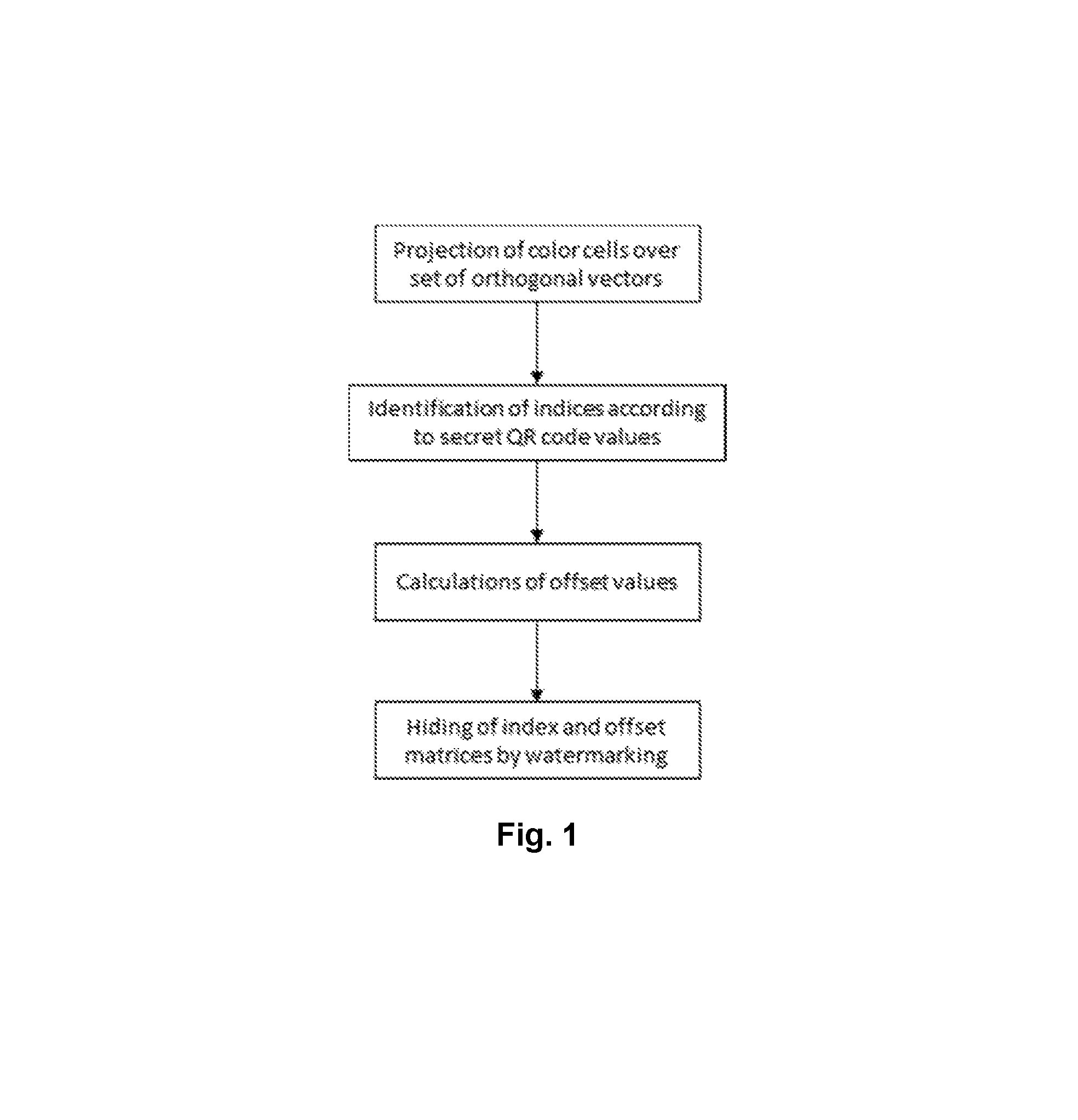
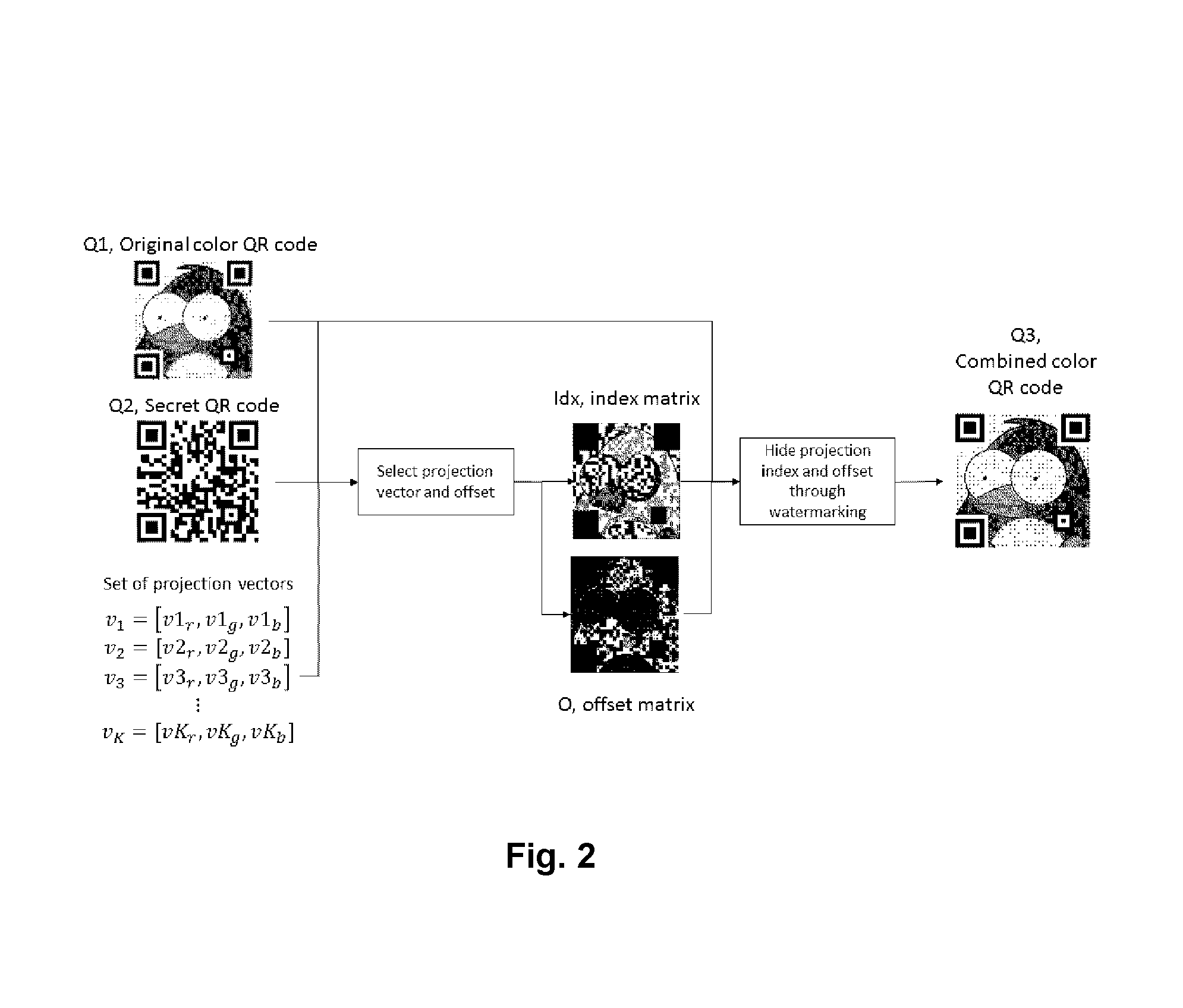
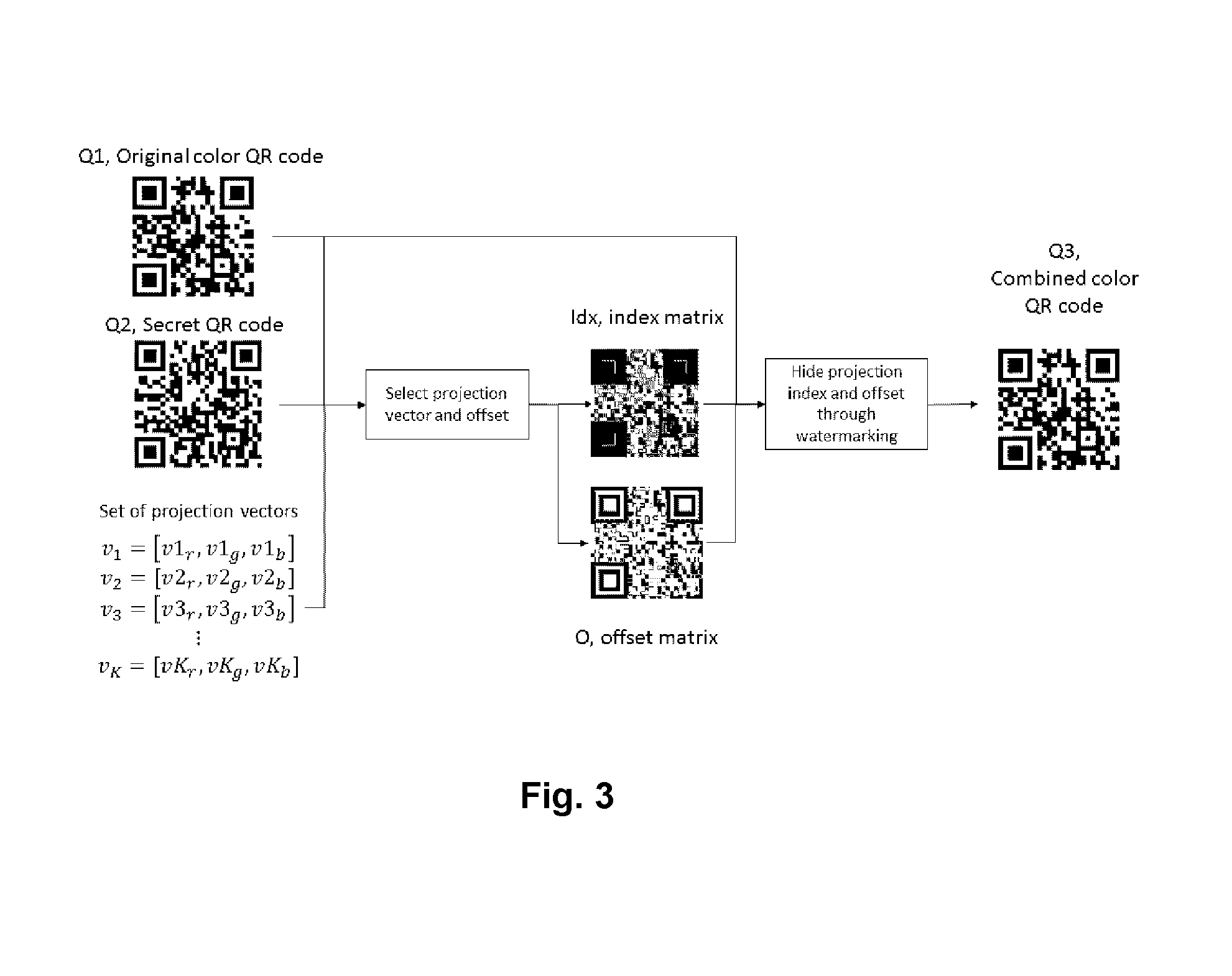
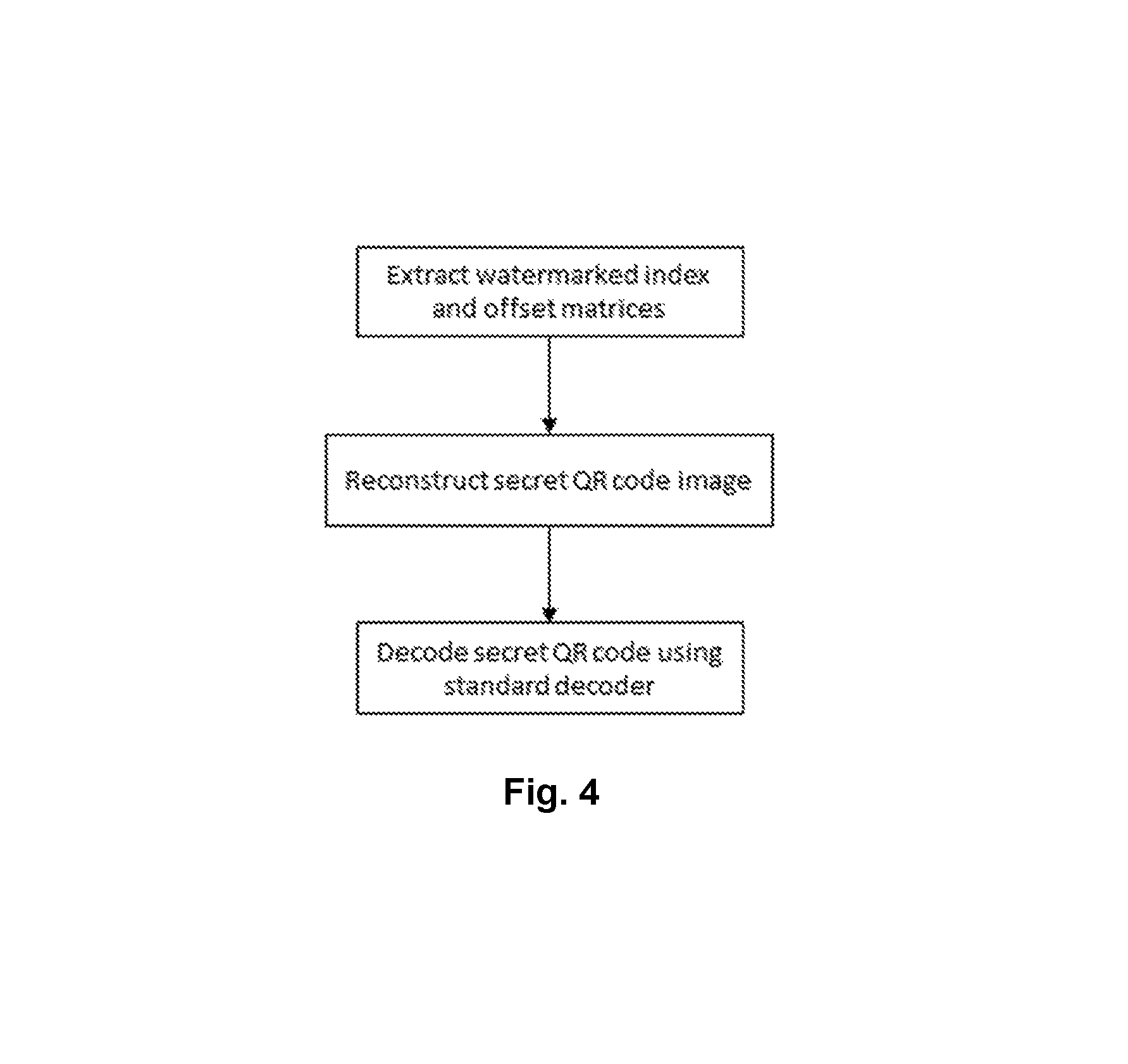
This patent describes a Secure QR Code: a colored public QR that any phone can read for its overt payload, with a second, secret black-and-white QR encoded into the color channels in directions orthogonal to luminance. Standard readers see only the public code; an authorized reader with the right decoding key can recover the hidden code as well. Watermark-style techniques (such as DCT-domain embedding) hide an index map in the color channels, and the approach can be combined with infrared or ultraviolet inks for extra layers. Practical uses include anti-counterfeit labeling, supply-chain authentication, and brand protection where a single label needs to carry both public marketing information and private verification data.
Figures