Spectral imaging sensors and methods with time of flight sensing
Summary
A normal camera records three numbers per pixel — red, green, blue — and that is enough for human vision. Many measurement problems aren’t. Telling one mineral from another, distinguishing healthy tissue from suspicious tissue, or identifying a particular crop from above all require finer spectral resolution — dozens or hundreds of narrow wavelength bands per pixel. That is the job of a hyperspectral camera.
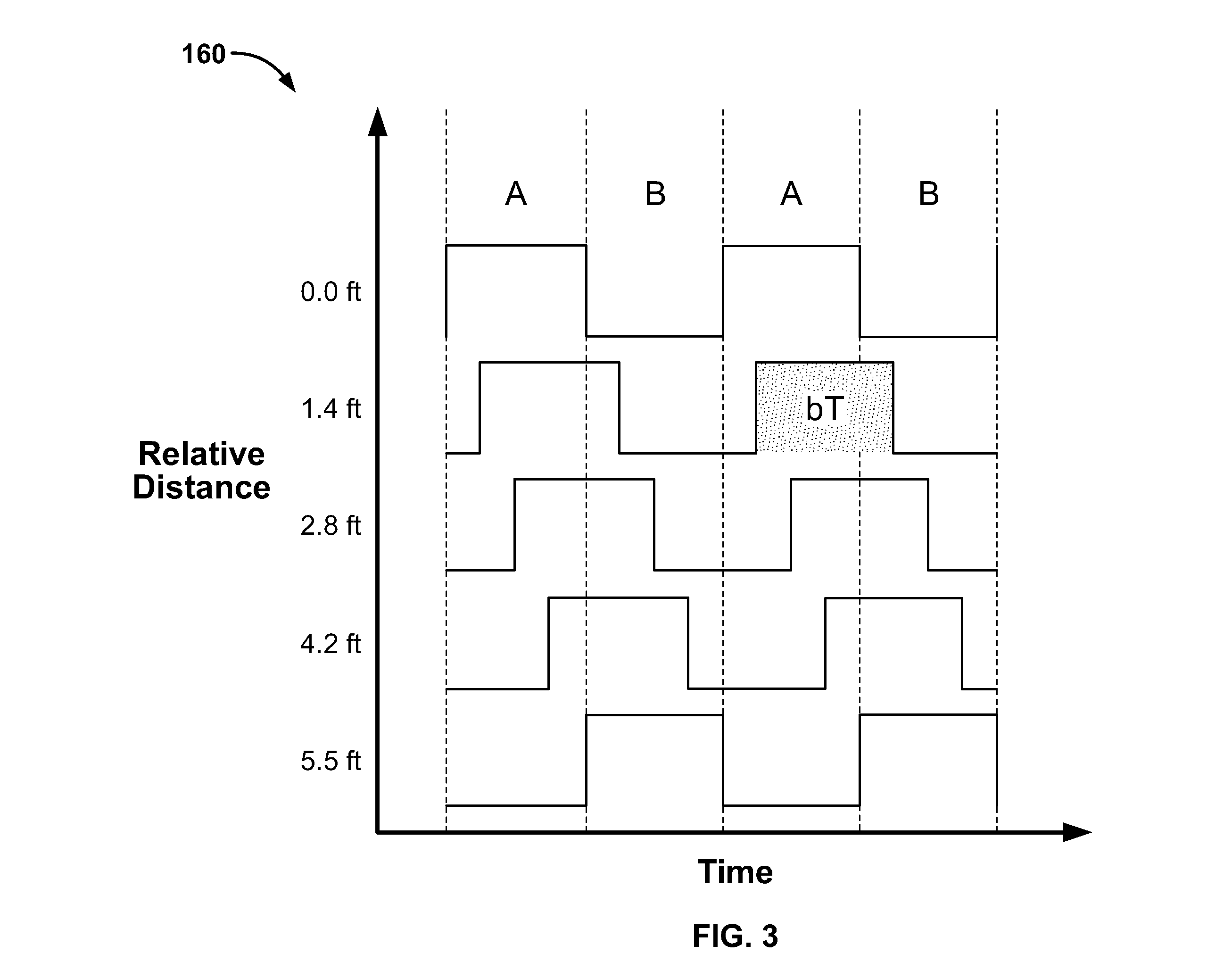
Hyperspectral cameras tell you what is at each pixel, but they don’t tell you where it is in three dimensions. Time-of-flight depth cameras do the opposite: they measure the distance to every point in the scene by timing how long laser pulses take to return, but they collapse all color into a single intensity. Combining the two has historically meant carrying two separate cameras and registering their outputs after the fact.
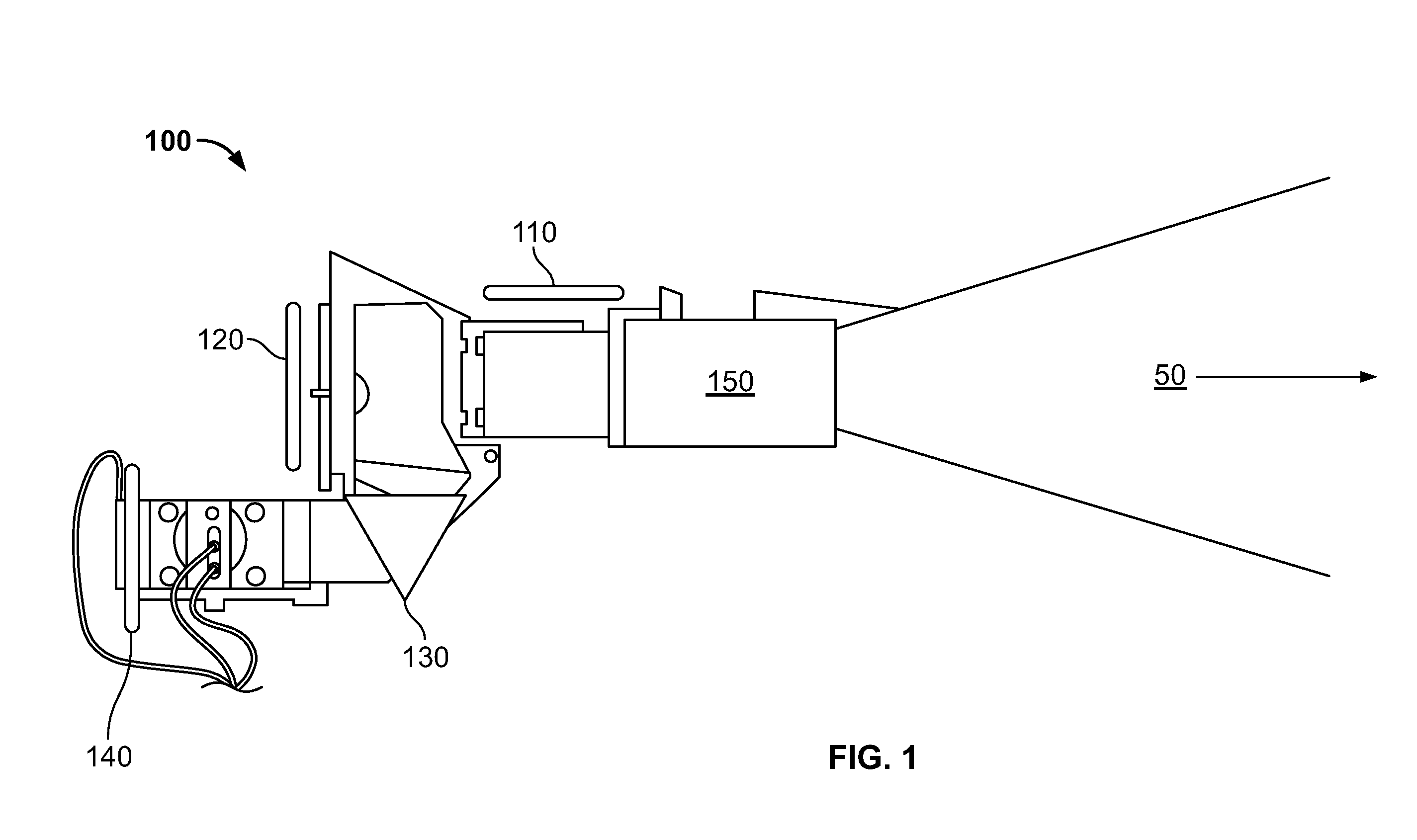
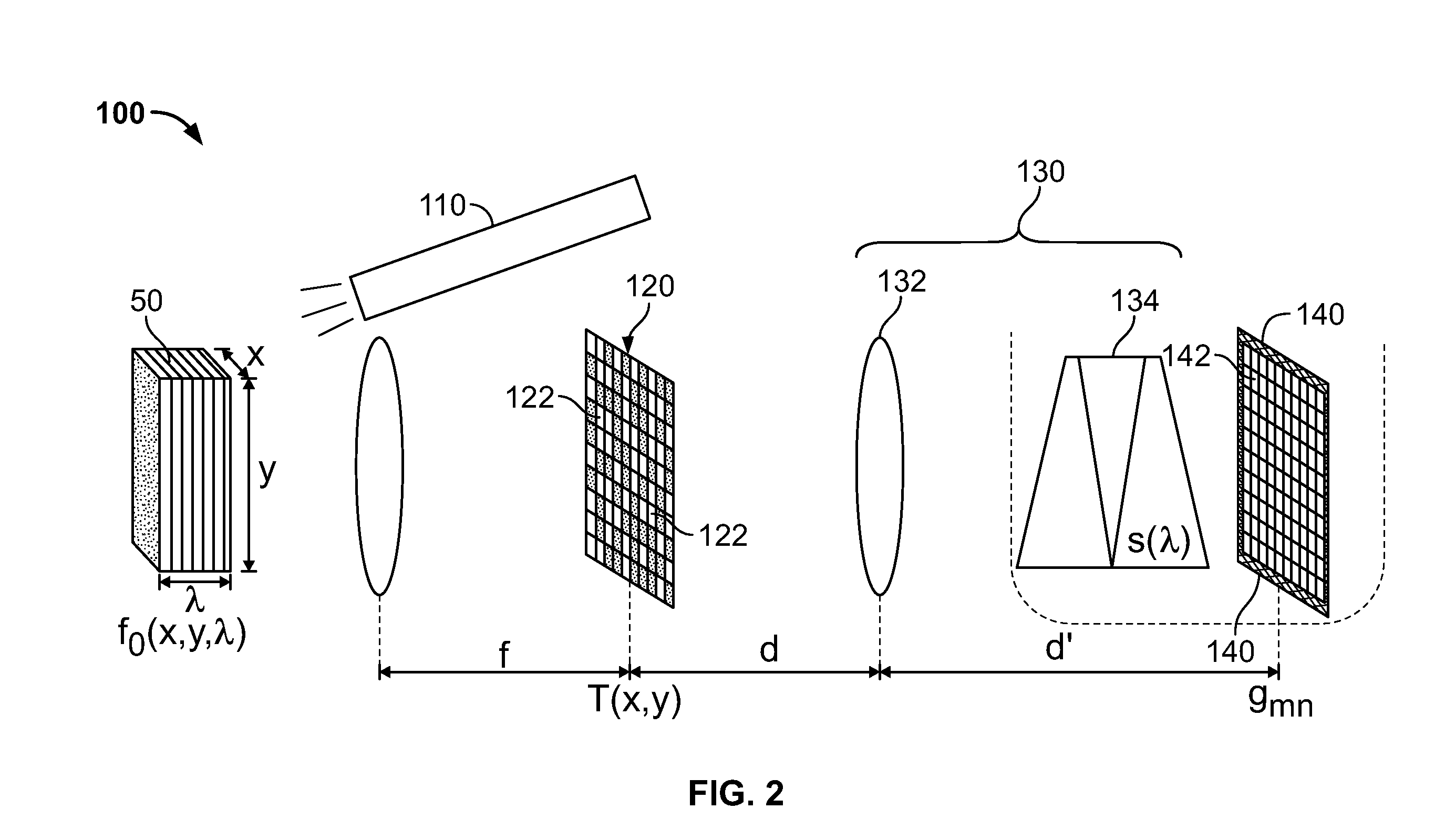
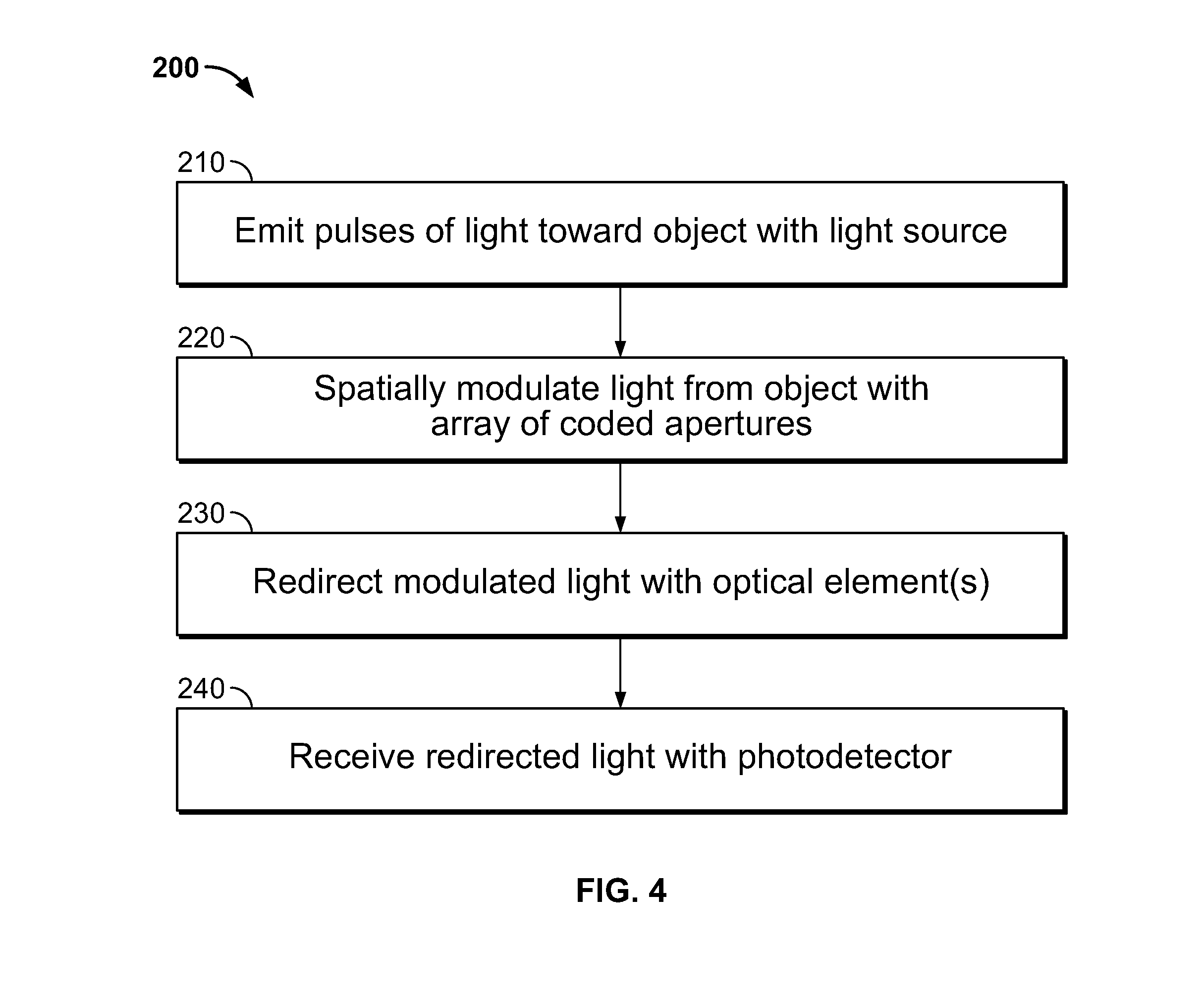
This patent merges hyperspectral imaging and time-of-flight depth into a single sensor. A pulsed laser illuminates the scene, a coded-aperture array — static or programmable — spatially encodes which wavelengths land on which pixels, and a synchronized photodetector measures both the return timing (depth) and the spectral signature (composition) at the same time. The output is a 3D point cloud where every point carries a full spectrum. Applications include geological survey and mineral identification, autonomous vehicles that need both terrain shape and material, medical tissue characterization, and remote environmental monitoring.
Figures